Last updated November 18, 2026
New windows and doors improve comfort, cut energy bills and add long-term value to your home. Sightline Windows & Doors Mesquite pairs proven product lines with a local vetted installing partner for lasting performance - and a price put in writing.
Choose your installer
The unit is half the job - the install is the other half. Background-checked local installers measure, set, seal and insulate every opening, and they know the lines we quote inside and out.
Select the right products
Compare styles, materials and glass packages side by side until the fit is right for your rooms, your budget and your goals. The product-line comparison below is the place to start.
Prepare your home for install
Before install day we walk you through a short checklist - furniture pulled back, treatments down, a clear path to each opening - so install day is watch-it-happen, not scramble.
Compare the Lines We Quote
Every project is priced on the same lines, side by side - the price indicators below are relative, and your consultant shows exact numbers on your actual openings.
PGTThe line homeowners arrive naming - the most impact certifications in the industry$$$
- More impact certifications than any other line we quote
- WinGuard, EnergyVue and ClassicVue Max systems built for every wind zone
- 99% on-time delivery keeps your install date on the calendar
CGIThe heavyweight impact line$$$$$
- Large-missile impact ratings for the strictest wind zones
- Architectural-grade aluminum with commercial-depth frames
- The line we quote when protection is the whole point
CWSThe value pick$$
- Vinyl systems built to strict wind codes
- Strong energy packages at the friendliest price point
- The smart start for whole-home replacements on a budget
ESWSlim lines, big glass$$$$
- Narrow-sightline aluminum for modern elevations
- Oversized openings and floor-to-ceiling glass
- Impact-rated without the bunker look
ECOThe aluminum impact workhorse$$$
- Factory-built aluminum impact systems
- A strong price-to-protection ratio for coastal homes
- Proven lines with short lead times
DIY vs Professional Door Installation: What’s Safe to Do Yourself
A fire-rated door assembly is exactly that: an assembly. Frame, slab, hinges, closer, seals, and label work as one tested unit, and the rating disappears the moment a non-listed component gets swapped in. Most homeowners don’t learn their exterior door is part of a rated assembly until an insurance adjuster asks for the installation documentation after a fire. That single fact separates the door jobs you can safely handle from the ones you can’t. This guide walks through what’s genuinely low-risk to do yourself, what carries consequences that show up years later, and how Nevada code and Mesquite’s climate change the calculus.
Quick Answer
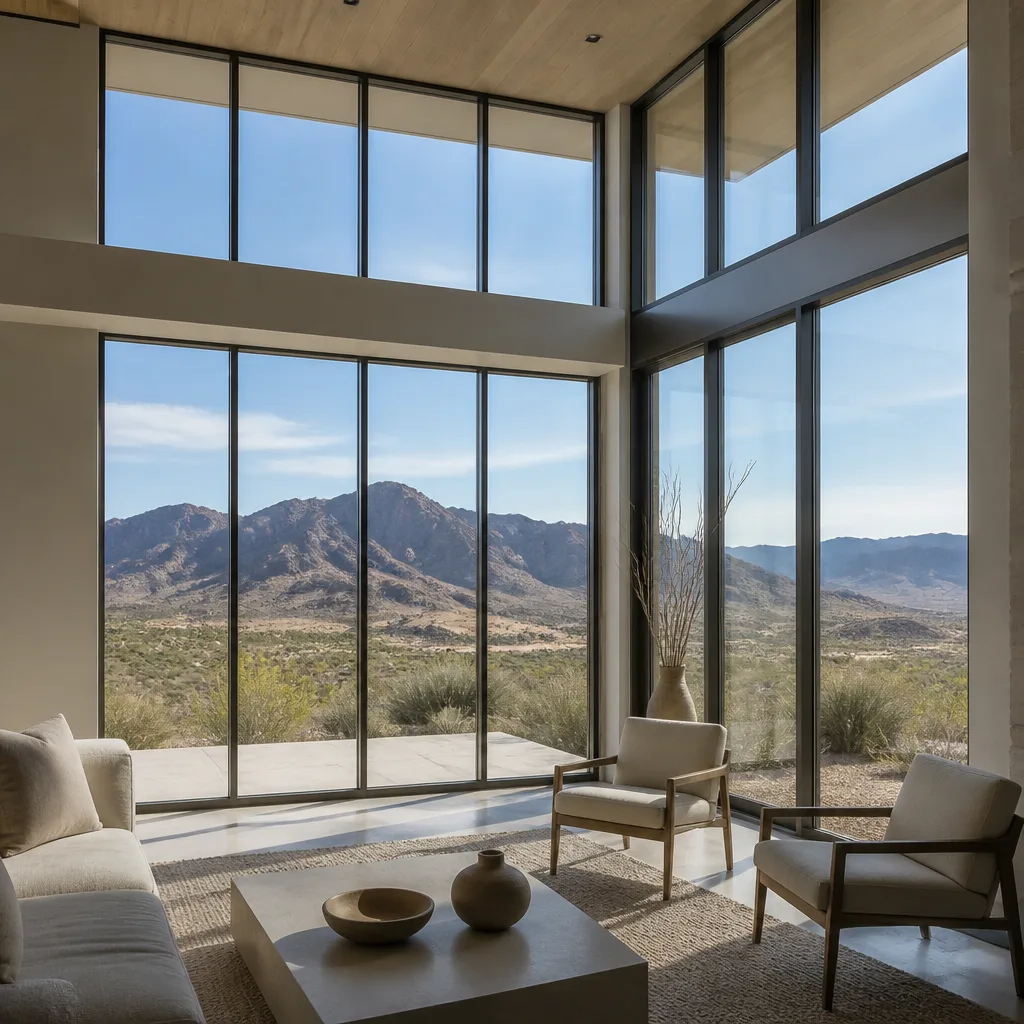
Replacing a door slab, painting, weatherstripping, and swapping standard hardware are reasonable DIY tasks. Anything involving the rough opening, fire-rated assemblies, impact or security-rated doors, or threshold waterproofing requires a licensed contractor. In Nevada, full-frame door replacement and any work on a rated assembly should be documented by a licensed installer, and homeowners who skip that step can lose insurance coverage and create disclosure problems in a future sale.
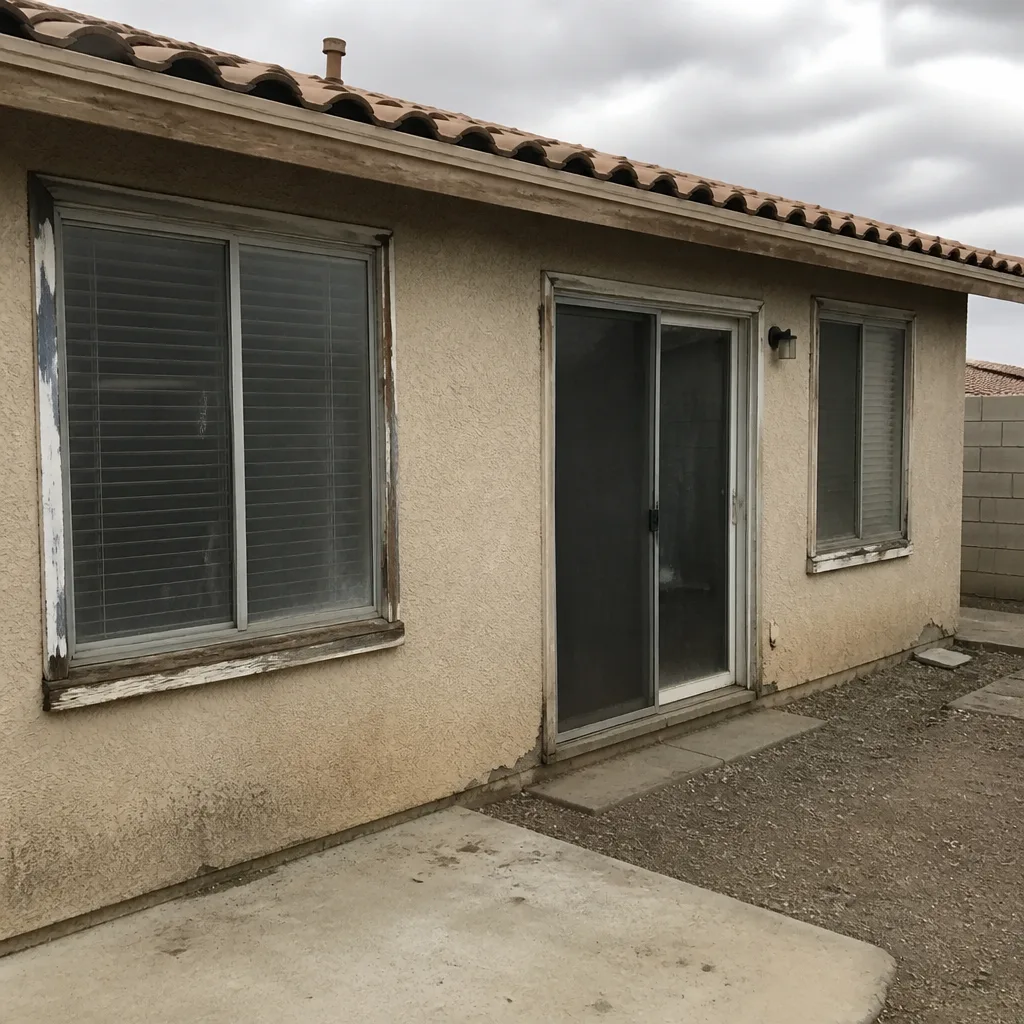 Before
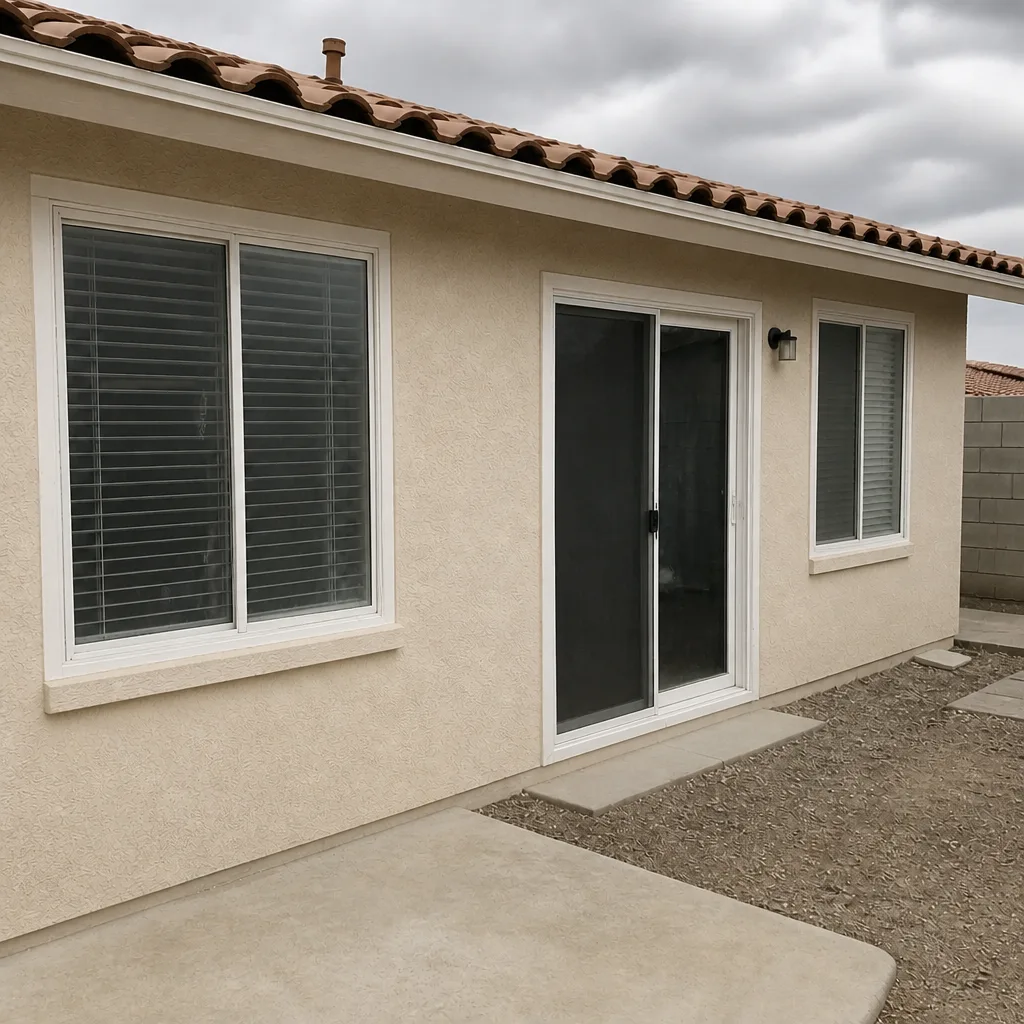 After
Table of Contents
- What You Can Do Yourself Without Risk
- How to Tell If Your Door Is Fire-Rated
- Hardware Alignment: Where Security Ratings Fall Apart
- Full-Frame vs Slab Swap: What Changes at the Rough Opening
- Nevada Code and Permit Reality
- Documentation You Need If You Self-Install
- Why Mesquite’s Climate Punishes Bad Door Installs
- Common Mistakes to Avoid
- When to Call a Professional
What You Can Do Yourself Without Risk
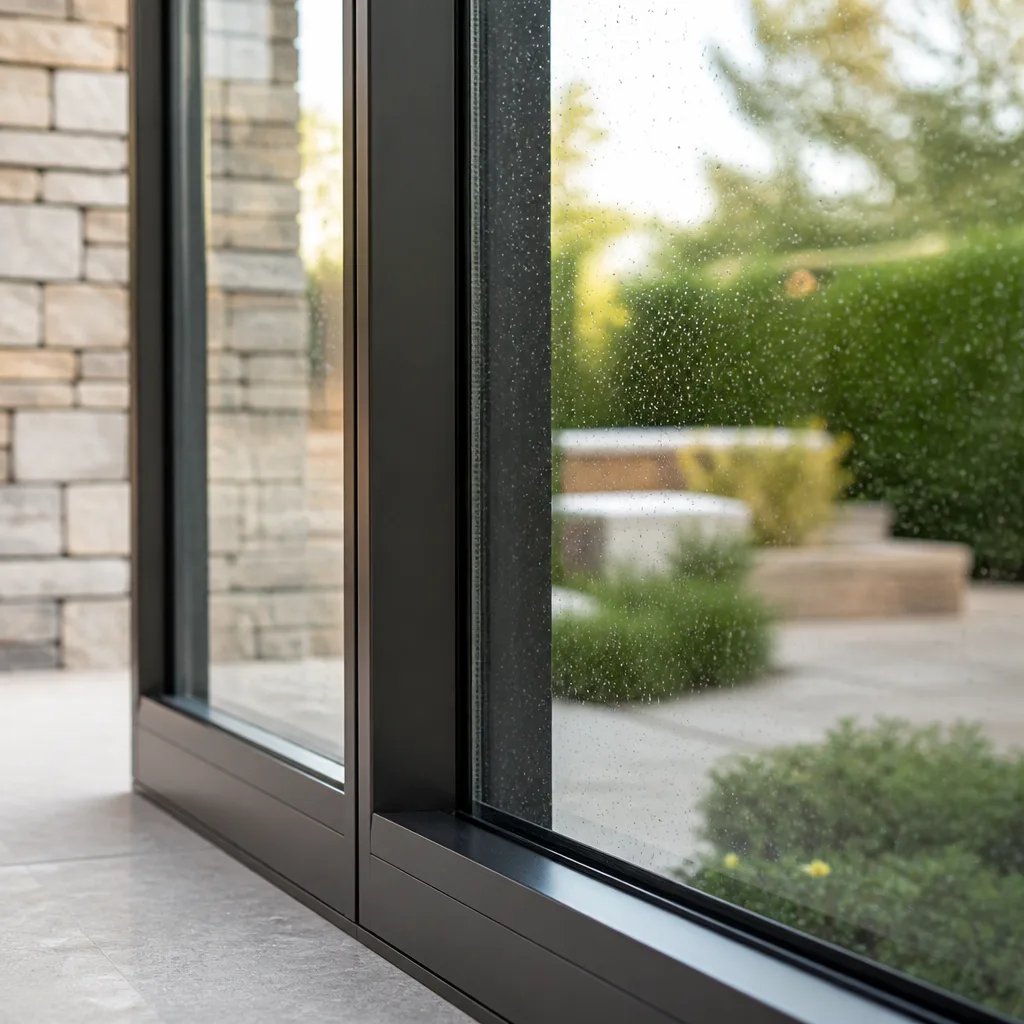
We’re not going to tell you every door job needs a crew. Plenty of door work is genuinely safe to handle yourself, and pretending otherwise would be dishonest. The dividing line is whether your work touches the structural opening, the fire rating, or the security rating. Stay on the safe side of that line and you’re fine.
Tasks that a careful homeowner can complete without affecting fire rating, warranty, or structural integrity:
- Replacing a non-rated interior slab (bedroom, closet, pantry) with a pre-hung or slab of matching dimension, provided the frame stays put.
- Painting or staining the door and frame. Most manufacturers require it, in fact, and skipping it can void the finish warranty.
- Weatherstripping replacement on an existing frame, using OEM or equivalent profiles.
- Standard hardware swaps on non-fire-rated doors: passage knobs, deadbolts without a rated assembly, and privacy locks.
- Adjusting hinges on a sagging non-rated door to restore alignment, short of drilling new mortises.
- Threshold sweeps and door bottoms on a sliding or hinged door where no gasket is part of a rated assembly.
Inside a Mesquite home, that list covers most interior door work. It does not cover any exterior door that forms part of a fire separation, which is more doors than you’d guess. Before you buy a slab for Mesquite’s 89109 or 89027 ZIP codes, check the assembly, and if the label is missing or unreadable, treat the door as rated until a professional confirms otherwise.
How to Tell If Your Door Is Fire-Rated
Fire-rated doors carry a label from a listing agency – commonly Underwriters Laboratories, Intertek, or Warnock Hersey – attached to the hinge edge of the slab or embossed on the frame head. That label lists the assembly’s fire rating in minutes (20, 45, 60, 90, or 180) and often a maximum size. No label means no rating, even if the door looks heavy and thick.
Where to look, in order:
- Hinge edge of the door slab. A small metal or foil label, sometimes painted over. Do not remove it – removing the label voids the rating.
- Frame head or strike jamb. A label embossed or screwed into the frame identifies the rated frame and its listed components.
- Door hardware. Hinges, closers, and latching hardware on a rated door must be listed for that assembly. A standard strike plate on a rated door breaks the listing.
- Gap and seals. Rated frames use an intumescent or gasketed seal at the head, jambs, and threshold. If the seal is torn, missing, or replaced with weatherstripping, the assembly is no longer compliant.
- Building permit records. Your local building department can pull the original permit for the assembly if you are in doubt about what was installed.
In Mesquite, many attached garages share a rated door with the house – the door between the garage and the living space is a 20-minute assembly in most residential construction. That is the door we get asked about most. Homeowners assume it’s a normal garage door, replace the slab with a similar-looking one, and unknowingly void the assembly. When we install replacement doors in Mesquite, that label and its documentation travel with the job.
Hardware Alignment: Where Security Ratings Fall Apart
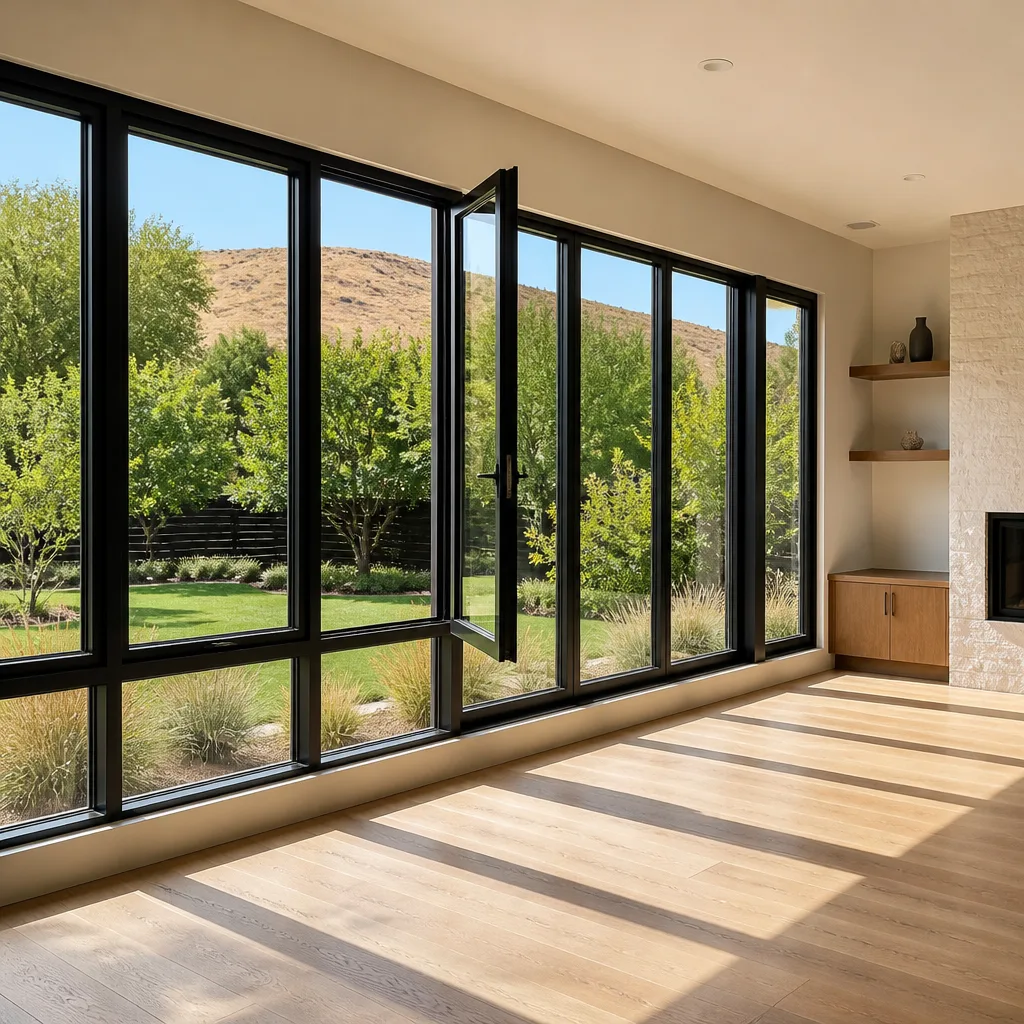
Every security-rated door, impact-rated door, and fire-rated door was tested as a unit. Change the position of a hinge, enlarge the strike mortise, or swap in a deadbolt with a longer throw, and the assembly still looks correct while its actual performance fails. This is the single most expensive misunderstanding we see.
The measurements that matter:
- Hinge alignment: hinge screws must hit the stud, not just the jamb casing, and the hinge plate must sit flush. A 1/16″ offset at the top hinge translates to a 1/8″ sag at the lock side over the door’s height.
- Strike plate position: the strike must align with the latch bolt or deadbolt at exactly the height tested – not 1/4″ high, not 3/8″ low. A misaligned strike reduces the holding force and lets the bolt walk when the door is pushed.
- Deadbolt throw: a 1″ throw is standard for security-rated doors. Going to a 1-1/8″ bolt or moving the bolt to a different position on the door pulls it out of the rated strike reinforcement and weakens the assembly.
- Handle height: commercial and multifamily assemblies may require the lever at 34″ to 48″ AFF per ADA. Residential is more forgiving, but rated doors still specify.
- Backset: 2-3/8″ for most residential doors, 2-3/4″ for most commercial. Mixing these moves the bolt position and forces a new strike mortise.
We’ve seen impact-rated doors in Mesquite replaced over a weekend and then fail their post-install inspection because the strike had been moved 3/16″. The homeowner had sealed the frame, thrown away the packaging, and couldn’t produce a rated strike plate. The fix required a new rated strike, a new opening prep, and a new inspection – over $400 in rework for a job that could have been done right the first time.
Full-Frame vs Slab Swap: What Changes at the Rough Opening
A slab swap uses the existing frame, jamb, and rough opening. A full-frame replacement removes the entire unit – frame, brickmold, sill pan, and flashing – and installs a new factory-assembled frame into the rough opening. The difference at the opening is significant, and it’s why full-frame work is not a beginner project, regardless of how many tools are in your garage.
Here’s what actually happens during a full-frame replacement at the rough opening:
- Remove trim, brickmold, and sill. On a masonry surround, that may mean cutting back stucco or siding and later patching it.
- Extract the existing frame without damaging the rough-opening studs, sheathing, and water-resistive barrier.
- Inspect and repair the rough opening. Rot at the sill, out-of-plumb studs, missing king or jack studs, and cracks from prior settling all surface here. Nevada builders sometimes leave rough openings tight to the frame – no room for shimming without opening the sheathing.
- Install a new sill pan and flashing. The pan must slope to the exterior, lap behind the siding, and integrate with the water-resistive barrier. Done wrong, water enters the wall cavity and never shows up until the framing rots.
- Set and shim the frame. Shims at the hinge side, strike side, and sill hold the frame in plumb and square through the entire opening. A 1/8″ twist in a 36″ door throws the lock side out of alignment with the strike.
- Fasten, insulate, and seal. Low-expansion foam at the perimeter, backer rod and sealant at the exterior, and the final air-sealing details.
- Reinstall trim and finish – caulk, patch, paint, and match. Most of the labor cost of a full-frame replacement sits in this step, not in the door itself.
That’s the job. In Mesquite, where exterior doors face 110-degree summers and wind-driven monsoon rain, the flash and seal steps carry more weight than in milder climates. Get the sill pan wrong and you will not know for two or three years, and by then the damage is inside the wall.
Nevada Code and Permit Reality
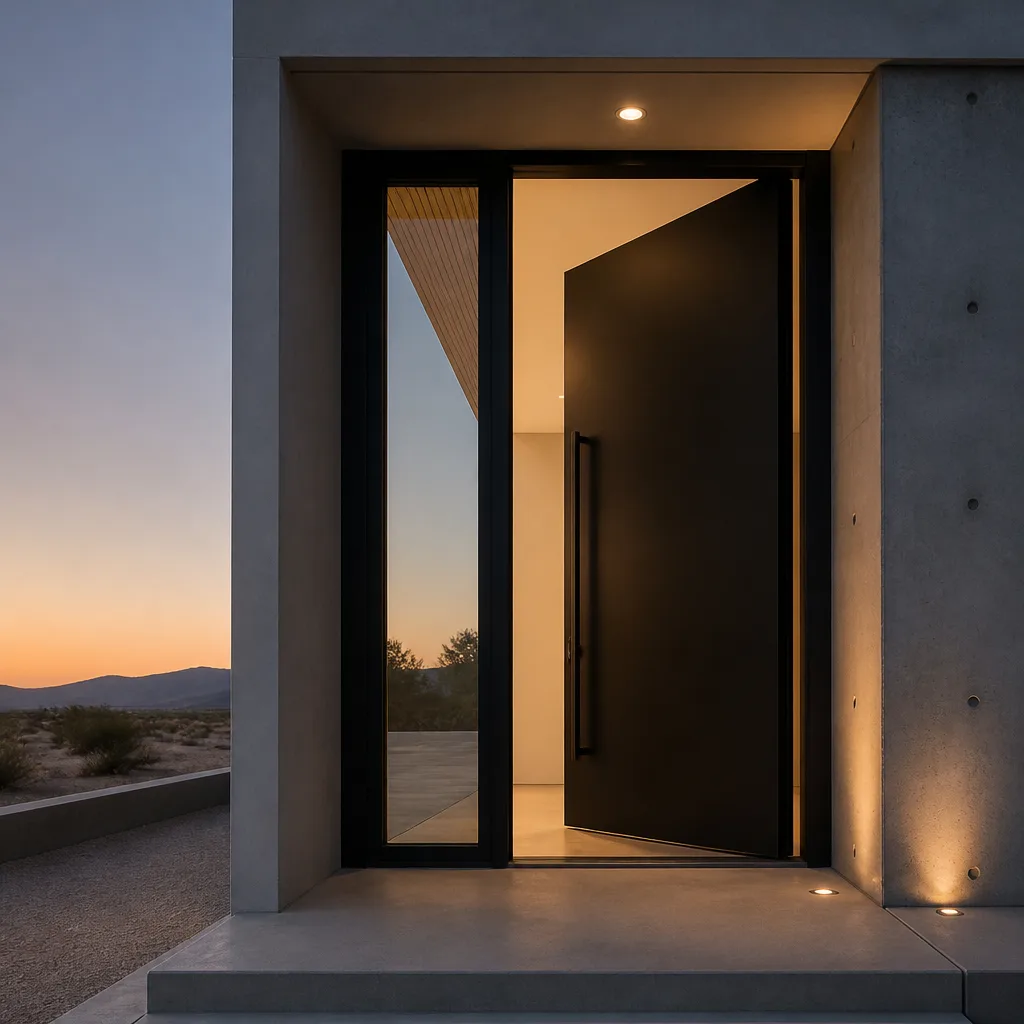
Nevada follows the International Residential Code, adopted and amended at the state and local level. In Mesquite, exterior door replacement – including full-frame work – requires a permit in most cases, and any work that changes the size of the opening, alters egress, or touches a fire-rated assembly definitely does. A key fact: Nevada does not require homeowners to hold a contractor’s license to work on their own home, but it does require a license for anyone they pay to work on it, and the work itself still has to pass inspection.
What that means in practice:
- Permits are pulled under the party doing the work. If a friend or handyman does the job under your direction, the permit and the liability sit with you.
- Egress windows and doors in bedrooms and sleeping rooms must meet minimum opening size (5.7 sq ft of clear opening, 20″ minimum width, 24″ minimum height, sill no higher than 44″ in most cases). Changing a bedroom door or window without checking these numbers is a code violation.
- Rated assemblies – including garage-to-house doors and shared-wall doors in townhome-style Mesquite construction – must be inspected with documentation of the assembly.
- Inspections require the installer’s sign-off and, for rated assemblies, the listing label retained on the door and frame.
We pull the permits and stand for the inspection on every job we do in Mesquite because it’s the only way to guarantee the assembly is documented. When a homeowner asks us to fix a permitted-but-failed job, the first thing we need is the paper trail, and it’s often missing.
If you’re deciding between doing the work yourself or bringing in a Mesquite door installation team, the permit question alone usually settles it. Not because the work is beyond your skill, but because the paper trail matters more than the physical install when a claim or a sale comes up.
Documentation You Need If You Self-Install
Self-installation is legal in Nevada. The insurance and real-estate consequences are what most homeowners miss. If you replace a door yourself and something goes wrong, the first thing your homeowner’s carrier will ask for is documentation showing the work was done to code and to the manufacturer’s installation instructions. No documentation means no coverage for that loss.
Keep the following, and keep it with your home records:
- The permit and inspection record. Even for a self-install, pull the permit. The inspection proves the work passed.
- Manufacturer’s installation instructions for the specific product installed. These are what an installer is obligated to follow, and what an inspector will check against.
- Product spec sheet showing the model number, impact rating, U-factor, SHGC, and fire rating if applicable.
- Photographs of the rough opening, the flashing and sill pan, the shimming, and the finished install. This is the document most often missing.
- Receipts for the door, hardware, and any listed components.
- Warranty registration – most manufacturers require it within a short window, and skipping it forfeits coverage.
Nevada real estate transactions increasingly require disclosure of any work done without a permit. If you replace an exterior door yourself and later sell, the buyer’s inspector will see the new door and ask. Having the paper trail in hand turns a red flag into a clean disclosure. Losing it can cost you at the negotiating table.
Our Sightline Windows & Doors Mesquite home page has one of the clearest examples of what that documentation package looks like – the measured survey, the written scope, the photo record, and the warranty, all in one bundle. It’s the same package we produce on every job, because the record is what protects you when something goes wrong.
Why Mesquite’s Climate Punishes Bad Door Installs
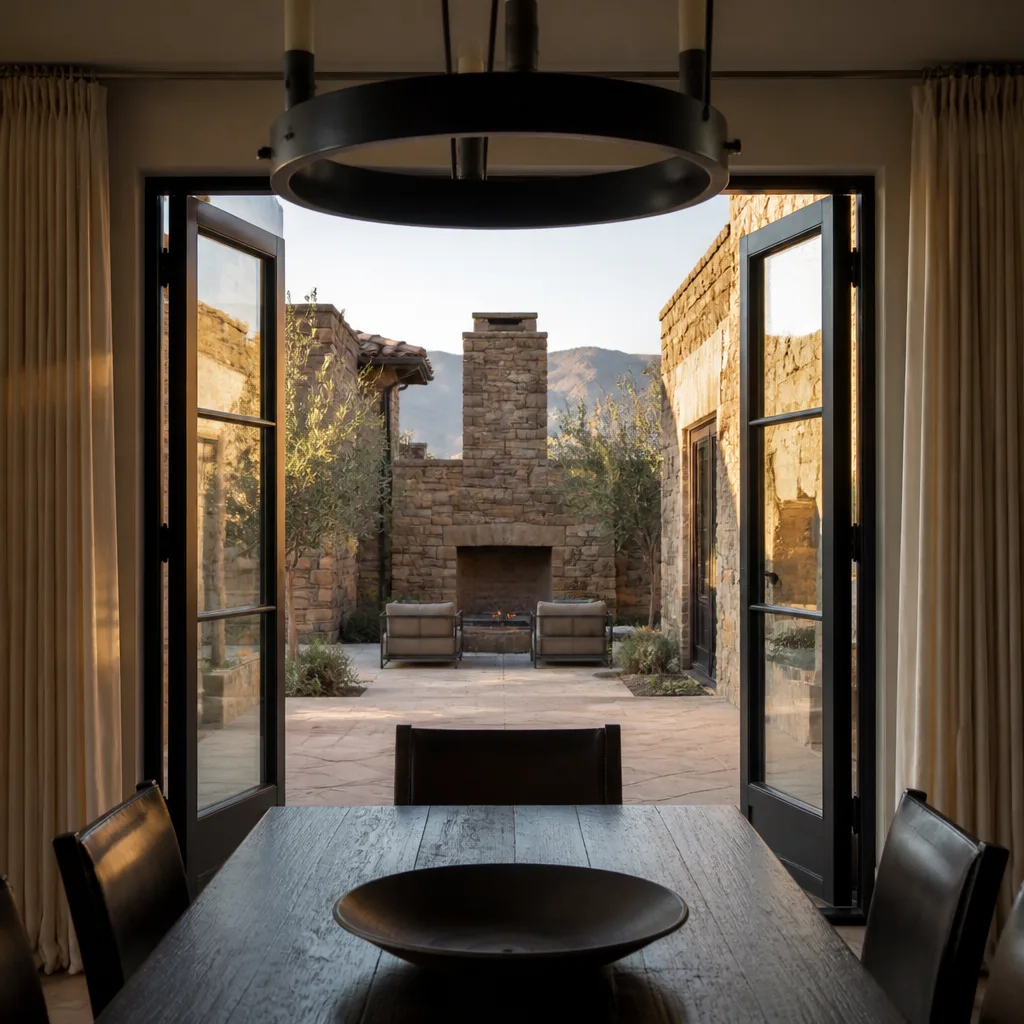
Mesquite sits at about 1,600 feet in the Virgin River valley, with summer highs that routinely top 110°F and monsoon-season humidity that swings 60 points in a matter of hours. That combination is hard on exterior doors. The thermal cycling alone – a metal door can swing 130°F across a day in July – works the shims and the sealant loose unless the install handles it.
What we watch for on Mesquite installs that colder-climate installers don’t:
- Thermal movement at the frame. A door that fit perfectly in November will bind in July if the frame wasn’t shimmed for expansion. Impact-rated steel doors need slightly looser shimming than wood, and can’t be wedged tight.
- Sun exposure on south and west elevations. UV breaks down weatherstripping and sealants twice as fast on Mesquite’s south and west walls. We specify UV-stable sealant and higher-grade weatherstrip for those exposures.
- Monsoon-driven rain. The valley’s summer storms push water hard against exterior doors. Sill pans that would work in Las Vegas fail in Mesquite under real water load if the slope is off by even a few degrees.
- Dust and sand. Fine particulate in Mesquite’s air gets into unlubricated hinges and locks, and accelerates wear on sliding door tracks. Rated hardware needs the specified lubricant, not WD-40.
- Wind load. Impact-rated doors in Mesquite should meet the local wind-speed requirement for the opening’s height and exposure. That’s a spec on the door, not a claim on a brochure.
Because of that, we don’t specify Mesquite doors by brand alone. We spec by performance tier, price range, and what the opening requires – which is why doors from ECO Window Systems, CWS, and CGI show up on our Mesquite jobs depending on the exposure, and why a door that works on a shaded north wall might be the wrong choice for a west-facing entry.
If you’re comparing quotes for Mesquite window replacement at the same time as your door, ask for the same climate report you’d expect on the door. The exposures are the same.
Common Mistakes to Avoid
- Replacing a fire-rated garage-to-house door with a non-rated slab. It’s the most common error we see in Mesquite. The door looks correct, the label is missing, and the assembly has lost its rating.
- Moving the strike plate without checking the deadbolt throw. A 1/8″ shift is enough to reduce the security rating, and it voids most manufacturer warranties on security doors.
- Reusing the old sill pan during a full-frame replacement. The pan is a one-use component. Reusing it means it no longer integrates with the new flashing and water gets into the wall within a year or two.
- Shimming the frame tight in a Mesquite summer install. The door binds in winter. Shimming to accommodate thermal movement is a Mesquite-specific detail that gets skipped by installers who mostly work in Las Vegas or southern California.
- Not pulling a permit for a full-frame swap and later disclosing “no permit” in a sale. Buyers price that disclosure into their offer, sometimes by more than the door cost.
- Skipping the warranty registration. Most manufacturer warranties on impact-rated and security-rated doors require registration within a specific window. Miss it and the coverage disappears.
- Using the wrong sealant for Mesquite’s UV load. Standard caulk fails within two summers on a south-facing door. Use UV-stable sealant and check the seal each spring.
When to Call a Professional
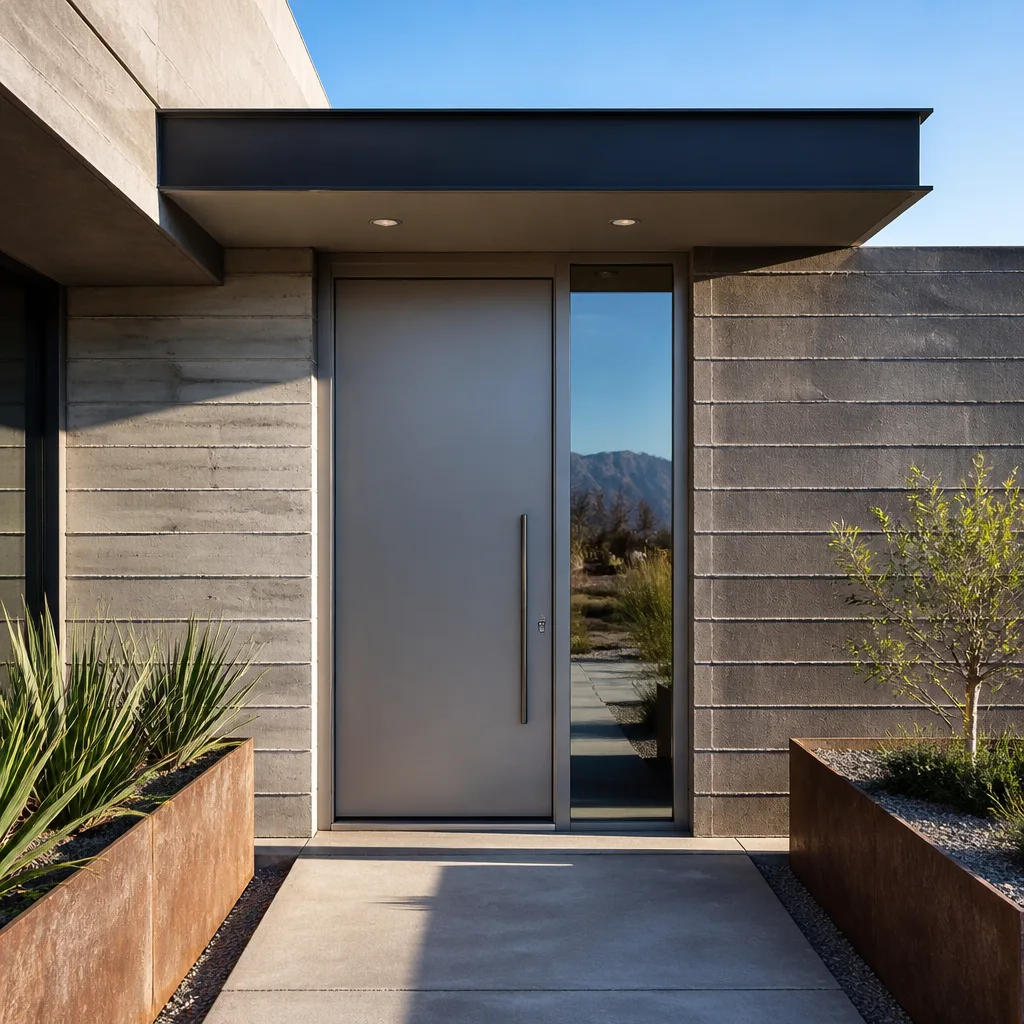
Call a professional for any of the following: a full-frame replacement where the rough opening will be exposed, any work on a fire-rated assembly, any door in Mesquite that will be installed as an impact-rated assembly (because the rating depends on every component being listed for the assembly), any door where the existing frame shows rot or movement at the sill, and any job where you plan to sell within five years and want a clean paper trail. In our experience, most Mesquite homeowners call for the fire-rated and impact-rated doors and handle their interior slab replacements themselves.
Sightline Windows & Doors Mesquite offers free estimates in Mesquite – call (888) 268-5117. We’ll inspect the opening, identify the assembly requirements, and give you a written price before any work starts. If you’re still comparing, our team will do a free second opinion on any written estimate you already have.
Frequently Asked Questions
Yes, if it’s a slab swap on a non-rated door and you don’t change the rough opening or egress dimensions. Full-frame replacements, fire-rated doors, and impact-rated doors require a licensed contractor for the permit and documentation. If you’re unsure which category your door falls into, check the hinge edge and frame head for a rating label before making a decision.
Plan on $1,200 to $2,800 for a standard 20-minute garage-to-house rated assembly, including installation; a 45-minute or larger assembly runs higher based on the door’s size and hardware. Mesquite pricing also climbs if the door has to be impact-rated for a specific exposure. Call (888) 268-5117 for an exact quote – estimates are free.
Not on a documented scope. The written price is the price, and if the opening reveals something the measured survey missed, we stop and re-quote in writing before any additional work begins. No change orders after a tool is lifted.
Yes. Every permitted door install we do in Mesquite is pulled under our license, inspected, and documented. The permit, the inspection record, and the assembly documentation are part of what you keep at the end of the job.
A single door replacement in Mesquite usually finishes in one day once the permit is in hand – typically 6 to 8 hours of on-site work. Add time if the rough opening needs repairs or the exterior siding requires patching. The permit timeline in Mesquite varies with the current inspection queue.
The permit and inspection record, the manufacturer’s installation instructions, the product spec sheet with the model number, photographs of the rough opening and flashing, receipts, and the warranty registration. Missing any of these puts you at risk in an insurance claim and again when you sell. A clean paper trail from a licensed installer solves the problem without all the file-keeping.
The Bottom Line
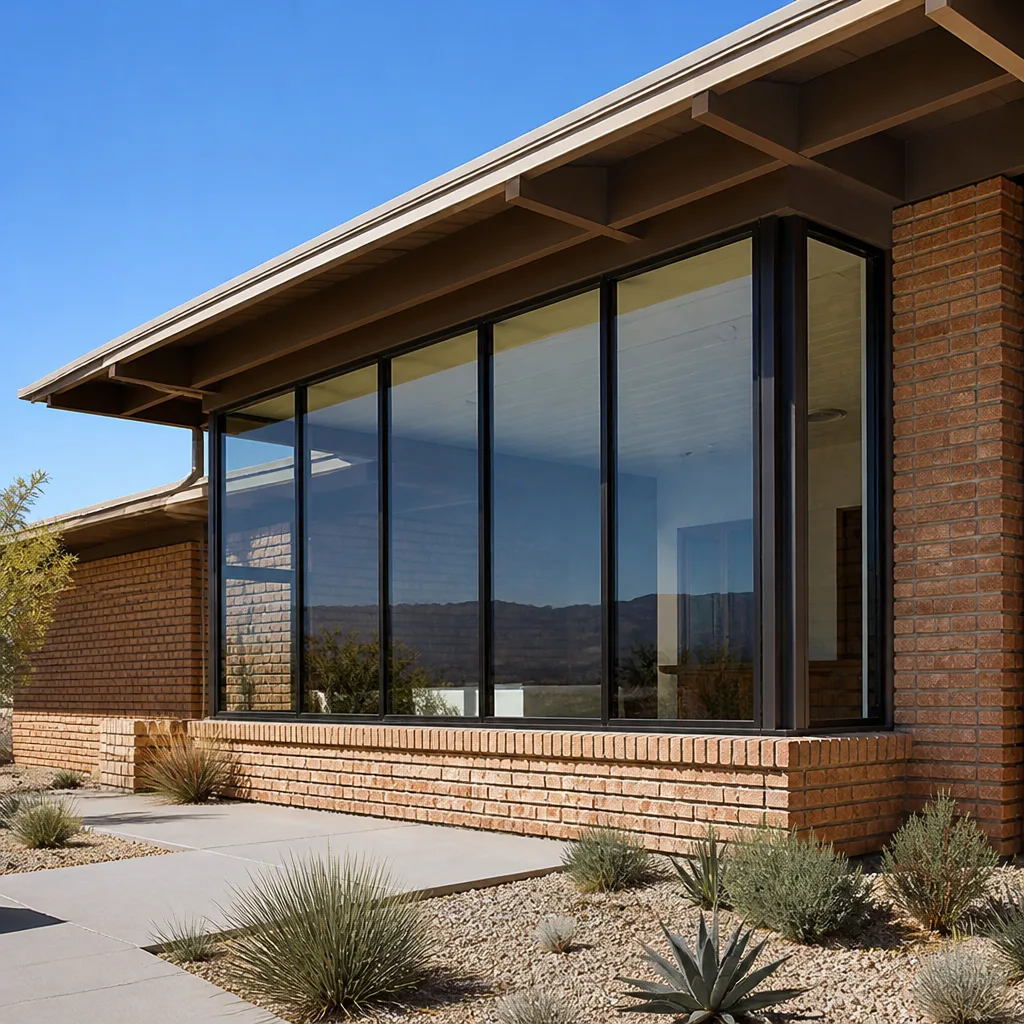
Most interior door work is fine to do yourself. Exterior work that touches the rough opening, a fire rating, a security rating, or an impact rating needs a licensed contractor and documented proof of installation. In Mesquite, the combination of 110-degree summers and monsoon rain makes the install detail – flashing, sill pan, shimming for thermal movement – more consequential than the door itself. If you’re replacing an exterior door, treat the assembly label as the first thing you check and the documentation package as the second. That’s the whole game. If you’d rather have the paper trail taken care of end to end, our team at Sightline’s Mesquite window installation services the same homes and the same assemblies, and we’re happy to take a look at the door at the same time. Call (888) 268-5117 for a free estimate and we’ll confirm what your opening actually requires before you buy a door.
Written by the team at Sightline Windows & Doors Mesquite.
Six Reasons Homeowners Choose Sightline Windows & Doors Mesquite
Laminated glass and reinforced frames hold up to wind-driven rain, hail and flying debris, so your openings stay sealed when the weather turns.
Low-E insulated impact glass from our manufacturer lines commonly cuts monthly cooling bills 20-30%.
Laminated impact glass shuts out up to 40% of outside noise - traffic, neighbors, weather.
Monitoring services run $30-90 a month. Laminated impact glass resists forced entry around the clock, with no subscription.
Tighter seals and insulated glass even out hot and cold rooms and stop the drafts at the frame.
A full impact package upgrades curb appeal, buyer confidence and appraised value in one project.
Other Sightline Windows & Doors Mesquite Services