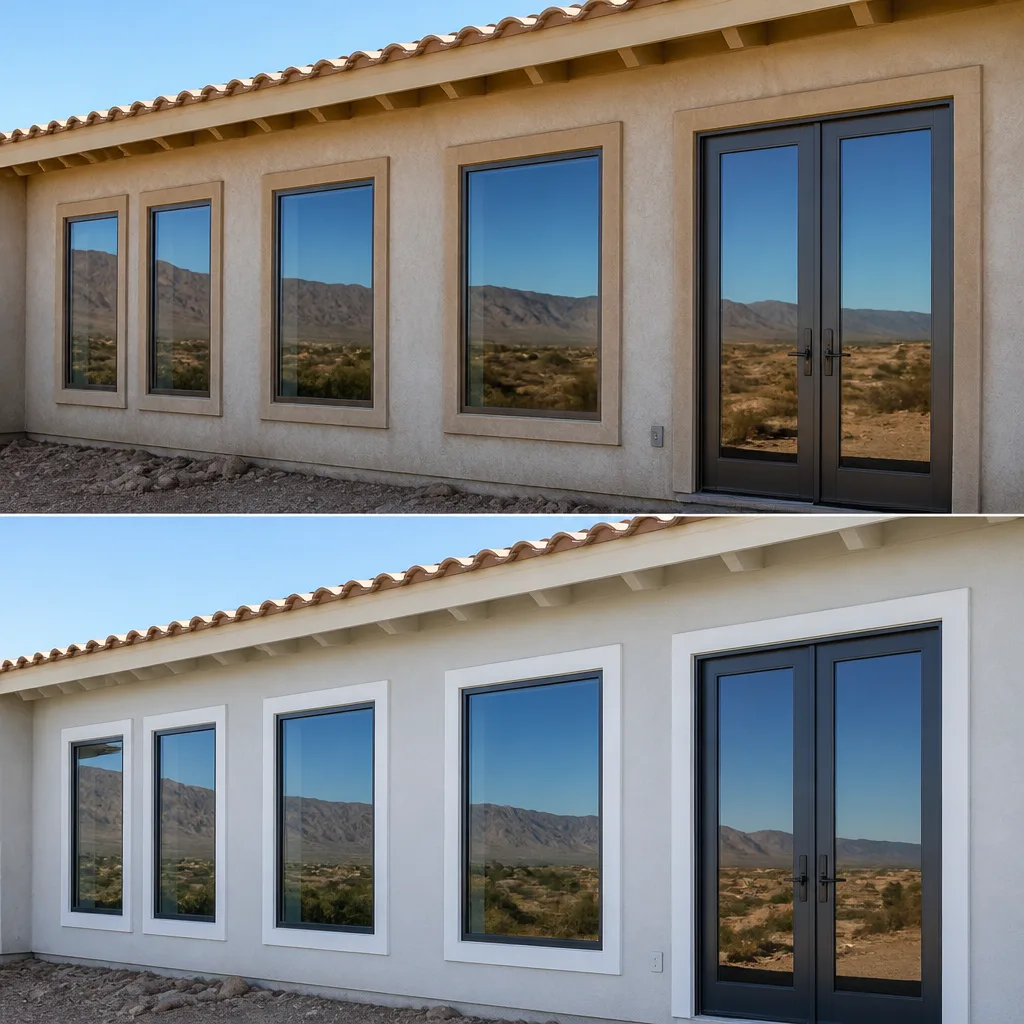
Last updated November 18, 2026
New windows and doors improve comfort, cut energy bills and add long-term value to your home. Sightline Windows & Doors Mesquite pairs proven product lines with a local vetted installing partner for lasting performance - and a price put in writing.
Choose your installer
The unit is half the job - the install is the other half. Background-checked local installers measure, set, seal and insulate every opening, and they know the lines we quote inside and out.
Select the right products
Compare styles, materials and glass packages side by side until the fit is right for your rooms, your budget and your goals. The product-line comparison below is the place to start.
Prepare your home for install
Before install day we walk you through a short checklist - furniture pulled back, treatments down, a clear path to each opening - so install day is watch-it-happen, not scramble.
Compare the Lines We Quote
Every project is priced on the same lines, side by side - the price indicators below are relative, and your consultant shows exact numbers on your actual openings.
PGTThe line homeowners arrive naming - the most impact certifications in the industry$$$
- More impact certifications than any other line we quote
- WinGuard, EnergyVue and ClassicVue Max systems built for every wind zone
- 99% on-time delivery keeps your install date on the calendar
CGIThe heavyweight impact line$$$$$
- Large-missile impact ratings for the strictest wind zones
- Architectural-grade aluminum with commercial-depth frames
- The line we quote when protection is the whole point
CWSThe value pick$$
- Vinyl systems built to strict wind codes
- Strong energy packages at the friendliest price point
- The smart start for whole-home replacements on a budget
ESWSlim lines, big glass$$$$
- Narrow-sightline aluminum for modern elevations
- Oversized openings and floor-to-ceiling glass
- Impact-rated without the bunker look
ECOThe aluminum impact workhorse$$$
- Factory-built aluminum impact systems
- A strong price-to-protection ratio for coastal homes
- Proven lines with short lead times
DIY vs Professional Energy-Efficient Windows: What’s Safe to Do Yourself
Installing an ENERGY STAR certified window yourself in Nevada can quietly cancel the reason you bought it. NV Energy’s residential rebate programs require that qualifying measures be installed by a licensed contractor before the incentive applies, which means a self-installed unit can be perfectly good glass and still be ineligible for the money that made the upgrade pencil out. That gap between “the window works” and “the window qualifies” is where most DIY guides go silent. This guide covers what Nevada’s permit and certification chain actually requires, which tasks you can legally and safely handle yourself, and how to read a written quote closely enough to tell whether the paperwork matches the install. We write it from Mesquite, where the desert swings between summer highs above 110°F and winter nights near freezing, and where that temperature spread is exactly what exposes a bad seal.
Quick Answer
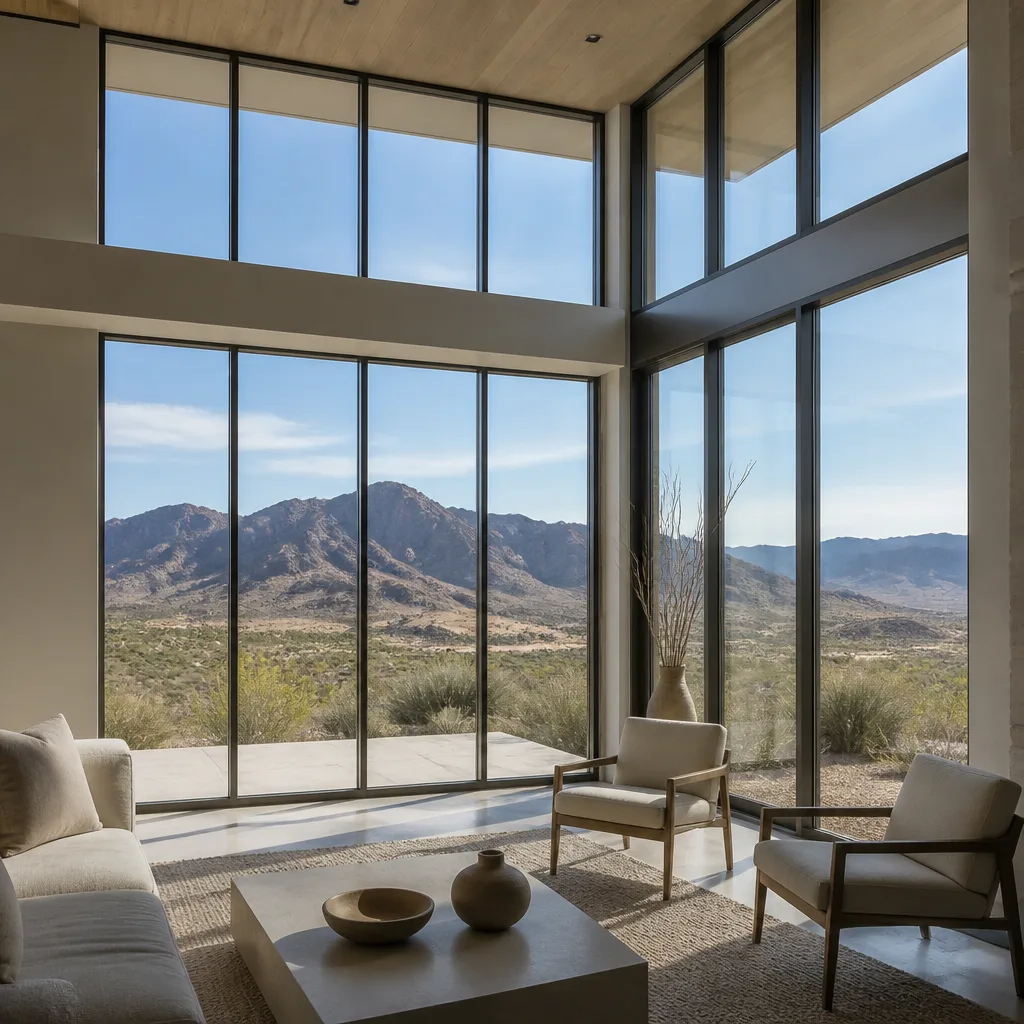
You can safely self-perform interior trim work, screen replacement, hardware adjustments, and finish painting around an already-installed window. You should not self-install an energy-efficient replacement window in Nevada if you want the installation to carry a manufacturer warranty, qualify for NV Energy or federal incentives, or pass a permitted inspection – window replacement is generally permitted work in Nevada and must be done by a licensed contractor. The labor you “save” by installing it yourself typically gets spent again on remediation, re-inspection, or a lost rebate.
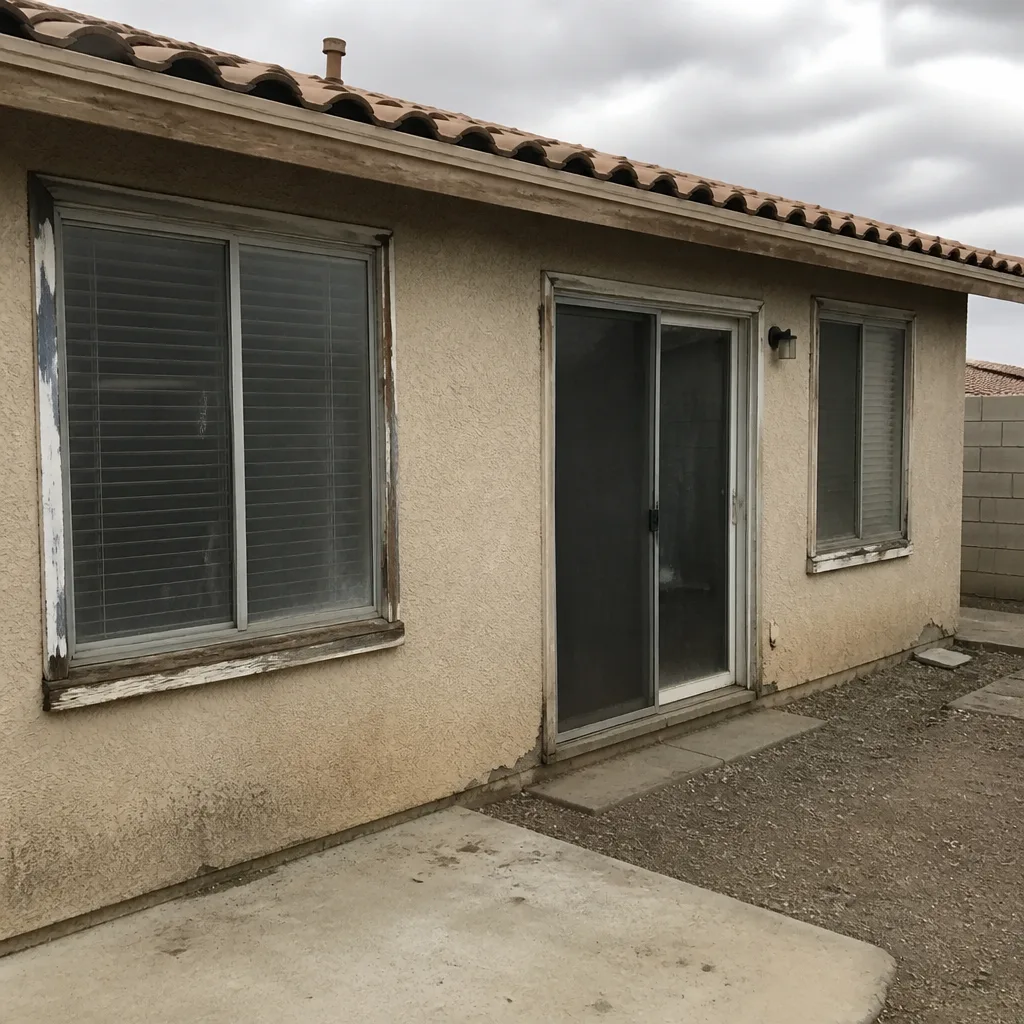 Before
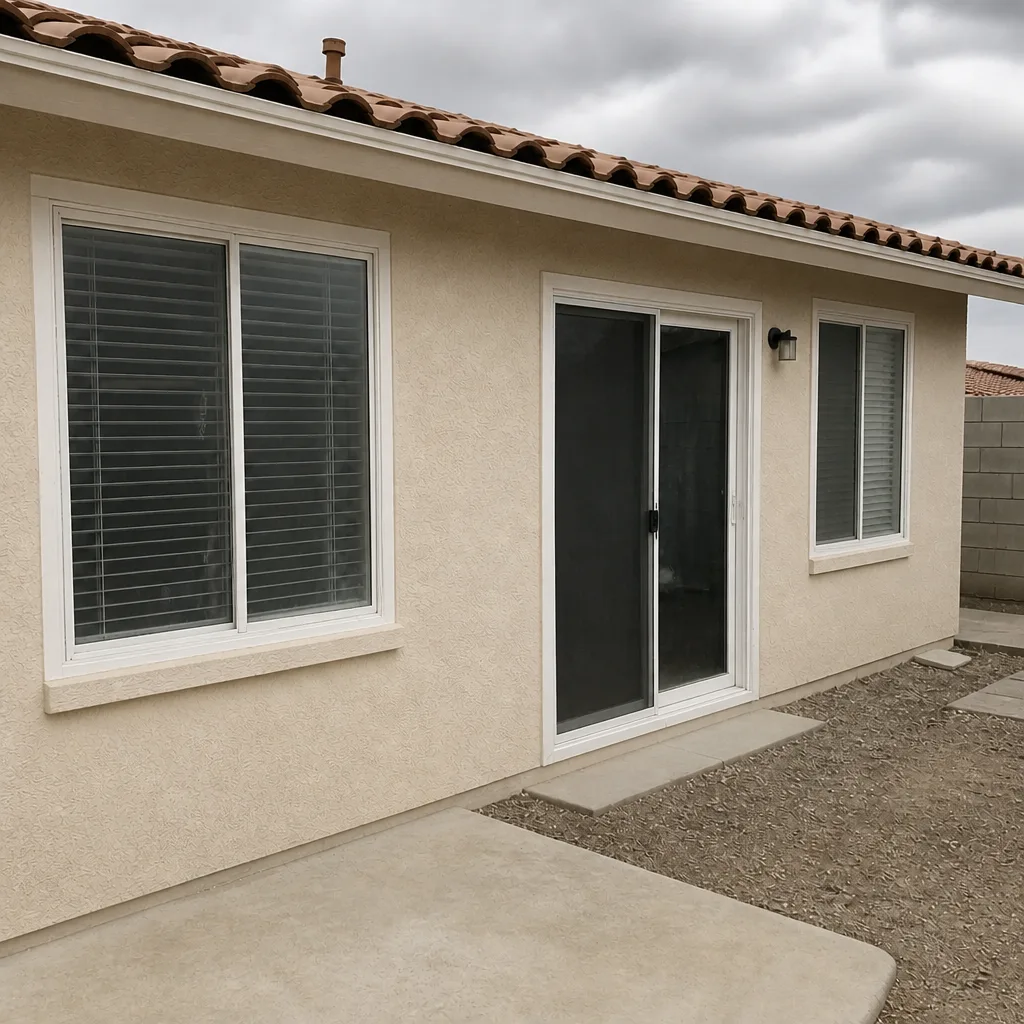 After
Table of Contents
- Which Rebates and Programs Require a Licensed Installer
- What Nevada Contractor Licensing Covers for Window Replacement
- Tasks Homeowners Can Legally and Safely Do Themselves
- Why Bad Air Sealing Can Make a New Window Worse Than the Old One
- How to Verify Your Quote Includes Permit Filing
- What a Written Price Document Should State Explicitly
- Mesquite Climate and Code: What Changes Locally
- What Energy-Efficient Window Work Costs in Mesquite
Which Rebates and Programs Require a Licensed Installer
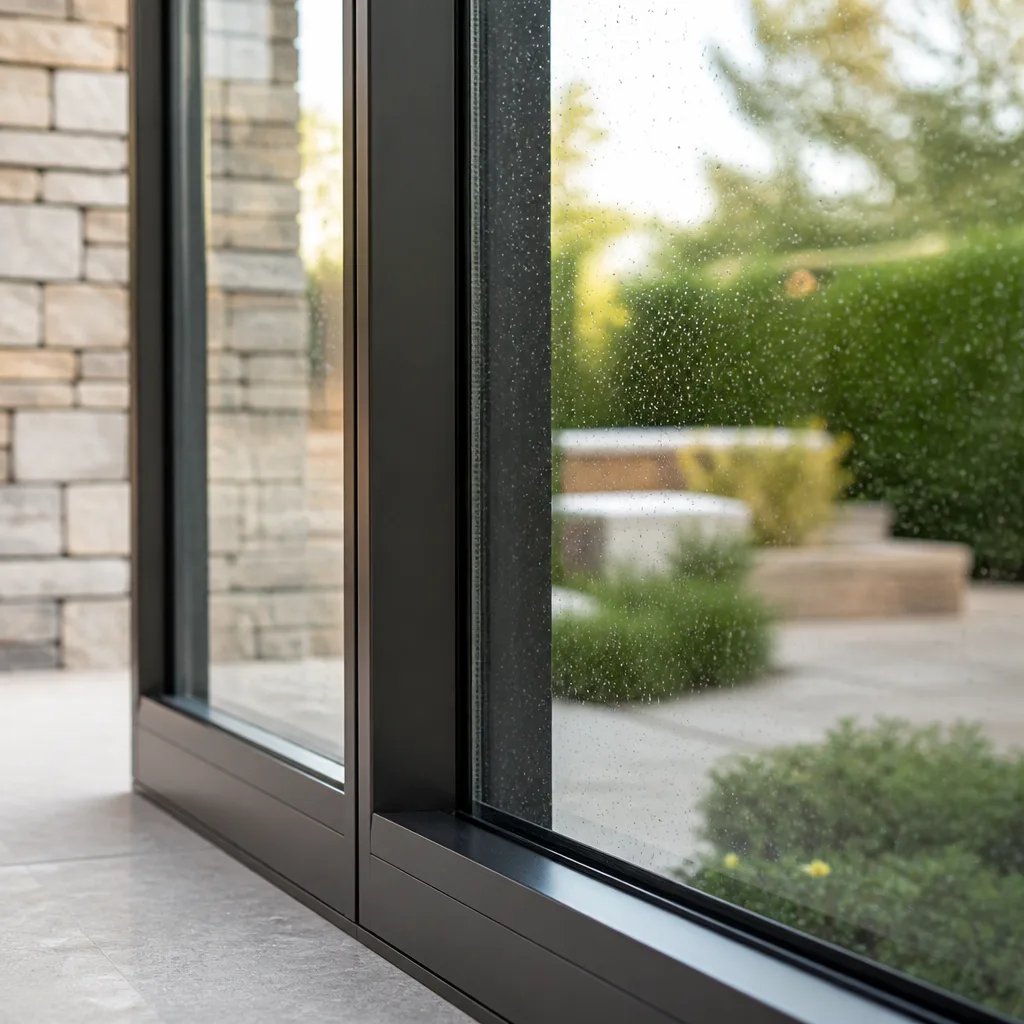
The single biggest reason DIY energy-efficient window installs backfire in Nevada is the rebate chain. A window earns its “energy-efficient” label through the NFRC rating system – the National Fenestration Rating Council tests and certifies U-factor (how fast heat moves through the glass) and SHGC (solar heat gain coefficient, i.e. how much sun heat the glass lets in). That certification belongs to the product. The rebate eligibility often belongs to the installer.
Here’s how the programs break down:
- NV Energy residential rebates – NV Energy’s residential incentive programs for qualifying efficiency measures generally require installation by a licensed contractor, with documentation submitted by that contractor. A homeowner-installed unit typically does not qualify, even if the glass is identical.
- Federal ENERGY STAR tax credits – The federal energy efficient home improvement credit (Section 25C) requires that qualifying windows meet specific U-factor and SHGC thresholds and be installed on an existing home. The credit goes to the homeowner, but the product must carry a valid ENERGY STAR certification and a manufacturer certification statement – which a self-install can technically preserve, yet many manufacturers void the product warranty when installation isn’t done by a qualified professional, leaving you with a credit and no recourse.
- Manufacturer warranties – Most window manufacturers, including lines we install like PGT and ViewLux, tie their product and glass warranties to professional installation. Read the warranty document before you decide. A voided warranty on a $700 window erases any labor savings in one failed seal.
In our experience across Mesquite, the homeowners who ask about rebates first are the ones who end up happiest, because the numbers line up in writing before anyone touches a frame. Call (888) 268-5117 for a free estimate and we’ll walk through which incentives apply to your specific openings.
What Nevada Contractor Licensing Covers for Window Replacement
Nevada regulates window replacement as a construction activity, and the state’s licensing framework (administered by the Nevada State Contractors Board) requires a licensed contractor for work above a modest dollar threshold – and window replacement generally lands above it. Replacing a window changes the building envelope: it involves framing, flashing, and water management, all of which fall under a contractor’s license classification.
The penalty structure for unlicensed work is not gentle:
- Stop-work and permits. Performing permitted work without a license can trigger a stop-work order, and the local building department can require the work be removed and redone by a licensed contractor.
- Civil penalties. The Nevada State Contractors Board can impose administrative fines for unlicensed contracting, and the amounts scale with the violation.
- No recourse if it fails. An unlicensed installer typically carries no bond and no contractor insurance you can claim against. If a leak develops behind a self-installed frame, you own the repair.
- Resale disclosure. Unpermitted work on a home can surface in a title or inspection report at sale, and it can stall a buyer’s financing.
For Mesquite homeowners in neighborhoods like Sun City and the communities off Falcon Ridge Parkway, where many homes were built in the 2000s and are now due for their first window replacement, this matters. A permit-less replacement in a tract home is easy to spot during an inspection because the surrounding stucco and trim tell the story. Our teams have up to 14 years of experience reading exactly that kind of evidence, and we’d rather show you the permitted path than fix a shortcut later.
Tasks Homeowners Can Legally and Safely Do Themselves
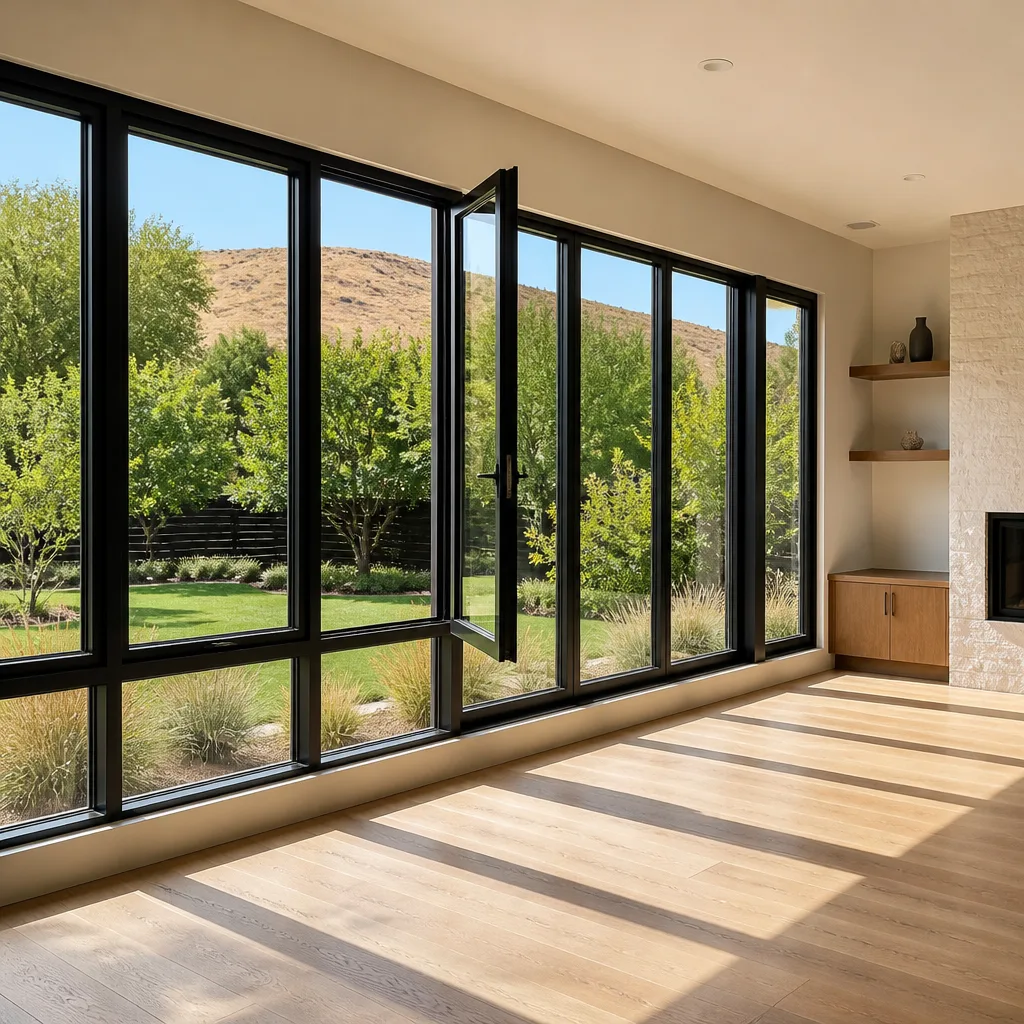
This isn’t a “don’t touch anything” guide. A meaningful amount of finish work is genuinely yours to do, and doing it well saves real money without touching the certification chain. Here’s the honest split:
Safe to do yourself:
- Interior trim and casing, including caulking and painting after the window is set and flashed.
- Screen replacement and re-screening on existing frames.
- Hardware adjustments – tightening hinges, lubricating tracks, adjusting a sash that’s rubbing, replacing a worn latch or handle.
- Interior paint touch-up around the new unit and cleaning glass and frames.
- Removing and reinstalling interior blinds, curtains, and valances.
Not safe or not legal to self-perform:
- Removing and setting the window frame itself, including flashing and weather barrier integration.
- Any work on the exterior envelope – stucco cutting, exterior trim, sill pan installation.
- Work on impact-rated units, where the anchoring and glazing system is part of a rated assembly.
- Anything that requires a permit, which window replacement generally does.
One caution worth stating plainly: window openings on upper floors involve height and fall risk, and tempered-glass code requirements (for windows near doors, in bathrooms, and in large panes) are easy to get wrong without knowing the rules. Those aren’t judgment calls for a homeowner on a ladder. Steep-roof and second-story work is work for trained professionals.
Why Bad Air Sealing Can Make a New Window Worse Than the Old One
This is the counterintuitive part most guides skip entirely: a high-performance window installed with poor air sealing will perform worse than the leaky old window it replaced, because the new window’s tighter glass raises the stakes on the gaps around it. Energy-efficient windows work by controlling three things – conduction (U-factor), solar gain (SHGC), and air leakage (measured as AL, air leakage, in the NFRC rating). A great U-factor with a bad perimeter seal still bleeds conditioned air through the rough opening.
The specific failure chain looks like this:
- The rough opening is measured and framed; if the sill isn’t level and shimmed correctly, the sash won’t seal square.
- Flashing is installed in the wrong order – a common DIY mistake – and water gets behind the frame instead of over it.
- Spray foam or backer rod is applied unevenly, leaving thermal bridges where the Mesquite heat drives straight through the frame.
- The air barrier around the opening is never tied into the building’s weather-resistive barrier, so the assembly leaks.
In Mesquite specifically, the temperature spread is unforgiving. Summer afternoons push past 110°F while winter nights dip toward freezing, and that daily expansion and contraction works on every seam. A seal that would hold in a mild climate can fail within a couple of seasons here. In our experience, the leak shows up first as condensation on the interior glass edge in January, then as a draft along the sill by the following summer. That sequence is the tell.
If you want a professional read on whether your current windows are leaking at the perimeter rather than the glass, the window replacement in Mesquite page walks through what we check during a measured survey.
How to Verify Your Quote Includes Permit Filing
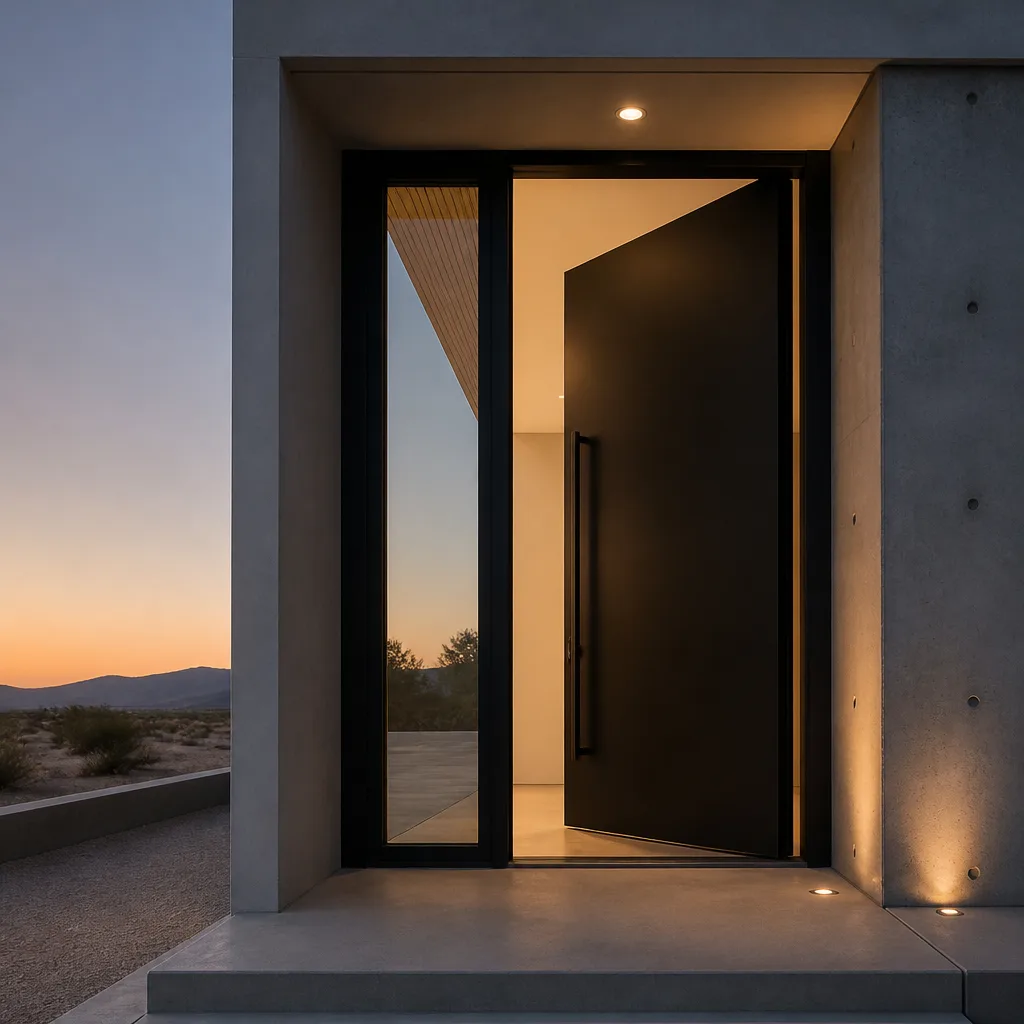
A quote that doesn’t state who pulls the permit is a quote that leaves the risk with you. In Nevada, permitted work requires the licensed contractor to file, and the permit and inspection responsibility should be explicit in writing before any work starts. Here’s how to check a quote for it:
- Look for a permit line item. A written estimate should name the permit and state that the contractor files it. If it’s absent, ask directly.
- Confirm the license number appears on the quote. It should match the contractor’s registration with the Nevada State Contractors Board, and you should be able to look it up.
- Check the inspection language. The quote should state that the work will be inspected and passed, not simply that a permit will be “handled.”
- Read what’s excluded. A good estimate says what it does not cover – stucco repair, drywall patching, painting – so you’re not surprised.
- Match the scope to the survey. The measured survey you receive should be the same document the price is built from. If the quote can change after work starts, the permit is the least of your worries.
Sightline Windows & Doors Mesquite builds every job the other way around. Under Haven Clause 1, the price is written before any work starts, and the measured survey and the written quote are the same document. Haven Clause 4 (Evidence on every job) means we leave a documented photo record when the work is done. That’s the difference between a quote you trust and a quote you hope holds.
What a Written Price Document Should State Explicitly
If you take one practical rule from this guide, make it this one: the written price document should be specific enough that a stranger could read it and know exactly what will happen at your house. Here’s what a complete window quote states, line by line.
- The product, named by manufacturer and model. Not “energy-efficient window” – the line, the model, the U-factor and SHGC values, and the glass package. We specify from eight manufacturer lines including PGT and ViewLux by performance tier, not by margin.
- Quantity and dimensions of every opening, matched to the measured survey.
- Installation scope: removal and disposal of the old units, flashing, sealing, exterior trim, interior trim responsibility, and whether stucco repair is included.
- Permit filing and inspection responsibility. Who pulls it, who pays for it, who passes the inspection.
- Warranty terms, in writing. Product warranty, labor warranty, and the workmanship guarantee. Under the Haven Standard, our 365-Day Done Right Promise – if it’s not done right, we make it right – is written in, not offered as a courtesy.
- The scheduled install window and the crew identification. Haven Clause 3 (Verified crews) means the technician at your door is background-checked, uniformed, and identified by license number before arrival.
- Payment terms and what triggers the final invoice.
If your quote is missing any of these, that’s the conversation to have before you sign. We offer a free second opinion on any written estimate – bring a competitor’s quote and we’ll review it at no charge, with the same measured survey discipline we use on our own jobs.
Mesquite Climate and Code: What Changes Locally
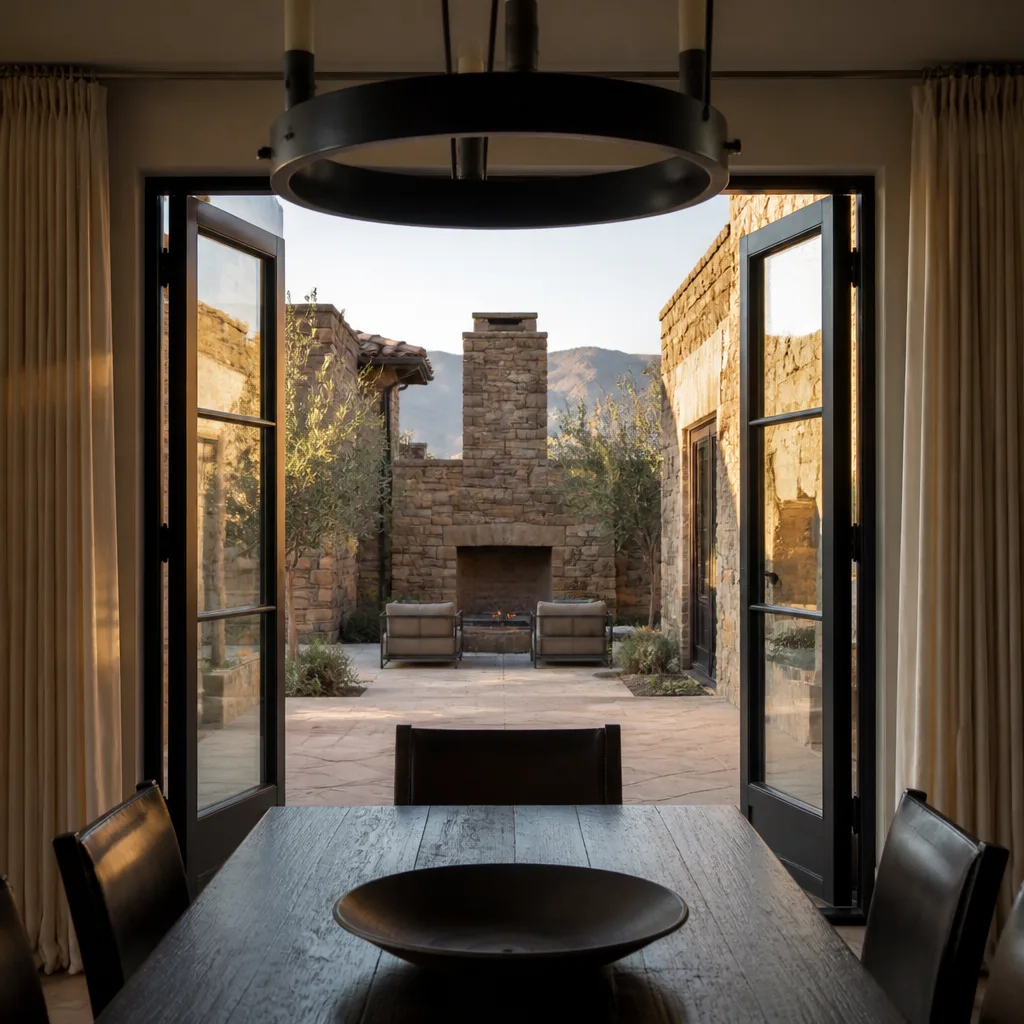
Mesquite sits in the Virgin River valley, where the desert does most of the work. Summer highs regularly clear 110°F, winter nights dip near freezing, and the sun angle in June hammers west-facing glass from mid-afternoon until sunset. That has direct consequences for window specification that a generic national guide won’t tell you.
For west and south-facing openings, SHGC matters more than U-factor in Mesquite’s cooling-dominated climate. A low-SHGC glass package in a west-facing window pays for itself faster than a lower U-factor on the same opening. For east and north openings, U-factor carries more weight in winter. Impact-rated products matter where wind-driven debris is a real risk during monsoon season. Our technicians have up to 14 years of experience matching the glass package to the opening’s orientation, and the measured survey captures that – orientation, overhang, sun exposure, and sightline – before any product is named.
Locally, the housing stock runs from newer builds in the communities around Wolf Creek to homes in the established pockets near the Virgin River, and the window condition varies widely by build year. The window installation in Mesquite page covers the install process itself; for anyone replacing rather than installing new, the replacement path is the right starting point. And if you’re also evaluating a patio or entry door, the door installation in Mesquite page breaks down the same permit-and-certification logic for those openings. You can see all our service lines from the Sightline Windows & Doors Mesquite home page.
What Energy-Efficient Window Work Costs in Mesquite
Cost ranges below reflect what we see in the Mesquite market. These are ranges, not promises – the exact price depends on the opening, the glass package, and the scope. Every price we quote is written before work starts.
- Standard energy-efficient replacement window (single unit, installed): roughly $550 to $1,200 per opening, depending on size and glass package.
- Impact-rated replacement window (installed): roughly $900 to $1,800 per opening.
- Interior trim and finish work (per opening): roughly $60 to $150, or do it yourself and save this line.
- Permit filing: typically a modest line item, and it should appear as one in your written quote.
- Screen replacement or hardware adjustment (existing units): roughly $40 to $120, and this is work you can also do yourself.
The money question is not just “what does the window cost” – it’s what portion of the cost comes back through NV Energy incentives, the federal tax credit, and the avoided cost of eventually fixing a bad self-install. In our experience, that third figure is the one homeowners underestimate. Call (888) 268-5117 for an exact quote on your openings; estimates are free, and we’ll put the price in writing before a tool is lifted.
Common Mistakes to Avoid
- Assuming the certification you bought transfers to your install. NV Energy rebate programs generally require licensed-contractor installation. The window can be certified and your install can still be ineligible – check the program rules before you buy.
- Self-installing on a permitted project. Window replacement is generally permitted work in Nevada, and doing it yourself can mean a stop-work order and a redo at your own cost.
- Skipping the flashing order. In Mesquite, where monsoon rain arrives fast, flashing installed in the wrong order channels water behind the frame instead of over it. That’s a leak that shows up a year later, not the same week.
- Ignoring SHGC on west-facing glass. Buying the lowest U-factor on the shelf and putting it on a west wall means paying for solar performance you didn’t get. Match the glass to the orientation.
- Taking a quote that doesn’t name the permit. If the written price doesn’t say who files the permit and who passes the inspection, you’re holding an incomplete document.
- Assuming a contractor will pull a permit because you asked verbally. Verbal is not in the document. In our experience, the permit conversation should live inside the quote, not in a phone call.
- Buying the window before you have a measured survey. A window bought off a tape measure is a window that may not fit the rough opening once the old unit comes out. The survey comes first, always.
When to Call a Professional
Call a licensed professional when the work involves removing or setting the window frame, integrating flashing and weather barrier, cutting stucco, working above the first floor, handling impact-rated units, or anything that requires a permit – which window replacement generally does. Call us when you’re buying a window you expect to qualify for a rebate, because the rebate eligibility runs through the installer. Call us when you’re replacing windows in a home built before 2010 and you want the measured survey and written scope before you commit to a number. And call us when your current windows condensate on the interior glass edge or draft at the sill, since those are the early signs of a perimeter seal failing rather than a glass problem. Sightline Windows & Doors Mesquite offers free estimates in Mesquite – call (888) 268-5117.
Frequently Asked Questions
Generally no, if the work requires a permit – which window replacement typically does. Nevada’s contractor licensing framework requires licensed work above a modest threshold, and unpermitted or unlicensed work on a permitted project can trigger stop-work orders and administrative fines. The safe path is to have a licensed contractor handle the frame and envelope work and do the finish work yourself.
Usually not. NV Energy’s residential efficiency programs generally require installation by a licensed contractor for the rebate to apply, with documentation submitted by that contractor. The window’s NFRC certification and the rebate eligibility are two different things – check the current program terms for your measure before you buy.
Standard energy-efficient replacement windows typically run roughly $550 to $1,200 per opening installed, and impact-rated units roughly $900 to $1,800, depending on size and glass package. These are ranges; the exact number depends on your openings and scope. Call (888) 268-5117 for an exact quote – estimates are free.
Yes – if the air sealing and flashing around the opening are done poorly, a high-performance unit can leak more than the old window it replaced. The new glass raises the stakes on the perimeter seal. In Mesquite’s temperature spread, that failure typically shows up as winter condensation, then a summer draft.
Interior trim, caulking and painting, screen replacement, hardware adjustments, and cleaning are all reasonable DIY tasks. The frame, flashing, exterior envelope, and anything requiring a permit should go to a licensed contractor. Second-story and steep-height work also belongs with trained professionals.
Read the quote for an explicit permit line item that names the permit and states the contractor files it, plus inspection language confirming the work will be passed. The license number should appear on the document and be verifiable with the Nevada State Contractors Board. If any of that is missing, ask before you sign.
The Bottom Line
The safe-to-DIY list in energy-efficient windows is shorter than most guides suggest: trim, screens, hardware, paint. The frame, flashing, envelope, and permit belong to a licensed contractor, and in Nevada the rebate programs generally require licensed installation for eligibility. That means a self-install can save labor on paper and cost more in remediation, lost rebate, or a voided warranty. Buy the window off a measured survey, get the price in writing with the permit named, and match the glass package to the opening’s orientation. If you want the numbers in writing before anyone starts, call Sightline Windows & Doors Mesquite at (888) 268-5117 for a free estimate.
Written by the team at Sightline Windows & Doors Mesquite.
Six Reasons Homeowners Choose Sightline Windows & Doors Mesquite
Laminated glass and reinforced frames hold up to wind-driven rain, hail and flying debris, so your openings stay sealed when the weather turns.
Low-E insulated impact glass from our manufacturer lines commonly cuts monthly cooling bills 20-30%.
Laminated impact glass shuts out up to 40% of outside noise - traffic, neighbors, weather.
Monitoring services run $30-90 a month. Laminated impact glass resists forced entry around the clock, with no subscription.
Tighter seals and insulated glass even out hot and cold rooms and stop the drafts at the frame.
A full impact package upgrades curb appeal, buyer confidence and appraised value in one project.
Other Sightline Windows & Doors Mesquite Services
What Neighbors Say About Sightline Windows & Doors Mesquite