Last updated November 18, 2026
New windows and doors improve comfort, cut energy bills and add long-term value to your home. Sightline Windows & Doors Mesquite pairs proven product lines with a local vetted installing partner for lasting performance - and a price put in writing.
Choose your installer
The unit is half the job - the install is the other half. Background-checked local installers measure, set, seal and insulate every opening, and they know the lines we quote inside and out.
Select the right products
Compare styles, materials and glass packages side by side until the fit is right for your rooms, your budget and your goals. The product-line comparison below is the place to start.
Prepare your home for install
Before install day we walk you through a short checklist - furniture pulled back, treatments down, a clear path to each opening - so install day is watch-it-happen, not scramble.
Compare the Lines We Quote
Every project is priced on the same lines, side by side - the price indicators below are relative, and your consultant shows exact numbers on your actual openings.
PGTThe line homeowners arrive naming - the most impact certifications in the industry$$$
- More impact certifications than any other line we quote
- WinGuard, EnergyVue and ClassicVue Max systems built for every wind zone
- 99% on-time delivery keeps your install date on the calendar
CGIThe heavyweight impact line$$$$$
- Large-missile impact ratings for the strictest wind zones
- Architectural-grade aluminum with commercial-depth frames
- The line we quote when protection is the whole point
CWSThe value pick$$
- Vinyl systems built to strict wind codes
- Strong energy packages at the friendliest price point
- The smart start for whole-home replacements on a budget
ESWSlim lines, big glass$$$$
- Narrow-sightline aluminum for modern elevations
- Oversized openings and floor-to-ceiling glass
- Impact-rated without the bunker look
ECOThe aluminum impact workhorse$$$
- Factory-built aluminum impact systems
- A strong price-to-protection ratio for coastal homes
- Proven lines with short lead times
The Complete Window Replacement Guide for Mesquite Homeowners
A dual-pane window seal tested to last 10 years in Minneapolis often fails in 4 to 5 years in Mesquite. The reason isn’t the glass. It’s the thermal cycle. Window testing standards don’t replicate what happens when a unit sits in 110°F ambient heat all afternoon and then drops 40°F overnight – a 70-degree swing that a Nevada summer delivers over and over. That repeated flex works the edge seal until it gives, and once the seal goes, the argon escapes and the pane fogs from the inside. This guide explains why windows fail faster here, how to read a manufacturer’s tested temperature range before you sign, what SHGC target actually fits a west-facing wall in Mesquite, how NV Energy rebates connect to specific glass packages, and what a complete written survey should contain. It’s calibrated to the conditions at 36.8°N, 114.1°W.
Quick Answer
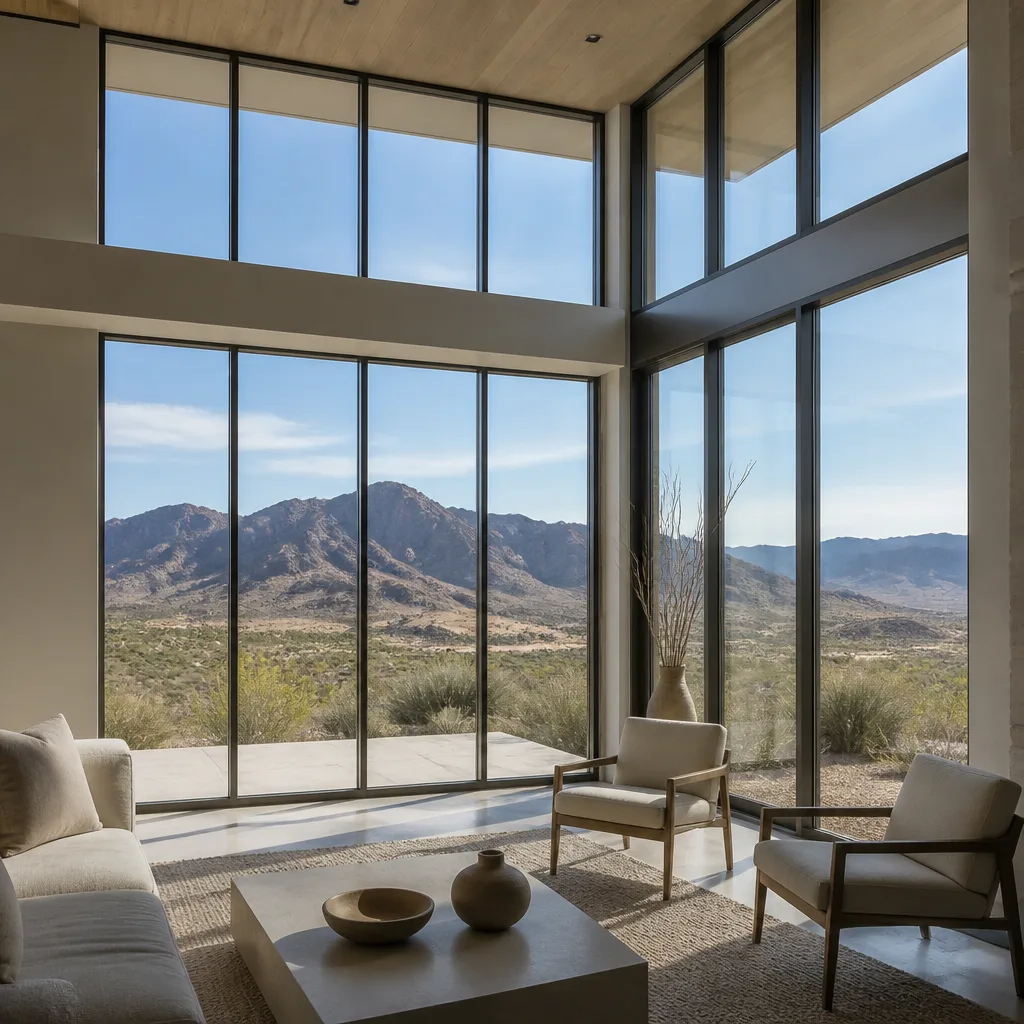
Window replacement in Mesquite, NV typically runs $450 to $1,100 per opening for standard vinyl dual-pane units, and $900 to $1,800 per opening for impact-rated or large custom sizes, installed. The single biggest factor in how long those windows last here is whether the unit’s frame and seal are rated for Mesquite’s sustained heat and wide daily temperature swing – not the brand name on the sash.
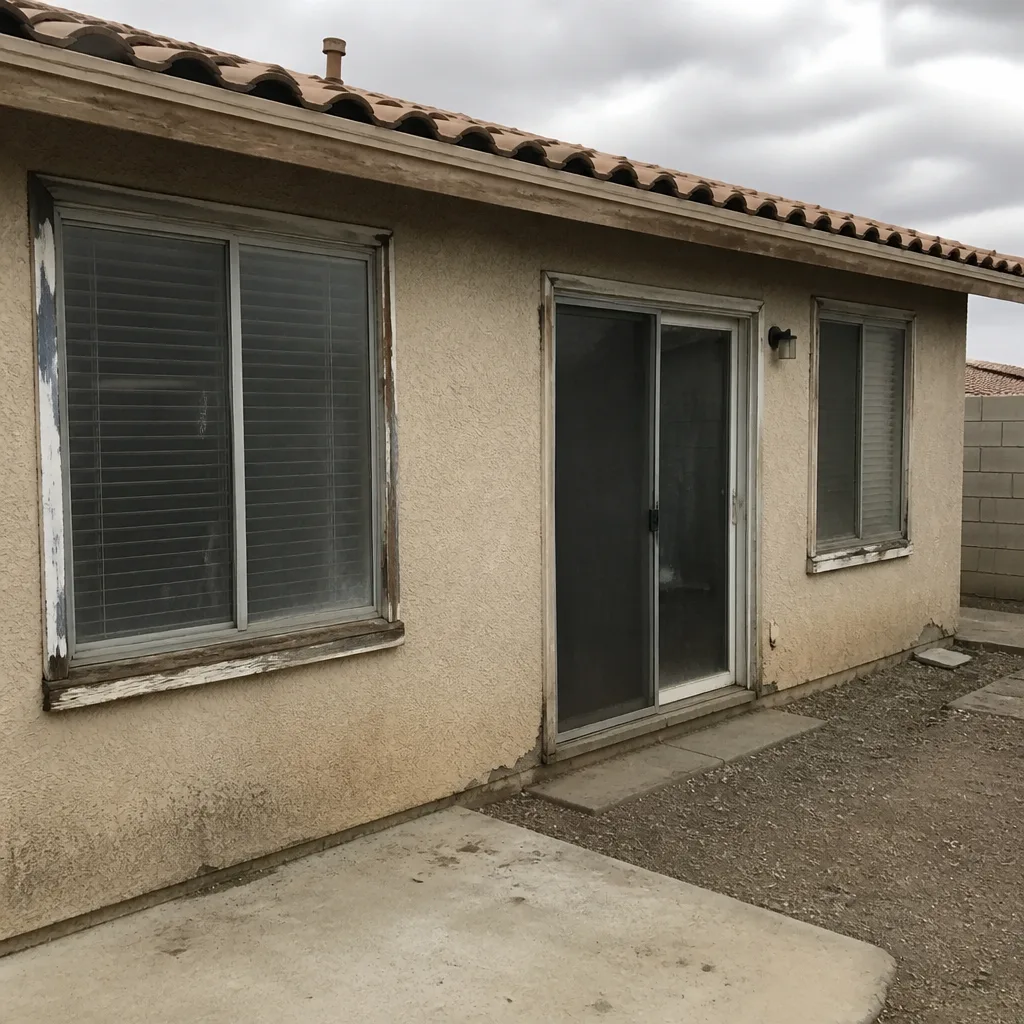 Before
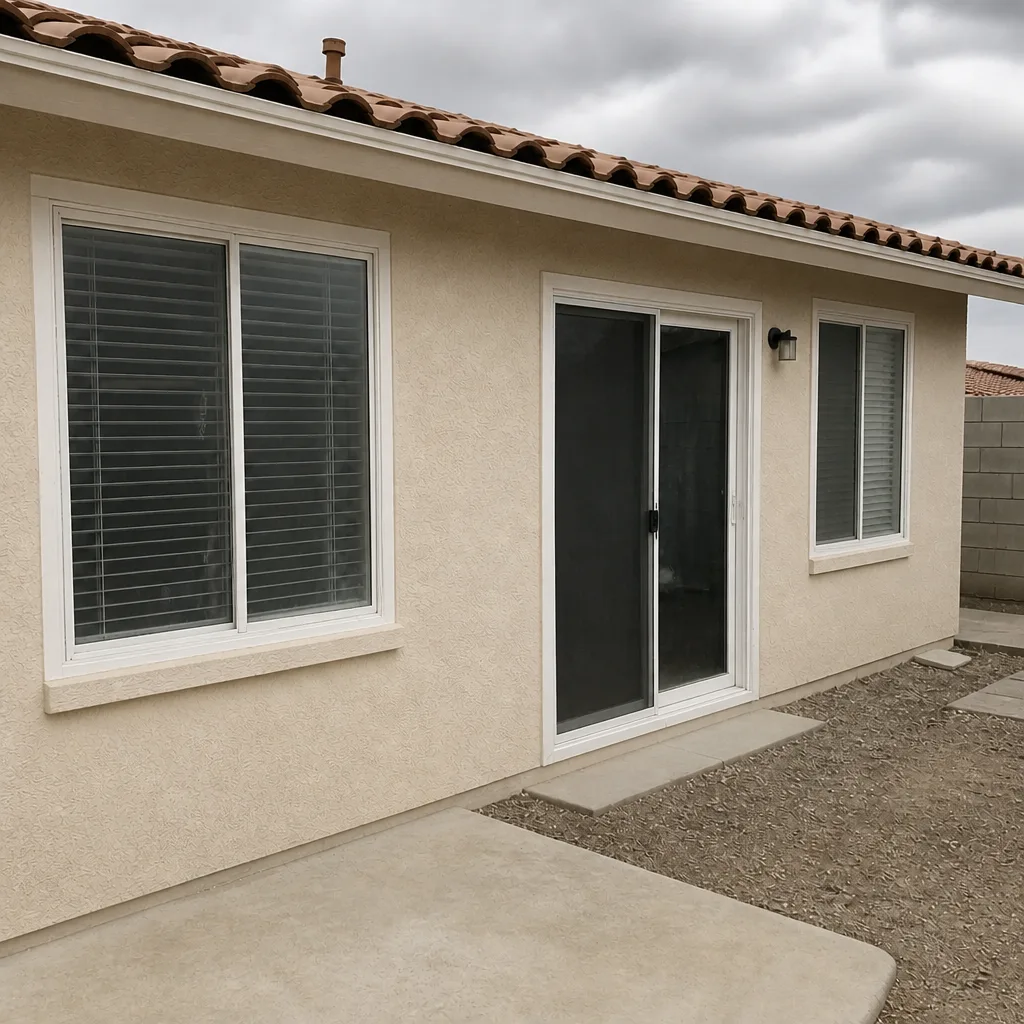 After
Table of Contents
- Why Windows Fail Faster in Mesquite Than National Ratings Predict
- Frame Material Performance at 110°F: Reading the Tested Temperature Range
- SHGC Targets for West- and South-Facing Windows in Mesquite
- NV Energy Rebates and the Glass Specs That Qualify
- The Rough Opening Checklist for Mesquite’s 1990s-2000s Tract Homes
- What a Complete Written Survey Looks Like
- The Replacement Process, Step by Step
- What Window Replacement Costs in Mesquite
Why Windows Fail Faster in Mesquite Than National Ratings Predict
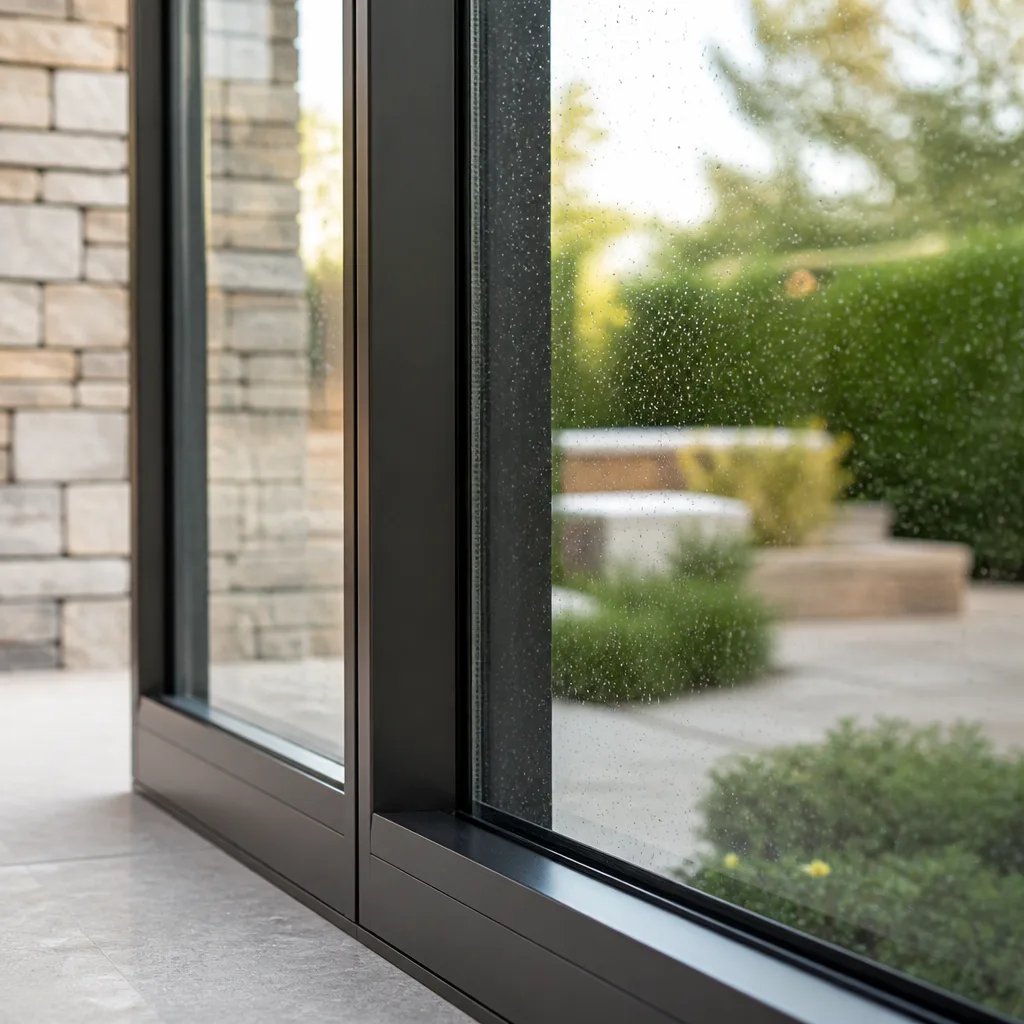
Seal failure is the number one reason we get called out to a Mesquite home. The insulating glass unit – the sealed sandwich of two panes with argon or krypton gas between them – is the part that fails first, and it fails on a schedule set by local weather, not by the lab that certified it.
Here’s the mechanical problem. Every material in a window expands when it heats and contracts when it cools. The spacer bar between the panes, the sealant bead at the edge, the frame itself – all of them move at different rates. In a mild climate that movement is small and the seal absorbs it. In Mesquite, a window on a south or west wall can hit 140°F surface temperature in July while the interior side stays at 75°F. The unit is being pulled in two directions at once, hundreds of times a season. The sealant fatigues, micro-cracks form at the edge, and moisture gets in.
Three failure modes we see repeatedly in Mesquite:
- Seal failure and fogging. Moisture between the panes, a hazy or milky look, or visible condensation that won’t wipe away. This is permanent – the unit has to be replaced, not cleaned.
- UV-driven frame oxidation. Vinyl and painted aluminum both chalk and fade under Mesquite’s UV load. Cheap vinyl goes yellow and brittle; the plasticizer migrates out and the frame loses impact strength.
- Thermal expansion gaps. Frames installed with standard national margins can pull away from the rough opening as they cycle, opening gaps at the perimeter that let in dust and hot air. Wind-driven dust here finds every gap.
None of this means you need to replace windows every five years. It means the spec sheet matters more here than the marketing. A unit rated for the temperature range Mesquite actually delivers will last. One rated for a national average won’t.
Frame Material Performance at 110°F: Reading the Tested Temperature Range
Frame material is where most homeowners get sold on looks and should be buying on physics. Every material has a coefficient of thermal expansion – how much it grows per degree of temperature change. In a climate that swings 70 degrees in a day, that number decides whether your windows stay sealed.
What to compare:
- Vinyl (uPVC). The most common choice in Mesquite tract homes. Good vinyl with UV stabilizers and a heat-rated formulation holds up well. Cheap vinyl has a higher expansion coefficient and gets brittle. Ask for the manufacturer’s tested temperature range in writing – a quality line will publish it, and you want a unit rated to at least 140°F surface temperature.
- Aluminum. Strong and dimensionally stable, but aluminum conducts heat, so a thermally broken frame is essential here. Without the thermal break, the frame itself becomes a heat bridge and you lose much of the glass performance you paid for.
- Fiberglass and composite. Low expansion, high heat tolerance, and they don’t chalk. Pricier, but they hold their dimensions through Mesquite’s cycle better than almost anything else.
- Wood. Beautiful, and the wrong call for a west-facing wall in Mesquite unless it’s well protected and you’re prepared to maintain it. Wood moves with humidity, and our humidity swings hard.
When you’re comparing quotes, don’t accept “high quality vinyl” as a spec. Ask for the tested temperature range, the UV stabilization method, and the expansion coefficient if the manufacturer publishes it. Lines like CGI and CWS publish performance data you can actually check. If a salesperson can’t produce the test data, that’s your answer about the product.
SHGC Targets for West- and South-Facing Windows in Mesquite
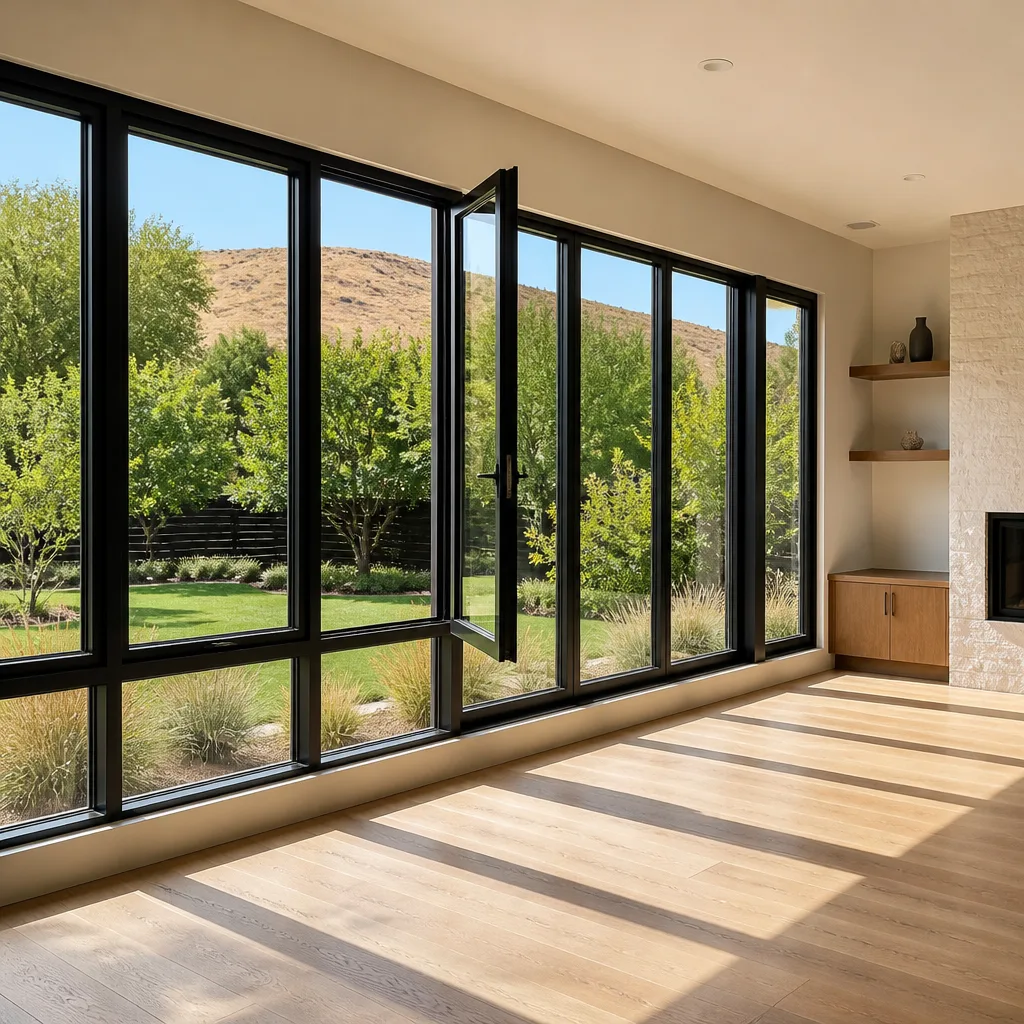
SHGC stands for Solar Heat Gain Coefficient – the fraction of solar heat that passes through the glass. A lower number means less heat comes in. In Mesquite, where cooling dominates the energy bill, SHGC is the most important single number on the glass spec, and it’s the number big-box windows most often get wrong for this climate.
Big-box stores stock for a national average. That often means an SHGC around 0.30 to 0.40 – reasonable for a mixed climate, too high for a west wall in the Mojave. Here’s what we specify in Mesquite:
- West-facing walls: SHGC of 0.23 to 0.27. These take the worst afternoon sun. Don’t compromise here.
- South-facing walls: SHGC of 0.25 to 0.30. High sun angle helps, but summer afternoons still load these walls.
- East-facing: SHGC of 0.27 to 0.32. Morning sun is gentler, so you can trade a little SHGC for visible light.
- North-facing: SHGC of 0.30 to 0.40 is fine. Little direct sun; prioritize daylight and U-factor instead.
The trade-off is visible light transmission (VLT). Very low SHGC glass can look gray or dark. The right glass package balances the two so the room still feels bright. Ask to see the full performance label – SHGC, U-factor, and VLT together – for the exact unit quoted, not a family average. If a quote lists “energy-efficient glass” with no numbers, ask for the label before you sign.
NV Energy Rebates and the Glass Specs That Qualify
NV Energy runs residential efficiency programs, and window replacement can qualify – but only when the glass package hits specific performance thresholds. The rebate isn’t automatic, and the vague “you may qualify” language in most quotes is a tell that the installer hasn’t checked.
What the rebate process actually requires:
- Verify current program terms. NV Energy updates its residential rebate amounts and qualifying specs periodically. Confirm the current per-square-foot or per-unit amount for windows directly with NV Energy before you buy – the number on a competitor’s website may be out of date.
- Match the glass spec to the program. Rebate programs typically set a maximum U-factor and SHGC. Your quoted glass package has to meet both, documented on the manufacturer’s performance label.
- Keep the paperwork. You’ll need the invoice, the product specs, and proof of installation. This is one more reason the written quote and the final invoice should match – a rebate reviewer will compare them.
- Check timing. Rebates are often capped per year or per household and can be exhausted. Apply promptly and keep your submission dated.
Do the math before you choose glass purely on rebate. A slightly better glass package that qualifies for a documented rebate and cuts your July cooling load is usually worth more over ten years than a marginally cheaper unit that misses the threshold. Ask for the rebate paperwork to be part of the written quote so you can see the qualifying spec and the expected credit side by side.
The Rough Opening Checklist for Mesquite’s 1990s-2000s Tract Homes
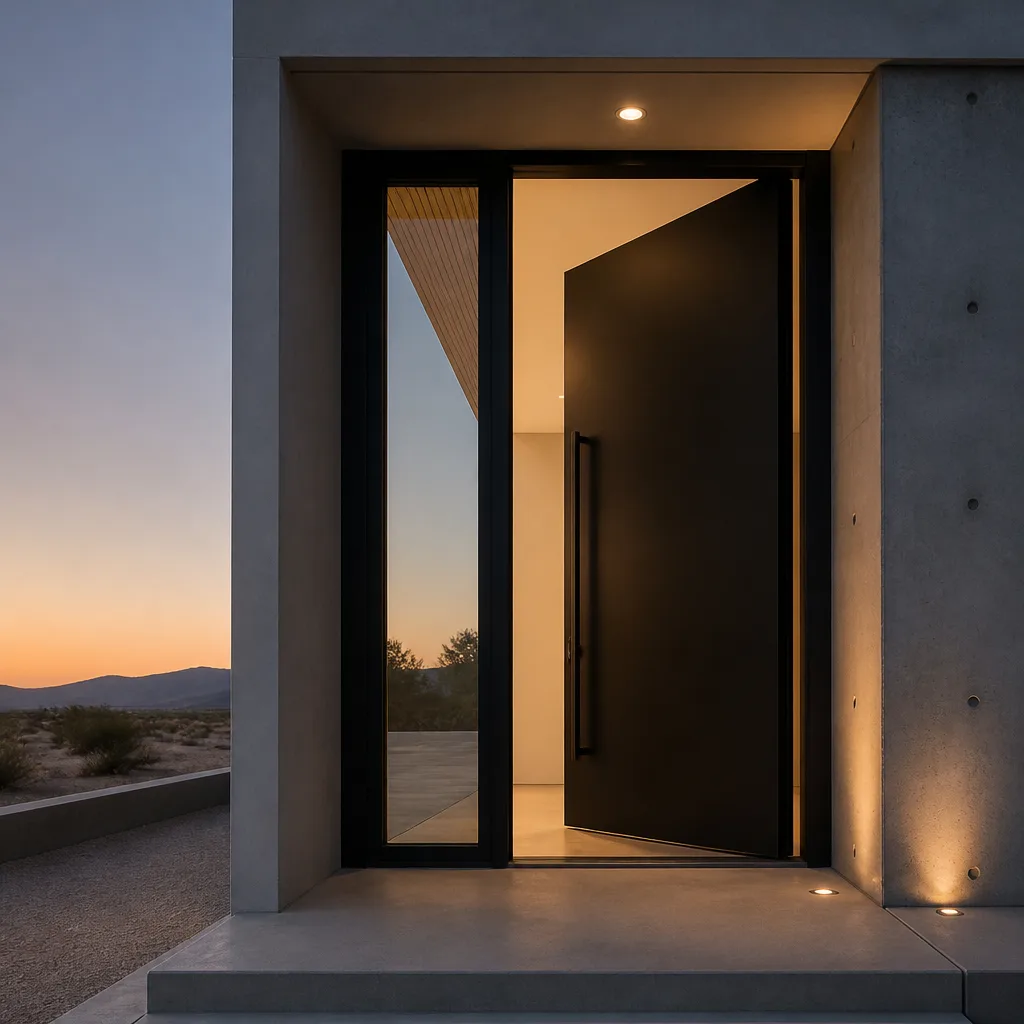
Most of the housing stock we work on in Mesquite was built between the mid-1990s and the late 2000s. That era has predictable construction details, and they directly affect what a replacement window has to do. A proper survey checks the rough opening before anyone quotes a price, because the opening determines whether a standard unit fits or you need a custom frame.
The checklist a measured survey should cover:
- Rough opening dimensions at three points – top, middle, and bottom – and at both jambs. Tract framing from this era isn’t always square; discovering that after the old window is out is how budgets blow up.
- Wood frame condition. Stucco and wood-frame homes from this period often have moisture staining, soft wood, or termite damage at the sill and jamb. Probe the framing and note anything that needs repair before the new unit goes in.
- Sill slope and flashing. Check that the existing sill drains and that flashing is intact. Mesquite’s wind-driven rain events, when they come, are intense.
- Stucco and exterior finish condition around the opening. Cracks and loose stucco affect how the new unit seals.
- Header and structural condition. Any sag or deflection in the header needs to be addressed, not covered up.
- Wall cavity depth. This decides what frame depth you can install and whether you can add insulation around the new unit.
This is where a lot of cheap quotes fall apart. A quote written from a photo and a tape measure will miss a soft sill or an out-of-square opening, and those discoveries arrive as change orders once the job starts. A measured survey that reads the actual opening is what lets a written price hold.
What a Complete Written Survey Looks Like
This is the section most homeowners skip and shouldn’t. The written survey is the document that should govern the whole job. If the survey and the final invoice aren’t the same document, with no line items added after the fact, you’ve lost control of the price.
A complete written survey in Mesquite includes:
- Opening-by-opening measurements, with the method noted (interior and exterior dimensions, three-point height and width).
- Existing frame and glass condition, documented per opening.
- The exact unit specified per opening: manufacturer line, model, frame material, glass package, SHGC, U-factor, and VLT.
- Any opening requiring custom sizing or structural repair, called out separately with its own line item.
- The written price, in dollars, per opening and total.
- Warranty terms in writing – product and workmanship, separately stated.
- Photo or measurement documentation of the openings, so the customer keeps a record of the starting condition.
At Sightline, the measured survey the customer keeps and the written quote cannot differ – that’s the founding principle under the Haven Standard. The measurement and the quote are the same document. That’s also why our final invoice can’t pick up line items the survey didn’t include. When you’re comparing quotes, ask every contractor whether their final invoice can differ from their written survey. The answer tells you what you’re buying.
The Replacement Process, Step by Step
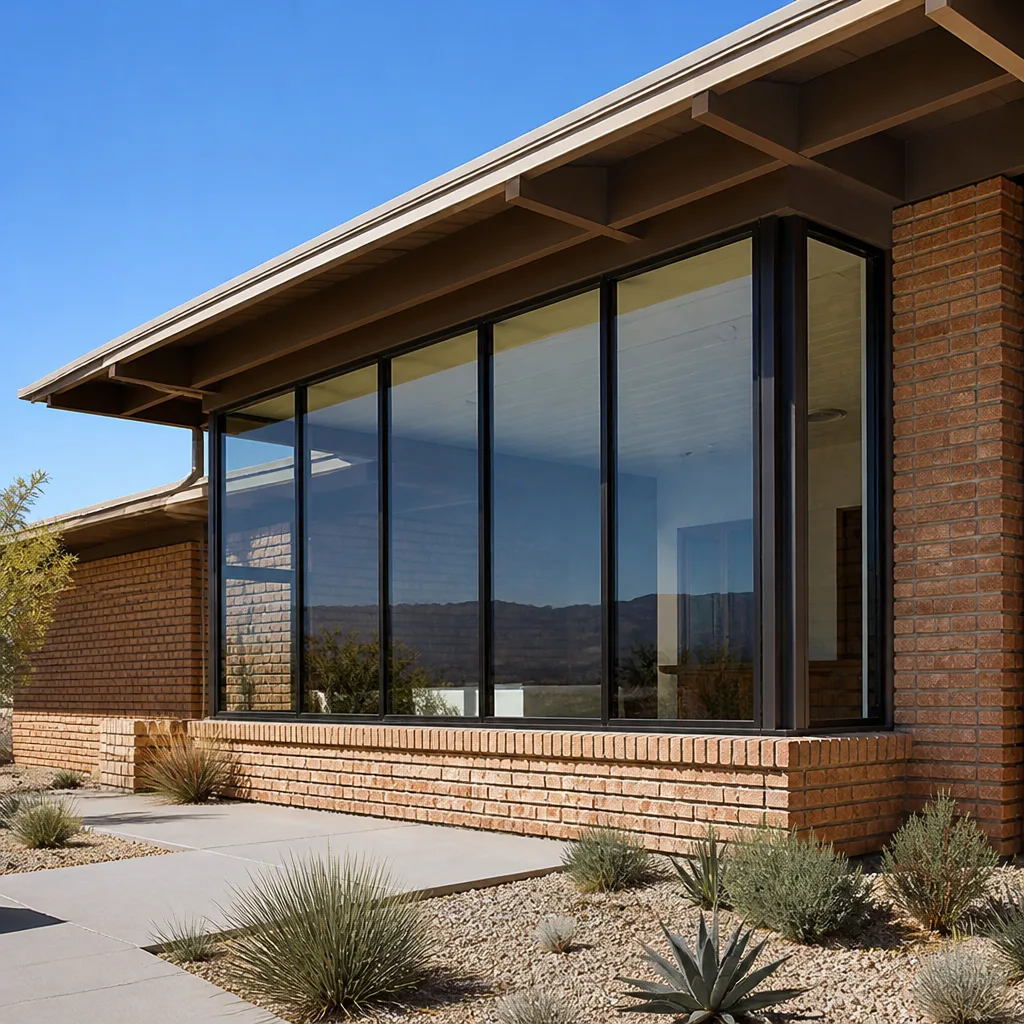
For a full-home window replacement, a typical Mesquite project runs about 2 to 4 days depending on the number of openings and whether any rough-opening repairs are needed. Here’s the sequence a documented replacement follows:
- Measured survey and written quote. Every opening measured; the written price in dollars per opening; the glass and frame spec documented. Nothing starts until you’ve signed a written price you’ve read.
- Order and confirm the product. Units are ordered to spec. Lead times vary by manufacturer line and custom sizing; a standard vinyl unit moves faster than an impact-rated or custom-geometry window.
- Scheduling confirmed in writing. You get a written date, not a callback window. Technicians arrive background-checked, uniformed, and identified by license number.
- Removal and opening prep. Old units out, rough opening inspected against the survey, any needed repairs handled, and the opening prepped and insulated.
- Installation. Units set plumb and square, shimmed, insulated, flashed, and sealed to the manufacturer’s instructions and local code requirements.
- Documentation. A photo record of every opening, before and after, and the completed warranty paperwork. That record is your evidence if anything comes up later.
- Final walkthrough. Operation check, seal check, and the final invoice, which matches the survey.
For related projects, our window installation service in Mesquite covers new-construction and addition work, while window replacement in Mesquite is the full tear-out and re-fit most of our customers need. If your project includes entry or patio openings, our door installation in Mesquite follows the same documented process.
What Window Replacement Costs in Mesquite
Pricing below reflects what we see across Mesquite’s tract-home market – Sun City Mesquite, the Fairway Estates area, and the older neighborhoods near downtown. Numbers are per opening, installed, and include a written price before work begins.
- Standard vinyl dual-pane, fixed or casement: roughly $450 to $750 per opening.
- Standard vinyl dual-pane, double-hung or slider: roughly $550 to $900 per opening.
- Energy-efficient package (upgraded glazing, low SHGC, argon): add roughly $75 to $200 per opening.
- Impact-rated windows: roughly $900 to $1,600 per opening, depending on size and glaze.
- Custom or geometric windows: priced to the opening; generally $700 to $1,800 per opening.
- Rough-opening repairs (soft sill, out-of-square frame): quoted separately on the survey as its own line item, not as a mid-job surprise.
Three things move the number: the total number of openings, the glass spec, and whether the rough opening needs repair. Two homes on the same street with the same window count can land $4,000 apart if one needs four sills rebuilt. That’s why the survey comes before the price, and why the price should never change after it.
For a wider look at how windows and doors fit together on a whole-home project, visit our Sightline Windows & Doors Mesquite home page.
Common Mistakes to Avoid
- Comparing quotes without reading the glass spec. A quote that says “dual-pane low-E” with no SHGC number tells you nothing about July performance. Insist on SHGC, U-factor, and VLT for the exact unit.
- Buying big-box stock windows for a west wall. The default SHGC in national stock is often too high for Mesquite’s exposures. You’ll feel it every summer afternoon.
- Accepting a quote built from a photo and a tape measure. Without reading the rough opening, a soft sill or out-of-square frame becomes a change order later.
- Not verifying rebate eligibility before you buy. “You may qualify” is not a rebate. Confirm the current NV Energy spec thresholds and keep the paperwork.
- Letting the invoice differ from the survey. If line items appear after work starts, the price wasn’t fixed. Get the written price up front and hold it.
- Skipping the photo record. A documented before-and-after record is your evidence for warranty claims and rebate review. Ask for it in writing.
- Picking frame material on looks alone. In Mesquite’s thermal cycle, expansion behavior and UV stability matter more than the color.
When to Call a Professional
Some window problems are cosmetic. Others aren’t, and it’s worth knowing the difference. Call a professional if you see fogging or condensation between the panes (the seal is gone and the unit needs replacement, not cleaning); if a frame is pulling away from the wall or daylight shows at the perimeter; if a west or south window is too hot to rest a hand near in summer; if you find soft wood, staining, or movement at the sill; or if a unit won’t close, latch, or has visible glass cracks. For anything involving the rough opening, header, or a suspected structural issue, get a measured survey before you spend money. Sightline Windows & Doors Mesquite offers free estimates in Mesquite – call (888) 268-5117, and we’ll bring a written price and a documented survey you keep.
Frequently Asked Questions
Most Mesquite homeowners pay $450 to $900 per opening for standard vinyl dual-pane windows, installed, and $900 to $1,600 for impact-rated units. NV Energy rebates where applicable can lower the effective cost, and rough-opening repairs are quoted separately on the survey. Call (888) 268-5117 for a written price – estimates are free.
Expect 15 to 25 years from a well-specified unit and 8 to 12 from a low-end one, with seal failure the usual end point. The wide daily temperature swing here is what shortens life – heat-rated frames and quality edge seals are what extend it. If your windows are fogging before that, the seal has failed and replacement is the fix.
Aim for SHGC between 0.23 and 0.27 on west-facing glass in Mesquite. That range cuts solar heat gain without making the room dark. Ask for the performance label on the exact unit quoted, not a family average.
They can, when the glass package meets current program thresholds for U-factor and SHGC. Rebate amounts and specs change, so confirm the current terms directly with NV Energy before you buy and keep your invoice and product specs for submission. Call (888) 268-5117 and we’ll make sure the qualifying spec is written into your quote.
Most full-home projects run 2 to 4 days, depending on opening count and whether any rough-opening repairs are needed. Custom and impact units have longer lead times before installation. You’ll get a written schedule, not a callback window.
It shouldn’t. Under the Haven Standard, the measured survey and the written quote are the same document, so the final invoice cannot add line items the survey didn’t include. If a quote can change after work begins, ask why before you sign.
The Bottom Line
Windows in Mesquite live a harder life than national ratings assume. The 110°F summers, wide daily temperature swings, low humidity, and persistent southwest wind drive seal failure, frame oxidation, and expansion gaps that a standard national spec won’t handle. The fixes are concrete: check the tested temperature range on the frame, target SHGC of 0.23 to 0.27 on west walls, verify NV Energy rebate thresholds against the exact glass spec, and start every project with a measured survey that reads the rough opening. Most of all, get a written price before anyone touches a tool, and make sure your final invoice is the same document. Have it in writing, arrive on schedule, verified crews, evidence on every job, no surprises – that’s the standard we build to. Call (888) 268-5117 for a free estimate from Sightline Windows & Doors Mesquite.
Written by the team at Sightline Windows & Doors Mesquite.
Six Reasons Homeowners Choose Sightline Windows & Doors Mesquite
Laminated glass and reinforced frames hold up to wind-driven rain, hail and flying debris, so your openings stay sealed when the weather turns.
Low-E insulated impact glass from our manufacturer lines commonly cuts monthly cooling bills 20-30%.
Laminated impact glass shuts out up to 40% of outside noise - traffic, neighbors, weather.
Monitoring services run $30-90 a month. Laminated impact glass resists forced entry around the clock, with no subscription.
Tighter seals and insulated glass even out hot and cold rooms and stop the drafts at the frame.
A full impact package upgrades curb appeal, buyer confidence and appraised value in one project.
Other Sightline Windows & Doors Mesquite Services
What Neighbors Say About Sightline Windows & Doors Mesquite