Last updated November 18, 2026
New windows and doors improve comfort, cut energy bills and add long-term value to your home. Sightline Windows & Doors Mesquite pairs proven product lines with a local vetted installing partner for lasting performance - and a price put in writing.
Choose your installer
The unit is half the job - the install is the other half. Background-checked local installers measure, set, seal and insulate every opening, and they know the lines we quote inside and out.
Select the right products
Compare styles, materials and glass packages side by side until the fit is right for your rooms, your budget and your goals. The product-line comparison below is the place to start.
Prepare your home for install
Before install day we walk you through a short checklist - furniture pulled back, treatments down, a clear path to each opening - so install day is watch-it-happen, not scramble.
Compare the Lines We Quote
Every project is priced on the same lines, side by side - the price indicators below are relative, and your consultant shows exact numbers on your actual openings.
PGTThe line homeowners arrive naming - the most impact certifications in the industry$$$
- More impact certifications than any other line we quote
- WinGuard, EnergyVue and ClassicVue Max systems built for every wind zone
- 99% on-time delivery keeps your install date on the calendar
CGIThe heavyweight impact line$$$$$
- Large-missile impact ratings for the strictest wind zones
- Architectural-grade aluminum with commercial-depth frames
- The line we quote when protection is the whole point
CWSThe value pick$$
- Vinyl systems built to strict wind codes
- Strong energy packages at the friendliest price point
- The smart start for whole-home replacements on a budget
ESWSlim lines, big glass$$$$
- Narrow-sightline aluminum for modern elevations
- Oversized openings and floor-to-ceiling glass
- Impact-rated without the bunker look
ECOThe aluminum impact workhorse$$$
- Factory-built aluminum impact systems
- A strong price-to-protection ratio for coastal homes
- Proven lines with short lead times
Windows & Doors Warning Signs: A Mesquite Homeowner’s Reference Guide
Condensation trapped between the panes of a double-pane window is the most-searched window problem in Nevada, and it has exactly one cause: a failed insulating gas seal. What most homeowners miss is that the very same foggy look on the interior surface of a single-pane insert means something entirely different, and usually far cheaper to fix. In Mesquite, we’ve watched a lot of people replace perfectly sound glass because they misread which symptom they were looking at. This guide maps ten common warning signs to their root causes so you can stop replacing parts and start fixing the opening.
Quick Answer
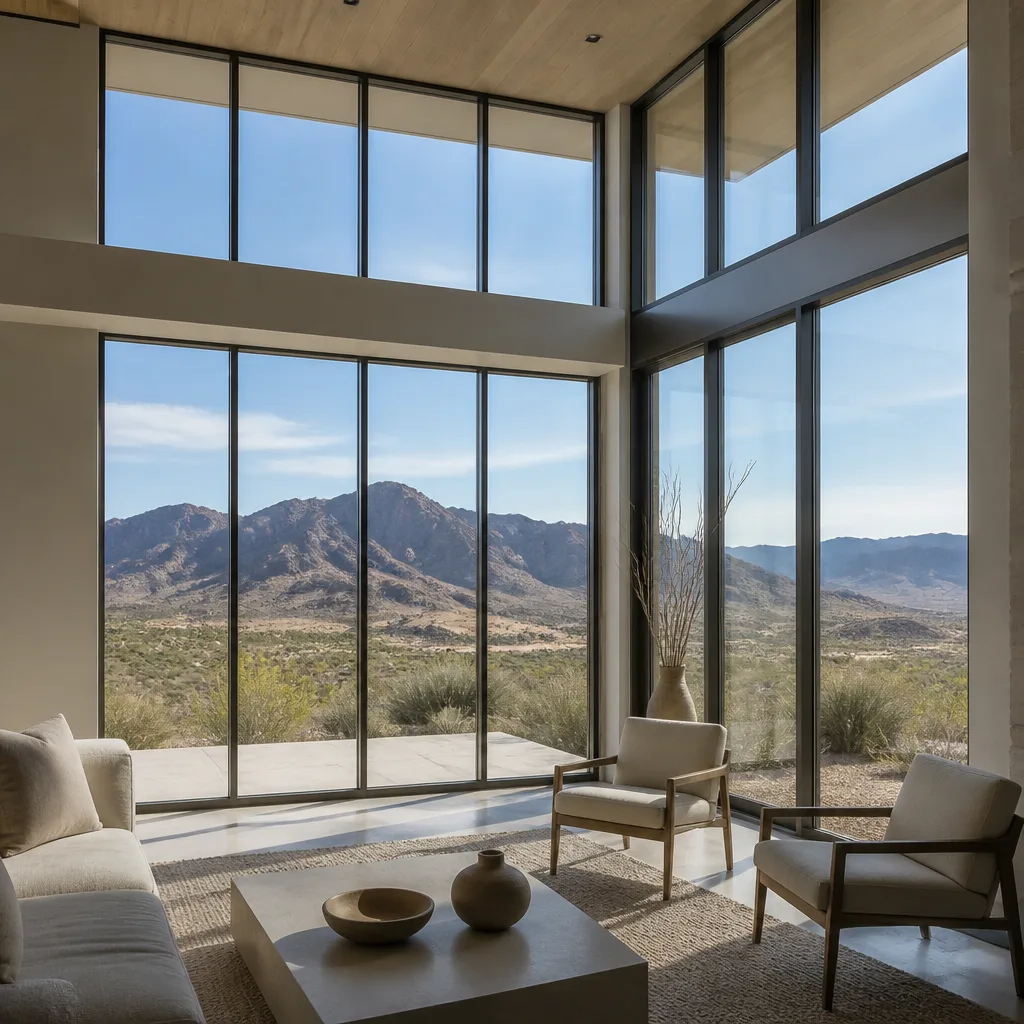
Most window and door warning signs in a Mesquite home point to a cause one layer deeper than the symptom you can see. A draft near a casement is usually not a bad seal; it’s a frame that’s racked out of square from thermal cycling. Condensation between panes is a product seal failure, but condensation on the glass surface is an indoor humidity and ventilation question. Diagnose the opening, not just the part, before you spend money.
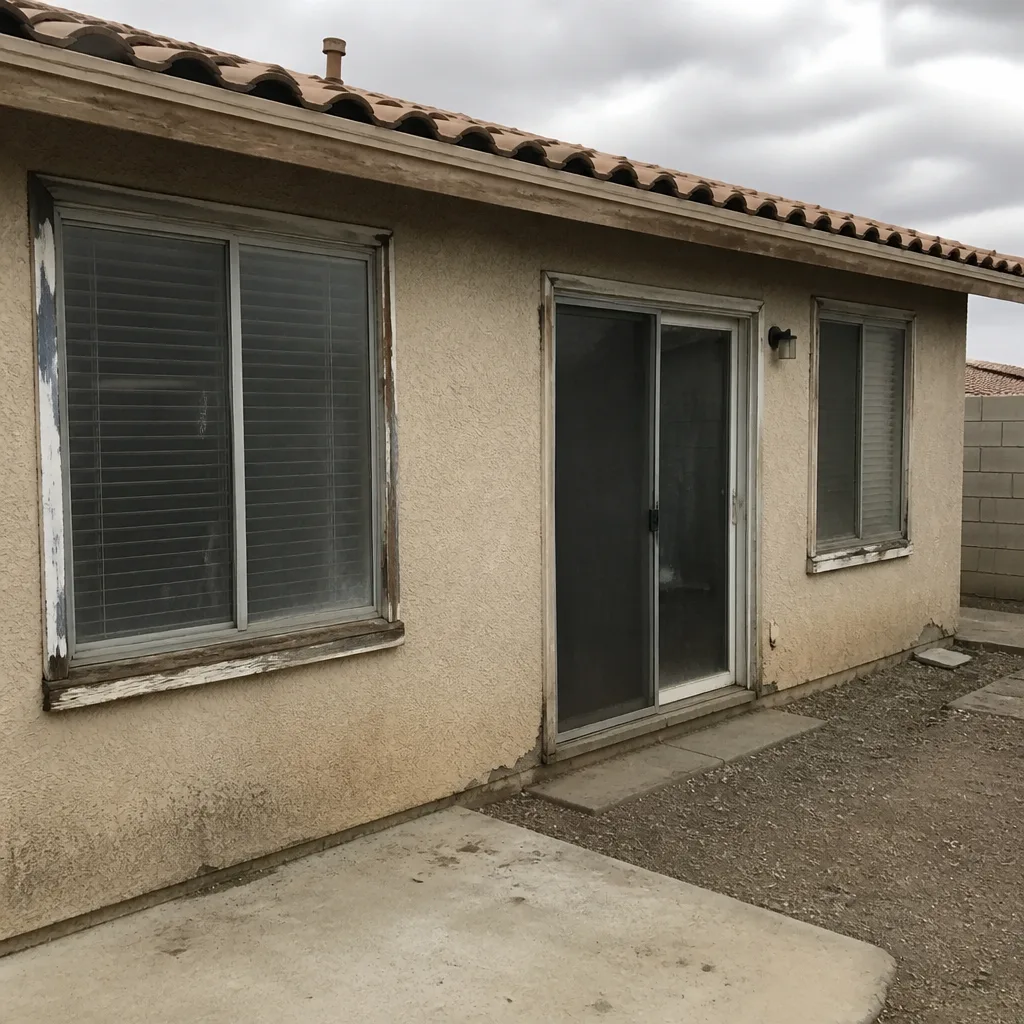 Before
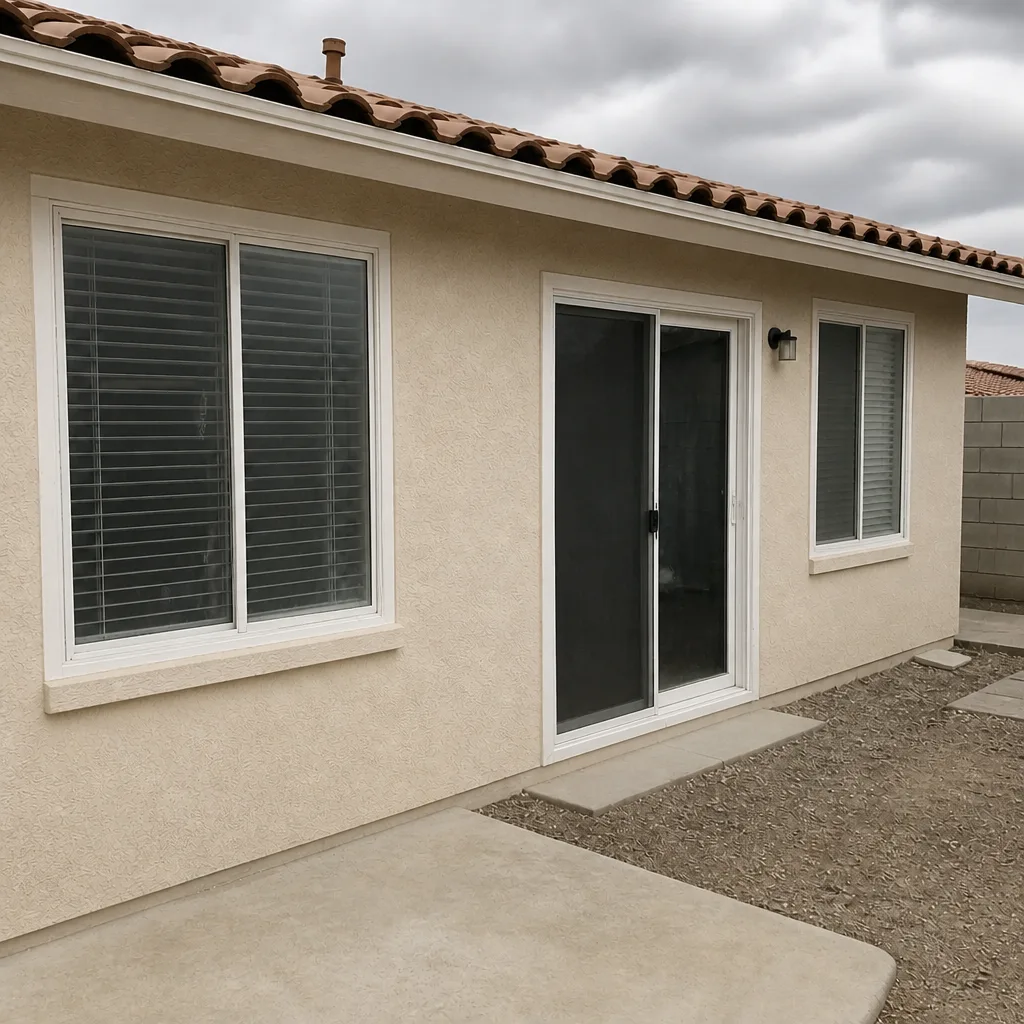 After
Table of Contents
- The Symptom-to-Cause Reference Table
- How Mesquite Heat Cycling Racks Frames in Pre-2005 Homes
- Seal Failure vs. Flashing Failure: Who Pays
- When It’s Structural Movement, Not a Window Problem
- A Photograph-and-Log Protocol Before You Call Anyone
- Hardware That Won’t Latch and Daylight at the Corners
The Symptom-to-Cause Reference Table
This is the core of the guide, and it’s the table to screenshot and keep. Each row starts with what you can actually see or feel, then lists the deeper cause we’d investigate first, and whether it’s typically a product issue, an installation issue, or a building-movement issue.
| Symptom you notice | Most likely root cause | Category |
|---|---|---|
| Fog or condensation between the glass panes | Failed insulating gas seal | Product |
| Condensation on the room-side glass surface | High indoor humidity, poor ventilation | Condition |
| Draft you feel along a casement or fixed unit | Frame racked out of square | Movement / install |
| Window sticks, drags, or won’t open smoothly | Racked frame or swollen sash | Movement / install |
| Visible daylight at a frame corner | Open joinery or failed perimeter sealant | Install |
| Water staining on the interior sill | Failed flashing or blocked weep holes | Install |
| Hardware won’t latch or lines up off-center | Frame shift out of plumb | Movement / install |
| Hairline crack at a drywall corner near the frame | Building settling or framing movement | Structural |
| Door dragging at the bottom, gap at top | Hinge-side settling or header deflection | Structural |
| Frost or heavy moisture on door glass in winter | Low-performance glazing or failed seal | Product |
Read down the “Category” column and you can already sort your problem. A “Product” row is often a warranty conversation. An “Install” row is a flashing-and-sealant conversation. A “Movement” or “Structural” row means the opening itself has changed shape, and no amount of new glass or fresh caulk will fix a frame that’s no longer square. In our experience across Mesquite, the movement and install rows cause far more of the drafts and sticking that homeowners blame on the windows themselves.
How Mesquite Heat Cycling Racks Frames in Pre-2005 Homes
Mesquite sits in the Mojave at roughly 1,600 feet, and the daily swing from a summer afternoon to a summer night can run 30 to 40 degrees. Winter flips the other way. That constant expand-and-contract is thermal cycling, and it works on a window frame the way it works on a road: it finds the weak point and moves it. Homes built before 2005 in this valley were often framed with materials and installation methods that didn’t anticipate decades of that swing, and the result is what the trade calls racking.
Racking means the frame has gone out of square, so the diagonal measurements no longer match. When that happens, the sash doesn’t sit flush, the weatherstripping stops making contact, and you feel a draft. The draft reads like a seal problem, but the seal is fine; the geometry underneath it has moved.
Here’s what racking looks like on a real Mesquite opening:
- A hairline gap that opens along one vertical edge of the frame in summer and closes in winter.
- A casement that latches smoothly in cool months and resists in July.
- Weatherstripping that looks intact but no longer touches the sash along its full length.
- A sash that sits visibly off-center within the frame when you sight along the jamb.
This is why re-caulking alone won’t fix it. Caulk is a surface seal; it can’t re-square a frame. If the opening is racked, fresh caulk simply bridges a moving joint and cracks again within a season. The real fix is evaluating the frame’s plumb and square, then deciding whether it can be shimmed and re-set or needs replacement. That measured survey is where every honest estimate should begin, which is why window replacement in Mesquite starts with readings, not a guess.
Seal Failure vs. Flashing Failure: Who Pays
Two different failures produce two different water symptoms, and homeowners routinely confuse them because both look like “the window leaks.” The distinction matters because one is usually covered by the product warranty and the other is not.
A seal failure is a product issue inside the glass unit itself. The insulating glass has a sealed perimeter, filled with an inert gas, that gives the unit its insulating value. When that perimeter seal fails, moisture gets between the panes and you see fog or a milky haze that won’t wipe off from either side. That’s a manufacturing failure, and on most quality units it’s a warranty claim. Products we specify from PGT and ViewLux, for example, carry insulating glass whose seal is expected to hold for years, so a fogged pane in a unit that age is a legitimate warranty conversation.
A flashing failure is an installation issue at the rough opening. Flashing is the layered water-shedding system around the frame that directs water out and away. When flashing is wrong, missing, or its sealant has failed, water gets behind the frame and shows up as staining on the interior sill, soft drywall at the corners, or a musty smell near the opening. That’s not the glass’s fault; it’s the perimeter. And it is generally not covered by a product warranty, because the product did its job.
How to tell them apart before you call
- Wipe the glass on both sides. If the fog is outside the glass on the room side, it’s humidity. If it’s trapped between the panes and won’t wipe, it’s a seal failure.
- Look for water where the glass meets the frame versus where the frame meets the wall. Interior sill staining that spreads toward the wall points to flashing.
- Check after a hard rain, not after sprinkler or hose exposure, to isolate whether the source is weather-driven.
- Note the season. Fog between panes shows up year-round; interior surface fog tracks with cold mornings and indoor humidity.
Knowing which failure you have changes who you call and who pays, and it changes what a written estimate should say. For the door side of the same question, the same flashing-versus-product logic applies; door installation in Mesquite always treats the threshold and jamb flashing as the first line of defense.
When It’s Structural Movement, Not a Window Problem
Sometimes the window is telling the truth about the house, not about itself. Certain symptoms point to the building moving rather than the opening failing, and calling a window company first is the wrong sequence because you’ll pay to replace a unit that the next shift of the foundation will rack all over again.
Warning signs that suggest structural movement rather than window failure:
- Stair-step cracks in the exterior stucco or brick near a corner, not just at the frame.
- A door that drags at the bottom while its top gap widens (or the reverse).
- Windows that stick across multiple openings on the same wall, not just one.
- Drywall cracks radiating from a corner that reappear after patching.
- A floor that’s noticeably out of level near the affected opening.
When two or more of these show up together, the honest move is a foundation or framing inspection before any window or door work. Mesquite’s expansive clay soils and the region’s seasonal moisture swings can move a slab, and a window that’s been asked to span a moving wall will rack no matter how well it’s installed. We’ve seen a Mesquite homeowner replace three sliding units on one wall before anyone checked the slab; the fourth replacement came with a foundation repair, and only then did the sticking stop. Sequence matters: stabilization first, then new openings.
A quality installation can account for normal settling, but it cannot compensate for active movement. That’s a boundary every honest window company should name out loud, not one we should quietly work around so the sale goes through.
A Photograph-and-Log Protocol Before You Call Anyone
The single best thing you can do before you pick up the phone is document what you see. A written estimate is only as good as the symptom it addresses, and photographs remove the guesswork. This numbered protocol is exactly the kind of capture that lets a written price match the real cause rather than the visible one.
- Photograph each symptom wide and close. One frame showing the whole window in context, then one close-up of the specific issue. Include a coin or ruler in the close-up so scale is clear.
- Measure the fog or staining. Note the date and the approximate percentage of the pane that’s affected, because seal failure often spreads over weeks.
- Test the draft on a still day. Hold a tissue or your hand at the suspected gap and note whether the draft is along one edge or around the whole frame.
- Check the sash square. Measure both diagonals of the opening corner-to-corner. A meaningful difference between the two means the frame is racked.
- Log water timing. Note whether sill staining appears after rain, after irrigation, or in humid weather, since that points to flashing or to surface humidity.
- Record the unit details. Note the brand, approximate age, and any label on the glass, plus a photo of the manufacturer mark if you can find it. A Therma-Tru or CGI nameplate photographed once saves a lot of phone tag.
- Catalogue the whole opening. Note other symptoms on the same wall, so a professional can tell whether the cause is one unit or a movement pattern.
When you bring that folder to a measured survey, the written scope should name each documented cause and its fix, line by line. That’s the standard every job at window installation in Mesquite is built on: a measured survey you keep, and a written quote that can’t differ from that document.
Hardware That Won’t Latch and Daylight at the Corners
Hardware failure and visible daylight at the corners are two symptoms that get blamed on “worn parts” more than almost any others. Both usually trace back to the frame rather than the part.
A latch, lock, or handle that won’t align is a plumb-and-square report card. When the internal locking mechanism lines up off-center or the handle resists at the bottom of its travel, the sash is meeting the frame at the wrong angle, because the frame has shifted. Replacing the latch won’t solve it; re-squaring the opening will. In a sliding door, a track that lets the door drag is often a sign the header above it is deflecting or the threshold has settled, and a replacement part won’t change the geometry.
Visible daylight at a corner is a perimeter problem, not a glass problem. You can usually trace it to one of a few causes:
- Open joinery at a frame corner, where miters have separated from movement.
- Failed perimeter sealant that’s dried and pulled away.
- A frame that was never perfectly set and has since shifted.
- Backer rod or foam that wasn’t installed, leaving a direct path from outside to inside.
Daylight at the corners is also a security concern and a water risk, since the same gap that lets light in lets air and moisture in. If it’s showing up close to grade on a patio slider, treat it as urgent. This is one of the cases where we’ll tell a homeowner to act promptly rather than wait.
Each of these is the point where the report card should do the talking: what the survey found, where it was, and which opening it affected.
Common Mistakes to Avoid
- Replacing glass when the frame is the problem. Fogged panes get replaced; the draft stays because the frame is racked. Read the symptom table before ordering glass and check the diagonal measurements first.
- Re-caulking over a failed flashing system. Caulk is a surface bridge, not a water-shedding system. A fresh bead over bad flashing looks fixed for one season and then stains the sill again.
- Calling a window company before a foundation inspection when the signs point to structural movement. Multiple sticking openings, stair-step stucco cracks, and dragging doors are slab questions. Stabilize the building first, then address the openings.
- Assuming all fogged glass is warrantied. Seal failures inside double-pane units usually are; surface condensation and flashing leaks are not. Know which category you’re in before you argue the point.
- Letting a corner gap at a patio slider sit. Daylight at a ground-level corner is a water and intrusion risk, and it’s the one symptom that deserves a prompt response rather than a wait-and-see.
- Accepting a verbal quote with no written scope. If the price isn’t written before work starts, you have no line to compare against the symptom. A written estimate is your evidence that the root cause was addressed, not just the surface.
- Skipping the photo log. Calling a contractor with a description instead of dated photographs means the first visit re-diagnoses what you already saw. Bring the folder.
When to Call a Professional
Call a professional now if you see daylight at a corner, active water staining that grows after rain, a door that’s dragged progressively over weeks, or a fogged unit that’s spreading across the pane. Those warrant a measured look rather than a wait-and-see. For drafts, sticking sashes, or a single stubborn latch, a scheduled visit is fine and often best. The point of the initial visit is evidence, not pressure: a measured survey you keep, readable frame readings, and a written line-item scope before any work begins. Under the Haven Standard, that written price and the measurement are the same document, and every completed job leaves a photo record. Sightline Windows & Doors Mesquite offers free estimates in Mesquite – call (888) 268-5117.
Frequently Asked Questions
No. Fog between double-pane panes is a failed insulating gas seal, a product issue that usually progresses slowly over weeks, not an emergency. Photograph it and note the affected percentage, since it’s typically a warranty conversation rather than something urgent. If condensation is on the room-side surface instead, it’s a humidity question and even less urgent.
Sticking is usually a racked frame catching on the sash. Mesquite’s large daily temperature swing works on a frame all day, and in homes built before 2005 the material expands and contracts enough to change the opening’s geometry. The sash that latches easily in January can resist in July because the frame moved, not because the sash got heavier. Measure the diagonals to confirm whether the frame is out of square.
Usually not, if the frame is racked. Caulk seals a joint at the surface, but if the underlying frame is out of square, the sash and weatherstripping still don’t meet and the draft remains. Caulk helps only where the gap is genuinely a sealant failure and the frame is square. A draft that follows one edge of the frame is the tell, since that’s the racking pattern, not a simple gap.
Generally no. A water leak behind the frame is usually a flashing or perimeter installation issue, which is not covered by the glass or unit product warranty. A seal failure inside the glass is a different matter and is often warrantied. Establish which you have before assuming the warranty will answer; photograph where the water shows up, since the interior sill versus the wall tells the story.
Look for multiple sticking openings on the same wall, stair-step cracks in exterior stucco, a door that drags at the bottom while its top gap widens, or drywall cracks that reappear after patching. Two or more together point to building movement rather than a window failure. In that case a foundation or framing inspection comes first, and window work follows once the structure is stable.
Wide and close shots of every symptom with a coin or ruler for scale, the diagonal measurements of any sticking opening, the water-timing notes, and the manufacturer label on the glass if you can find it. A folder of dated photos lets the written estimate address the root cause and lets you compare quotes line by line. Bring the folder to the survey; it makes the measured scope faster and more exact.
The Bottom Line
In Mesquite, the visible warning sign is rarely the real problem. Fog between panes is a seal failure; fog on the surface is humidity; a draft or sticking sash is usually a frame that’s racked from years of heat cycling; water staining is a flashing failure the product warranty won’t cover; and multiple symptoms on one wall may be the house moving, not the window failing. Diagnose the opening, not the part. Document what you see, measure the diagonals, and read the symptom table before you spend. The one fix that pays for itself is getting the cause right before anyone orders product.
When you’re ready to price the actual cause, Sightline Windows & Doors Mesquite home is the place to start, and our window replacement in Mesquite and window installation in Mesquite pages walk through the measured process in detail. Call (888) 268-5117 for a free estimate – the written price comes before any work starts, and the survey is yours to keep.
Written by the team at Sightline Windows & Doors Mesquite.
Six Reasons Homeowners Choose Sightline Windows & Doors Mesquite
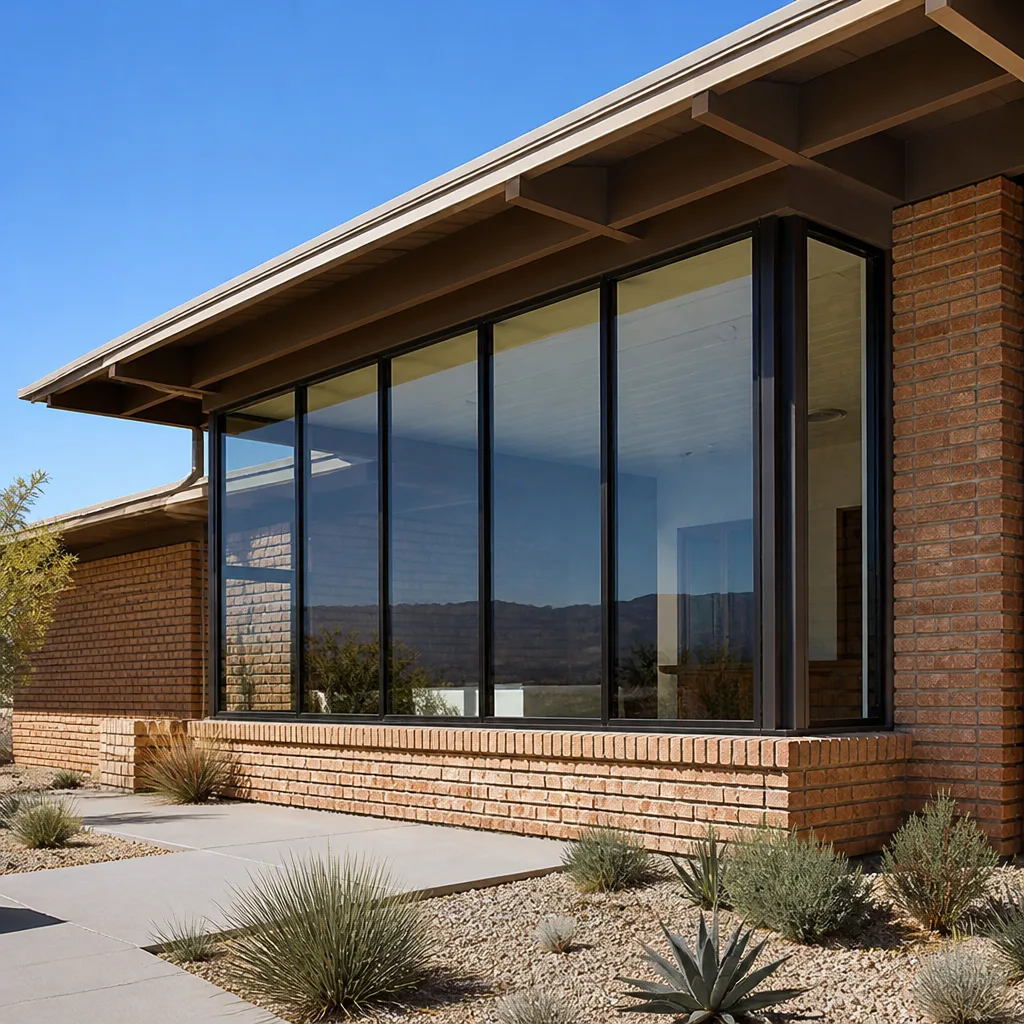
Laminated glass and reinforced frames hold up to wind-driven rain, hail and flying debris, so your openings stay sealed when the weather turns.
Low-E insulated impact glass from our manufacturer lines commonly cuts monthly cooling bills 20-30%.
Laminated impact glass shuts out up to 40% of outside noise - traffic, neighbors, weather.
Monitoring services run $30-90 a month. Laminated impact glass resists forced entry around the clock, with no subscription.
Tighter seals and insulated glass even out hot and cold rooms and stop the drafts at the frame.
A full impact package upgrades curb appeal, buyer confidence and appraised value in one project.
Other Sightline Windows & Doors Mesquite Services
What Neighbors Say About Sightline Windows & Doors Mesquite