Last updated November 18, 2026
New windows and doors improve comfort, cut energy bills and add long-term value to your home. Sightline Windows & Doors Mesquite pairs proven product lines with a local vetted installing partner for lasting performance - and a price put in writing.
Choose your installer
The unit is half the job - the install is the other half. Background-checked local installers measure, set, seal and insulate every opening, and they know the lines we quote inside and out.
Select the right products
Compare styles, materials and glass packages side by side until the fit is right for your rooms, your budget and your goals. The product-line comparison below is the place to start.
Prepare your home for install
Before install day we walk you through a short checklist - furniture pulled back, treatments down, a clear path to each opening - so install day is watch-it-happen, not scramble.
Compare the Lines We Quote
Every project is priced on the same lines, side by side - the price indicators below are relative, and your consultant shows exact numbers on your actual openings.
PGTThe line homeowners arrive naming - the most impact certifications in the industry$$$
- More impact certifications than any other line we quote
- WinGuard, EnergyVue and ClassicVue Max systems built for every wind zone
- 99% on-time delivery keeps your install date on the calendar
CGIThe heavyweight impact line$$$$$
- Large-missile impact ratings for the strictest wind zones
- Architectural-grade aluminum with commercial-depth frames
- The line we quote when protection is the whole point
CWSThe value pick$$
- Vinyl systems built to strict wind codes
- Strong energy packages at the friendliest price point
- The smart start for whole-home replacements on a budget
ESWSlim lines, big glass$$$$
- Narrow-sightline aluminum for modern elevations
- Oversized openings and floor-to-ceiling glass
- Impact-rated without the bunker look
ECOThe aluminum impact workhorse$$$
- Factory-built aluminum impact systems
- A strong price-to-protection ratio for coastal homes
- Proven lines with short lead times
Seasonal Windows & Doors Care for Mesquite: Year-Round Homeowner’s Guide
Mesquite recorded 53 days above 105°F in 2023. At those temperatures, the expansion differential between a vinyl frame and an aluminum screen track can exceed 3mm – enough to bind a slider shut or crack a corner weld that looked fine in April. Most seasonal maintenance guides are written for a climate with four soft seasons. Mesquite doesn’t have those. It has a long furnace, a short but real cold snap, and a monsoon window that pushes water sideways against openings built to shed it downward. This guide is organized around those three stress periods, with the specific checks that matter in Mesquite and the months to do them.
Quick Answer

Care for windows and doors in Mesquite follows three real seasons, not four: pre-summer inspection in April (frame seals, screen tension, weatherstripping), monsoon preparation in July through September (drainage channels and exterior caulk joints), and post-heat inspection in October (UV seal clouding, frame micro-cracking) plus a short winter track-lubrication routine below 35°F. Skip the spring and fall versions written for cooler climates – they miss what actually fails here.
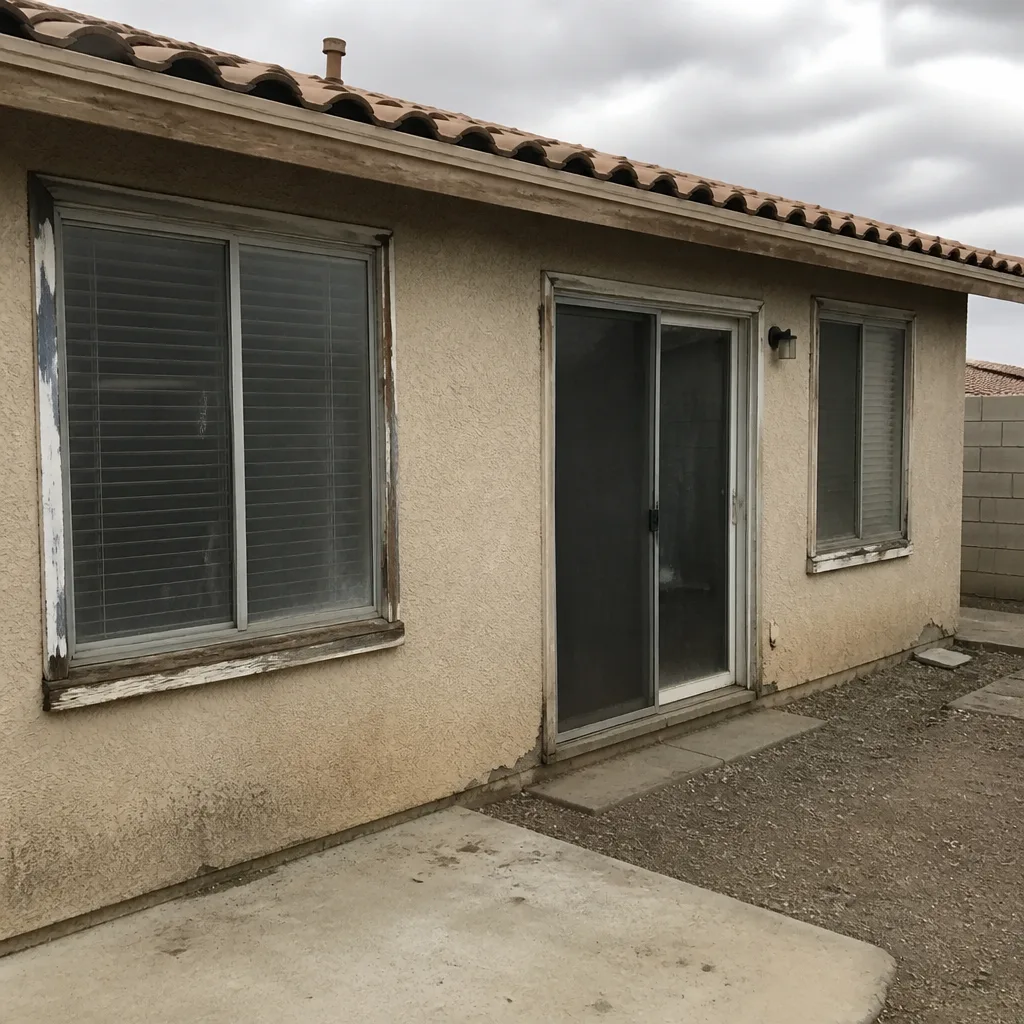 Before
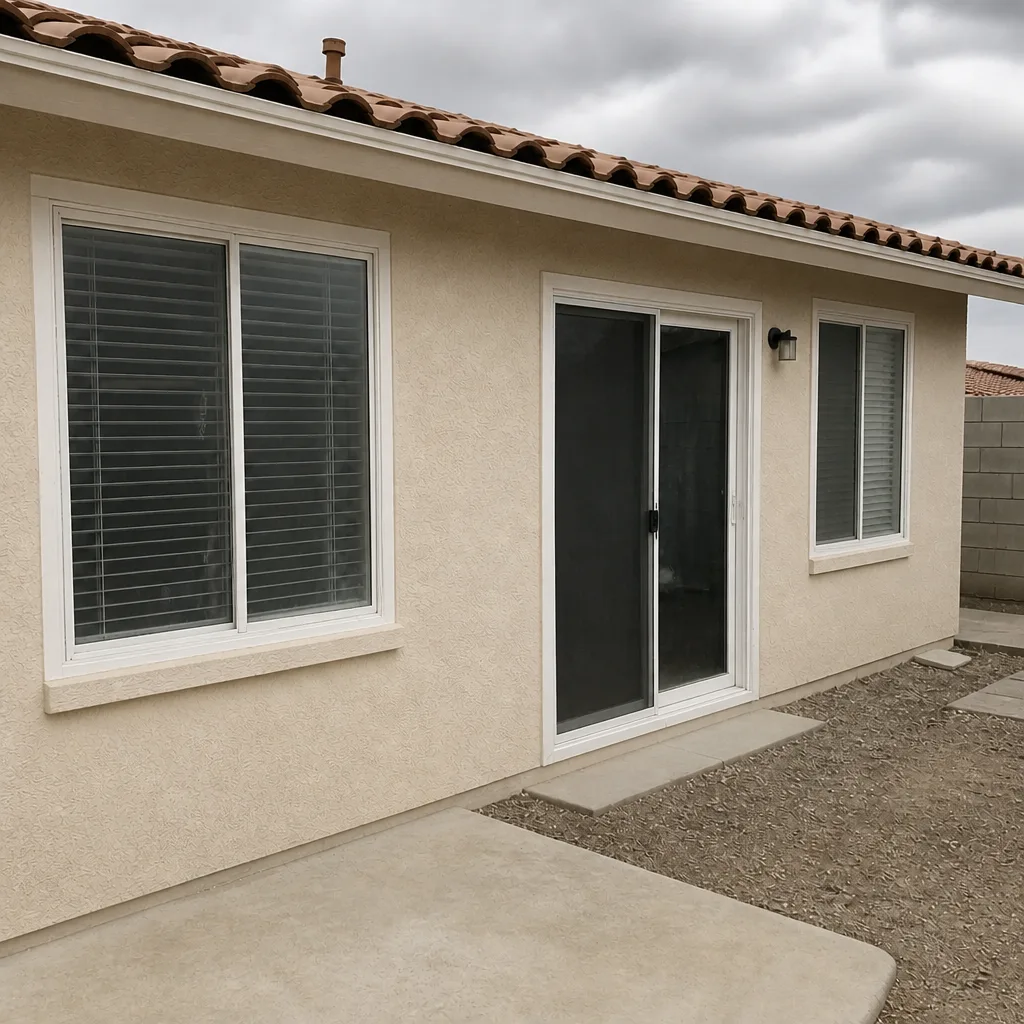 After
Table of Contents
- Pre-Summer Checklist: What to Inspect Before the First 100°F Week
- Monsoon Preparation: Drainage, Caulk, and Storm-Angle Water
- Post-Heat Inspection: What October Reveals That April Didn’t
- Winter Cold-Snap Protocol: Track Lubrication Below 35°F
- Month-by-Month Calendar for Mesquite’s Actual Climate
- Window Checks vs. Door Checks: Where the Maintenance Splits
- Repair or Replace? Reading the Six-Year Signal
Pre-Summer Checklist: What to Inspect Before the First 100°F Week
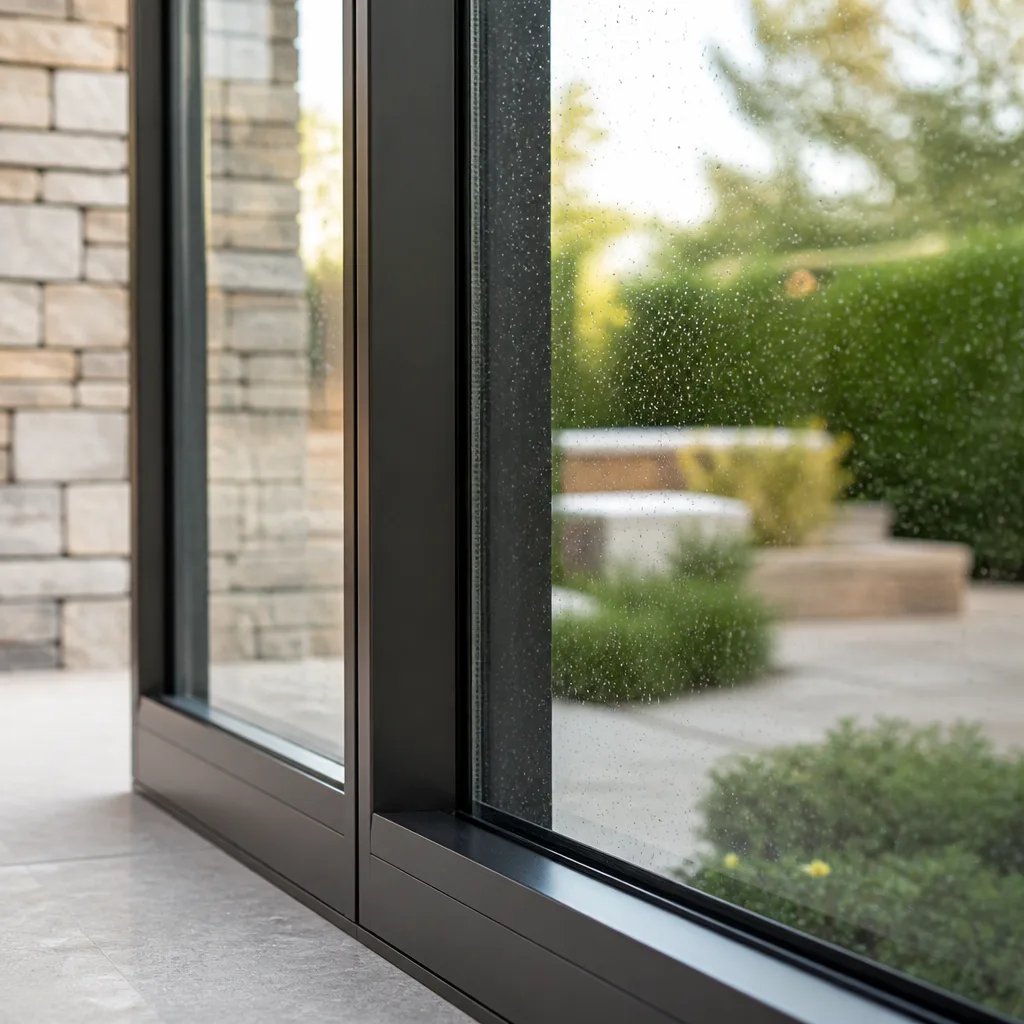
April is the last month in Mesquite where you can work on an exterior opening comfortably. By the first week of May, surface temperatures on west-facing frames routinely climb past 140°F – too hot to touch bare-handed, too hot for exterior sealant to cure properly. Everything you want done before summer has to happen in that April window. What you’re looking for on each opening:
- Frame seal integrity. Run a fingertip along the interior edge of every fixed frame where it meets drywall. Any gap, grit, or softness in the sealant is a candidate for air infiltration once the frame expands. In our experience, the west and south elevations of a Mesquite home leak first.
- Screen tension. Press the center of each screen. If it deflects more than about 1/4 inch, the spline has stretched – common after a summer of expansion cycles. Loose screens fail in wind, and monsoon gusts will find them.
- Weatherstripping on operable openings. Close each window and door, then slide a business card along the seal. If you can pull it out with no resistance, the weatherstripping has compressed and needs replacement – a $15 fix that saves real cooling dollars.
- Weep holes. Each slider and many fixed frames have small drainage holes at the sill. Confirm each is clear. A weep hole plugged with desert dust is the number one cause of sill water intrusion we see in Mesquite homes.
- Track debris. Vacuum the bottom track of every slider. Sand and grit act as an abrasive every time the panel rolls.
None of this requires tools beyond a vacuum, a business card, and daylight. It takes about an hour per standard Mesquite home and it sets up the rest of the year. If a frame reading or a sightline measurement looks off – a bowed jamb, a racked panel – that’s a professional call. The window installation in Mesquite team keeps a measured survey on file for exactly this kind of comparison.
Monsoon Preparation: Drainage, Caulk, and Storm-Angle Water
Mesquite’s monsoon is short and violent – typically late July through early September, with storms that drop two inches in an hour and drive it sideways at an angle from the south and southwest. That matters because most window and door systems are designed to shed water vertically down their face. A sideways-driven storm tests the perimeter seals and the drainage channels, not the glass.
Here’s how to verify the system is directing water away from the sill before the first monsoon cell forms:
- Walk the exterior perimeter. Look at every caulk joint where the frame meets stucco, masonry, or siding. Any joint that is cracked, lifted, or missing is a leak waiting for pressure.
- Test the drainage path. Pour a cup of water into the bottom track of each slider and watch it exit the weep holes at the sill. If it pools and sits more than about 30 seconds, the channel is blocked and needs clearing.
- Check the sill slope. Exterior sills should tilt subtly away from the wall. If water marks show pooling against the frame, the sill has settled or the flashing was never correct.
- Confirm door thresholds drain. Patio and entry doors have a threshold drainage slot. On a sliding patio door in particular, a plugged slot will push water under the door under wind pressure.
- Inspect the interior below each opening. Any drywall staining at the frame base – even faint – is a monsoon leak that already happened. That’s a documented finding now, not a guess.
If you find a failed exterior joint the week before a storm, the fix is a fresh bead of exterior-grade sealant applied dry. If you find a failed drainage path or a settled sill, that’s a call. The door installation in Mesquite team can look at threshold drainage and frame integrity together – the two failures share the same cause more often than not.
Post-Heat Inspection: What October Reveals That April Didn’t
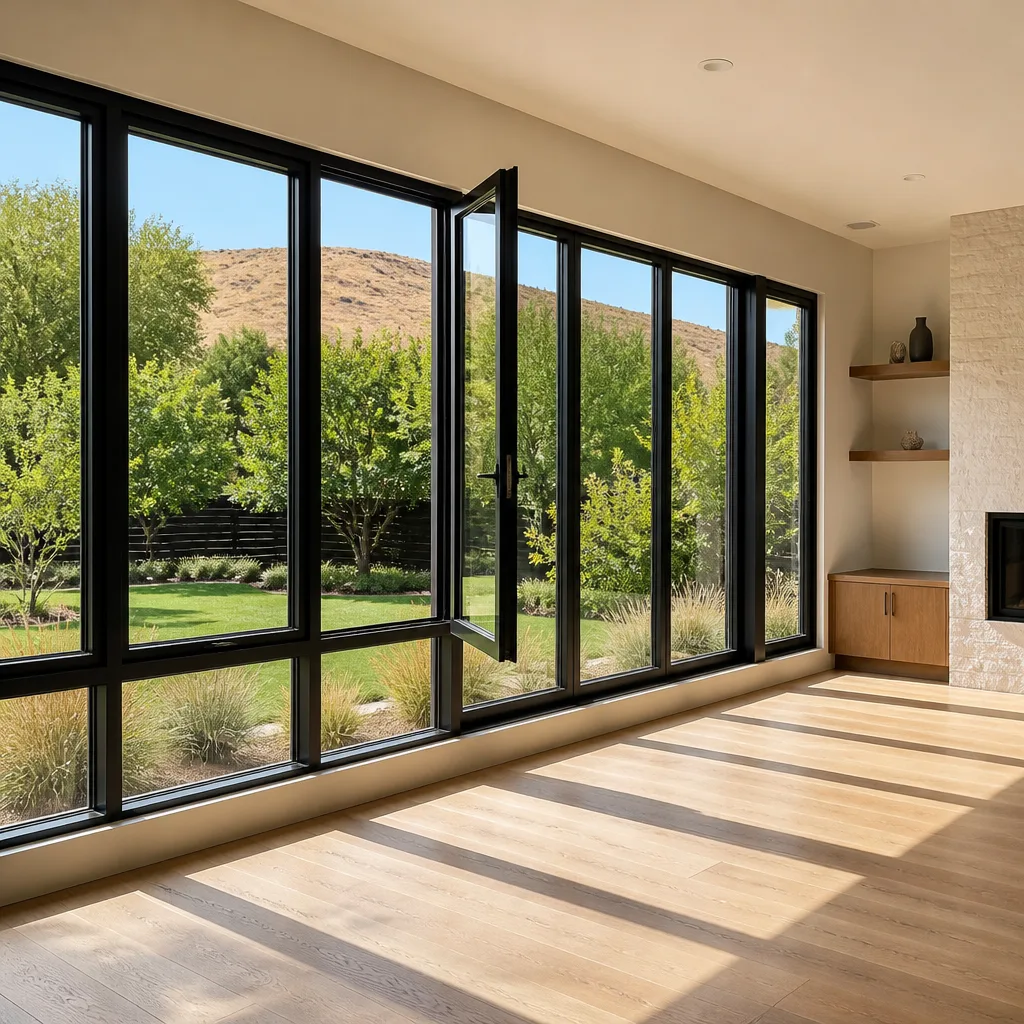
October is the honest month. By then, the frame has been through 50-plus days of thermal expansion and contraction, and the failures that started in July are visible. Two specific things to look for:
- UV-induced seal clouding. Look at every insulated glass unit from an angle, not straight on. A faint fogging or a halo near the edges is the sealant in the glass failing. Once that seal is gone, the unit loses its insulating gas and its U-factor climbs – a real cooling cost in a Mesquite summer, not a cosmetic nuisance.
- Frame micro-cracking. Run a fingernail along the interior corners of vinyl frames, especially on southern and western elevations. Hairline cracks at a welded corner are the beginning of an air-infiltration problem. Left alone through another summer, they open.
- Check for air infiltration directly. On a cool October morning, hold a tissue near frame joints and operable edges. Movement means the seal has failed. This is the cheapest diagnostic there is.
- Look at hardware alignment. A door that used to latch easily and now doesn’t is telling you the frame moved. That’s an adjustment, not a replacement – but catch it before it wears the strike plate.
If October gives you clouded glass or corner cracking, don’t wait for spring. The next summer will accelerate both. In our experience, a Mesquite opening that shows micro-cracking in October is on a 12-to-18-month clock before it needs real attention. The window replacement in Mesquite team has walked through hundreds of these – and the ones that get caught early cost less than the ones that don’t.
Winter Cold-Snap Protocol: Track Lubrication Below 35°F
Mesquite does get cold. Not Midwest cold, but sharp, short snaps that dip below 35°F a handful of nights each winter, and that’s cold enough to change how a sliding door track behaves. Below 35°F, standard petroleum-based track lubricants thicken, and combined with accumulated desert dust they can turn a smooth slider into a stiff one. Worse, the wrong lubricant across a cold snap becomes a dirt magnet by spring.
What actually works:
- Use a dry-film lubricant or silicone spray. These don’t thicken at 35°F and don’t grab airborne desert dust the way grease does.
- Clean before you lubricate. A clean dry track plus a light silicone film beats a greasy track every time.
- Skip WD-40 and household oils. They attract dust and can congeal below 40°F. They are the wrong tool for a desert slider.
- Check the weatherstripping after cold snaps. Cold makes already-compressed weatherstripping brittle. If a November snap leaves a draft in December, the strip was on its way out.
- Test every operable door once per cold snap. Open and close it fully. A door that suddenly sticks in cold is telling you the rollers or the track need attention before something harder breaks.
The cold snap is short, but it’s the window where an overlooked track gets damaged. Fifteen minutes of diligence in December saves a proper repair in February.
Month-by-Month Calendar for Mesquite’s Actual Climate
Most national maintenance calendars are useless in Mesquite because they’re built for climates with a long wet spring and a leaf-fall autumn. This one is built for what Mesquite actually does:
- January – Cold-snap check. Test every exterior door and slider for smooth operation. Clean and lightly silicone-lube tracks. Check weatherstripping on the north elevation.
- February – Hardware audit. Tighten hinge screws, check locks, confirm strike plates align. Cold-snap shifts are visible now.
- March – Drainage check. First warm month. Clear every weep hole. Verify exterior caulk joints before summer heat makes sealant work hard.
- April – Pre-summer inspection. The big one. Frame seals, screen tension, weatherstripping, track vacuuming. Get it done before the first 100°F week.
- May – Exterior pause. Too hot to touch frames. Interior work only – hardware, weatherstrip, blind and screen adjustments.
- June – Interior observations. Watch for fogging, sticking doors, drafts on cool mornings. Note what you find – October confirms it.
- July – Monsoon prep. Re-check exterior caulk and threshold drainage. Clear weep holes again. Confirm interior below every opening is dry.
- August – Storm watch. After any major monsoon cell, inspect the interior below every opening for staining. Catch and document early.
- September – Post-monsoon check. Re-inspect drainage. Confirm no new leaks. This is the second-to-last chance before October.
- October – Post-heat inspection. UV seal clouding, frame micro-cracking, air infiltration check on a cool morning. The month that tells you the truth.
- November – Cold prep. Lubricate tracks with dry-film or silicone. Confirm weatherstripping on all operable units.
- December – Final review. Document any findings. Note clouded glass or cracked corners for the spring decision.
You don’t need all twelve months in a binder. The four that matter most in Mesquite are April, July, October, and December. Those are the ones where a missed check costs money in cooling or replacement.
Window Checks vs. Door Checks: Where the Maintenance Splits
Windows and doors in Mesquite fail on different schedules because they do different work. A fixed window holds a seal. An operable door moves – and moving parts wear. Knowing which check belongs to which opening saves you time.
- Windows: focus is seal integrity, glass clouding, weep-hole clearance, and frame cracking. Hardware on an operable window needs lubrication once, sometimes twice a year. Fixed windows need almost nothing beyond caulk at the perimeter.
- Doors: focus is track lubrication, roller wear, threshold drainage, and weatherstripping at the sweep. A sliding patio door is a machine and needs machine attention – the track and rollers, specifically – once per season.
- Both: exterior caulk joints, interior perimeter seal, and the wall below the opening (the wall is the tell for a leak you can’t see).
If you’re comparing product lines while you’re at this level of detail, the differences matter. PGT and ES Windows are typically specified for impact-rated categories. CGI and CWS sit in the energy-efficient tier with stronger U-factor and SHGC numbers. We select by what the opening requires, not by what’s in a warehouse – and the written quote names the line, the tier, and the price range before anyone lifts a tool. That’s Haven Clause 1: Have it in writing.
Repair or Replace? Reading the Six-Year Signal
Most Mesquite homes in the 2015-to-2025 build range are still inside the first decade of their original windows and doors. That’s the window – literally – where a well-maintained opening keeps performing and a neglected one starts to fail. The signals to watch:
- Clouded glass in more than one opening. A single failed unit is a repair. Three or more in the same elevation usually means the glass was installed in the same heat cycle and all of them are aging out together.
- Repeated weatherstripping replacement on the same opening. If you’re replacing the sweep strip on a door every 18 months, the door itself is out of alignment and that’s a replacement conversation.
- Persistent air infiltration even after caulk and seal work. The frame has moved or the unit was never correct to begin with.
- Water intrusion that returns after a fix. Same story – the fix isn’t wrong, the opening is.
There’s no ranking or score you need. The honest test is: are you doing the same repair twice in 24 months? If yes, the opening is asking to be replaced. If no, keep maintaining.
Common Mistakes to Avoid
- Following a Midwest maintenance calendar. Raking leaves and prepping for a hard winter are not on the list in Mesquite. Skip any guide that gives equal weight to all four seasons – it’s written for someone else.
- Caulking in May or June. Exterior sealant won’t cure correctly once frame surface temperatures pass 140°F on a west-facing elevation. April or October, not July.
- Using WD-40 on a sliding door track. It attracts desert dust and congeals below 40°F. Dry-film or silicone only.
- Cleaning screens with a pressure washer. Mesquite’s dust and hard water combine to tear spline out of a screen under pressure. Garden hose, low flow, done.
- Ignoring a weep hole that’s “just a little clogged.” Plugged weep holes are the number one cause of sill water intrusion in Mesquite homes after monsoon.
- Skipping the October inspection because nothing seemed wrong in April. UV seal clouding and micro-cracking take a full summer to show. October is when the answer arrives.
- Trusting a verbal quote for a replacement. If a contractor won’t put the price on paper before work starts, you’re buying a surprise, not a window. The written price and the measured survey should be the same document.
When to Call a Professional
Some checks belong in your hands – vacuuming tracks, checking weep holes, replacing weatherstripping, holding a business card to a seal. Some don’t. Call a professional when: the glass has clouded or lost seal on more than one opening, a frame has a hairline crack at a welded joint, water intrusion has returned after a proper fix, a sliding door has fallen out of alignment and a simple roller adjustment hasn’t resolved it, or you’re staring at a quote and can’t tell whether a replacement is the right call or an upsell. Also call if you’re comparing a competitor’s written estimate and want a second set of eyes on it – Sightline Windows & Doors Mesquite offers free second opinions on any written estimate. Background-checked, uniformed technicians, license numbers on the record, and a measured survey you keep. Free estimates in Mesquite – call (888) 268-5117.
Frequently Asked Questions
Four times a year, timed to Mesquite’s actual stress periods: April (pre-summer), July (pre-monsoon), October (post-heat), and December (cold-snap prep). The February and June checks are lighter – hardware and observation only. A full walkthrough in April and October is the backbone of the calendar.
Heat, not storms. Sustained days above 105°F cause thermal expansion and contraction cycles that stress frame welds, weatherstripping, and glass seals far more than the short monsoon does. The monsoon causes faster, more visible failures, but the heat is what ages an opening year after year. That’s why the April and October inspections matter more than the July one.
Yes, for surface caulk joints in dry weather, using exterior-grade sealant. What you should not do yourself is repair a settled sill, re-flash a frame, or chase a water intrusion that has returned after a previous fix – those are signs the opening is out of alignment or the original installation was faulty, and a fresh bead of caulk won’t fix either. Call (888) 268-5117 for a free estimate if you’re in that situation.
Look at the glass from an angle, not straight on. A faint fogging, a haze, or a halo near the edges is the sealant failing. Once that halo appears, the unit has lost its insulating gas and its U-factor has climbed. In Mesquite, the loss shows up in cooling costs before it’s visible – a professional reading on the glass is the only way to confirm. Call (888) 268-5117 for a free estimate on a glass or unit replacement.
A dry-film lubricant or a light silicone spray. Both work below 35°F without thickening and both resist capturing desert dust the way petroleum-based products do. Clean the track first, then apply a light film. Never use WD-40 or household oil – they turn into a dust magnet by spring and can stiffen the rollers in a cold snap.
When you’re doing the same repair twice inside 24 months, when three or more units in the same elevation have clouded glass, or when air infiltration returns after a proper caulk and seal job. Those are structural signals, not cosmetic ones. A single failed weatherstrip or a clogged weep hole is a repair – the pattern is the replacement signal. Call (888) 268-5117 for a free estimate that includes the measured survey and a written price before any work starts.
The Bottom Line
Seasonal care for windows and doors in Mesquite is three checks, not four: April before the heat, July before the monsoon, October before you make any replacement decision. Clean tracks, clear weep holes, honest sealant, the right lubricant below 35°F, and a business-card test on every operable opening once a quarter. That level of care keeps a 2015-to-2025 build-range home’s windows and doors performing for a decade or more. When something needs more than a check – a clouded unit, a cracked corner, water that keeps coming back – get a written second opinion before you decide. The written price and the measured survey belong in the same document. That’s the standard we work to, on every job, under the Haven Standard.
The Sightline Windows & Doors Mesquite home page lays out the full product range, and our team is available by phone around the clock. Every visit includes a measured survey you keep, a written price before any work starts, and a documented photo record when the job is finished. Call (888) 268-5117 for a free estimate in Mesquite.
Written by the team at Sightline Windows & Doors Mesquite.
Six Reasons Homeowners Choose Sightline Windows & Doors Mesquite
Laminated glass and reinforced frames hold up to wind-driven rain, hail and flying debris, so your openings stay sealed when the weather turns.
Low-E insulated impact glass from our manufacturer lines commonly cuts monthly cooling bills 20-30%.
Laminated impact glass shuts out up to 40% of outside noise - traffic, neighbors, weather.
Monitoring services run $30-90 a month. Laminated impact glass resists forced entry around the clock, with no subscription.
Tighter seals and insulated glass even out hot and cold rooms and stop the drafts at the frame.
A full impact package upgrades curb appeal, buyer confidence and appraised value in one project.
Other Sightline Windows & Doors Mesquite Services