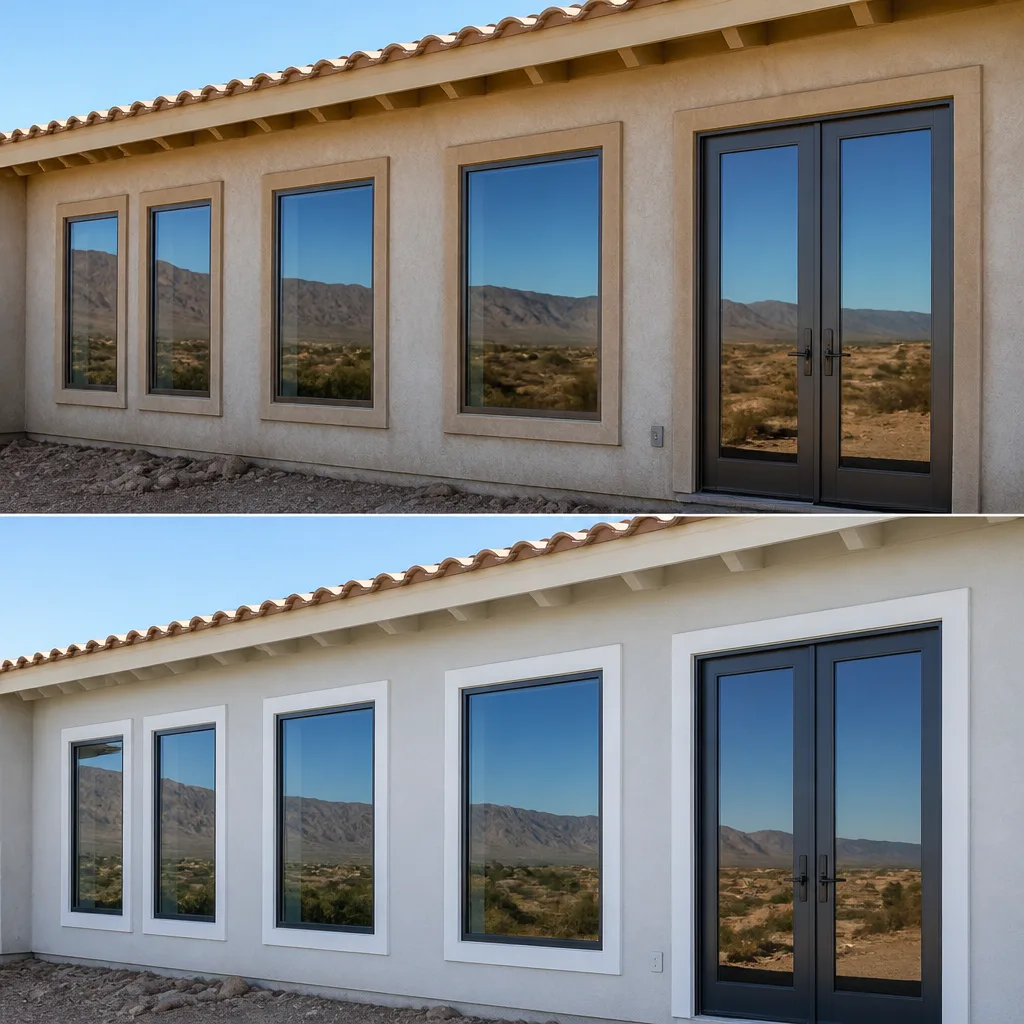
Last updated November 18, 2026
New windows and doors improve comfort, cut energy bills and add long-term value to your home. Sightline Windows & Doors Mesquite pairs proven product lines with a local vetted installing partner for lasting performance - and a price put in writing.
Choose your installer
The unit is half the job - the install is the other half. Background-checked local installers measure, set, seal and insulate every opening, and they know the lines we quote inside and out.
Select the right products
Compare styles, materials and glass packages side by side until the fit is right for your rooms, your budget and your goals. The product-line comparison below is the place to start.
Prepare your home for install
Before install day we walk you through a short checklist - furniture pulled back, treatments down, a clear path to each opening - so install day is watch-it-happen, not scramble.
Compare the Lines We Quote
Every project is priced on the same lines, side by side - the price indicators below are relative, and your consultant shows exact numbers on your actual openings.
PGTThe line homeowners arrive naming - the most impact certifications in the industry$$$
- More impact certifications than any other line we quote
- WinGuard, EnergyVue and ClassicVue Max systems built for every wind zone
- 99% on-time delivery keeps your install date on the calendar
CGIThe heavyweight impact line$$$$$
- Large-missile impact ratings for the strictest wind zones
- Architectural-grade aluminum with commercial-depth frames
- The line we quote when protection is the whole point
CWSThe value pick$$
- Vinyl systems built to strict wind codes
- Strong energy packages at the friendliest price point
- The smart start for whole-home replacements on a budget
ESWSlim lines, big glass$$$$
- Narrow-sightline aluminum for modern elevations
- Oversized openings and floor-to-ceiling glass
- Impact-rated without the bunker look
ECOThe aluminum impact workhorse$$$
- Factory-built aluminum impact systems
- A strong price-to-protection ratio for coastal homes
- Proven lines with short lead times
Window Installation Maintenance Schedule: What to Do and When
Silicone exterior sealant on a properly installed window has a documented service life of 7 to 10 years. Most homeowners have never re-caulked a single window in 15 years of ownership. That gap between the rated life of the material and the reality on the wall is where water intrusion starts, and it’s why windows fail years before their rated service life. Window maintenance isn’t one annual walkthrough. It’s four separate task categories running on four different clocks. This guide separates them, assigns each a frequency, and shows you what failure looks like if you skip it. We install windows in Mesquite for a living, and the desert makes every one of these intervals shorter.
Quick Answer

Check hardware quarterly, inspect drainage channels and weep holes twice a year, clean glazing and tracks annually, and replace exterior sealant every 7 to 10 years (sooner in desert climates where UV and dust accelerate breakdown). Log every action with a date and a photo. The single most expensive mistake is treating sealant replacement as part of the annual cleaning rather than as its own scheduled event on a decade-long cycle.
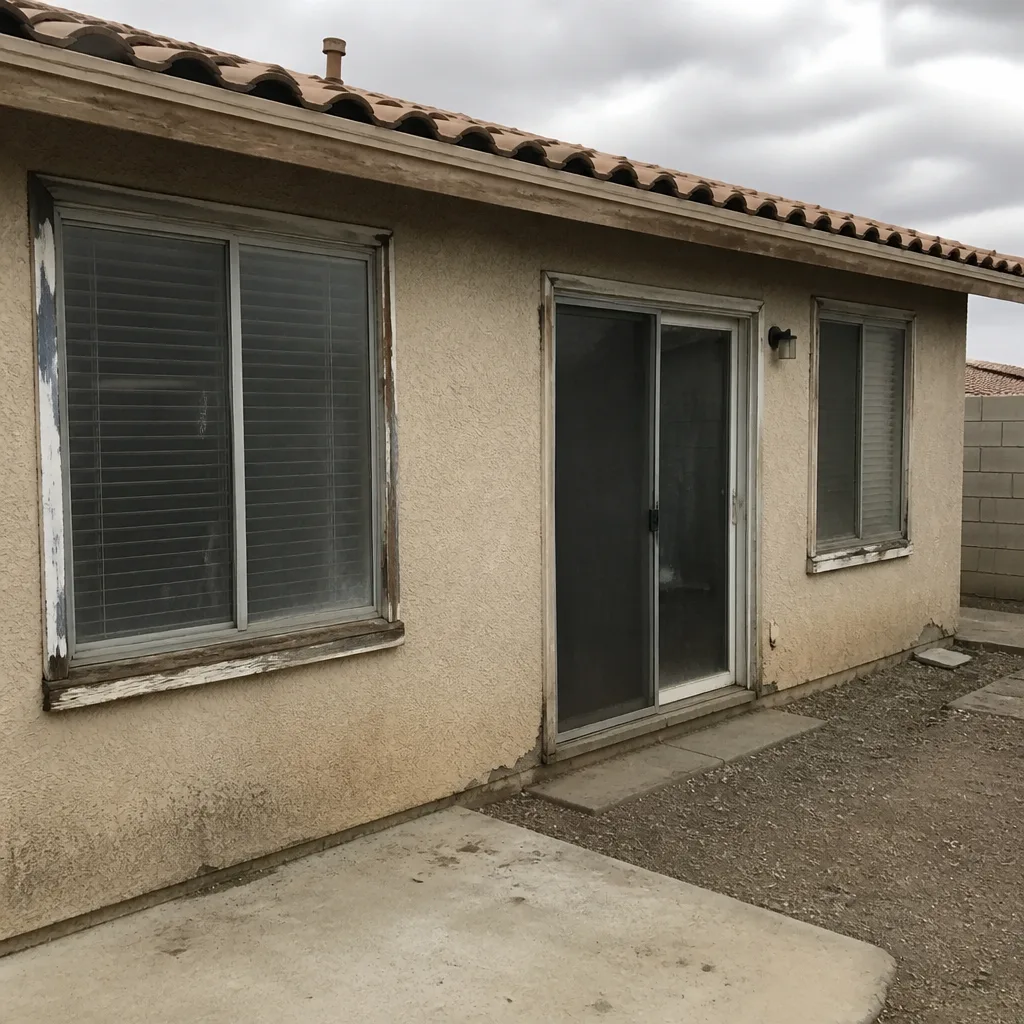 Before
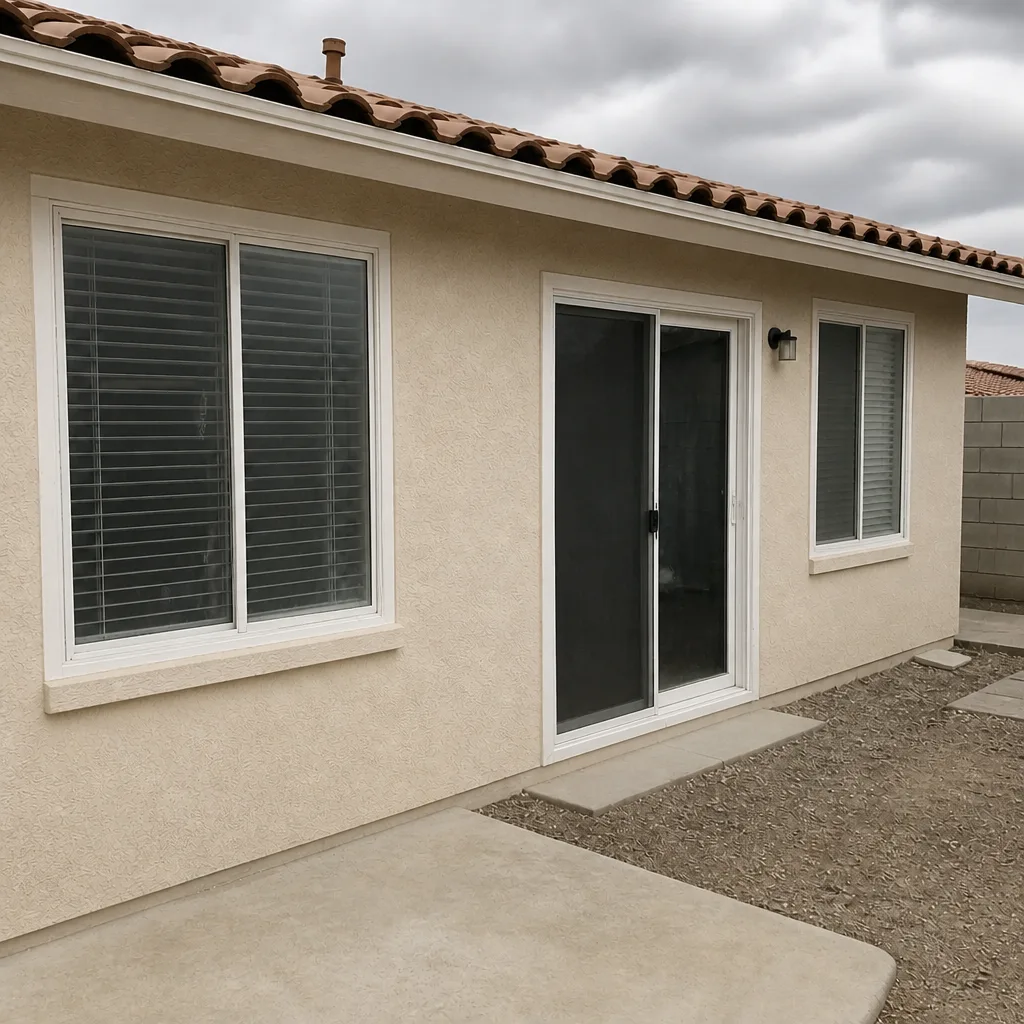 After
Table of Contents
- Why Four Maintenance Clocks Beat One Annual Walkthrough
- The Quarterly Hardware Check: What to Torque and What to Lubricate
- Biannual Drainage Channel Inspection for Desert Climates
- The 7 to 10 Year Sealant Replacement Cycle
- Annual Glazing and Track Cleaning
- Comparing the Installation Photo Record at Year Five
- Building a Maintenance Log That Holds Up in a Warranty Claim or Home Sale
- The Twelve-Month Calendar at a Glance
Why Four Maintenance Clocks Beat One Annual Walkthrough
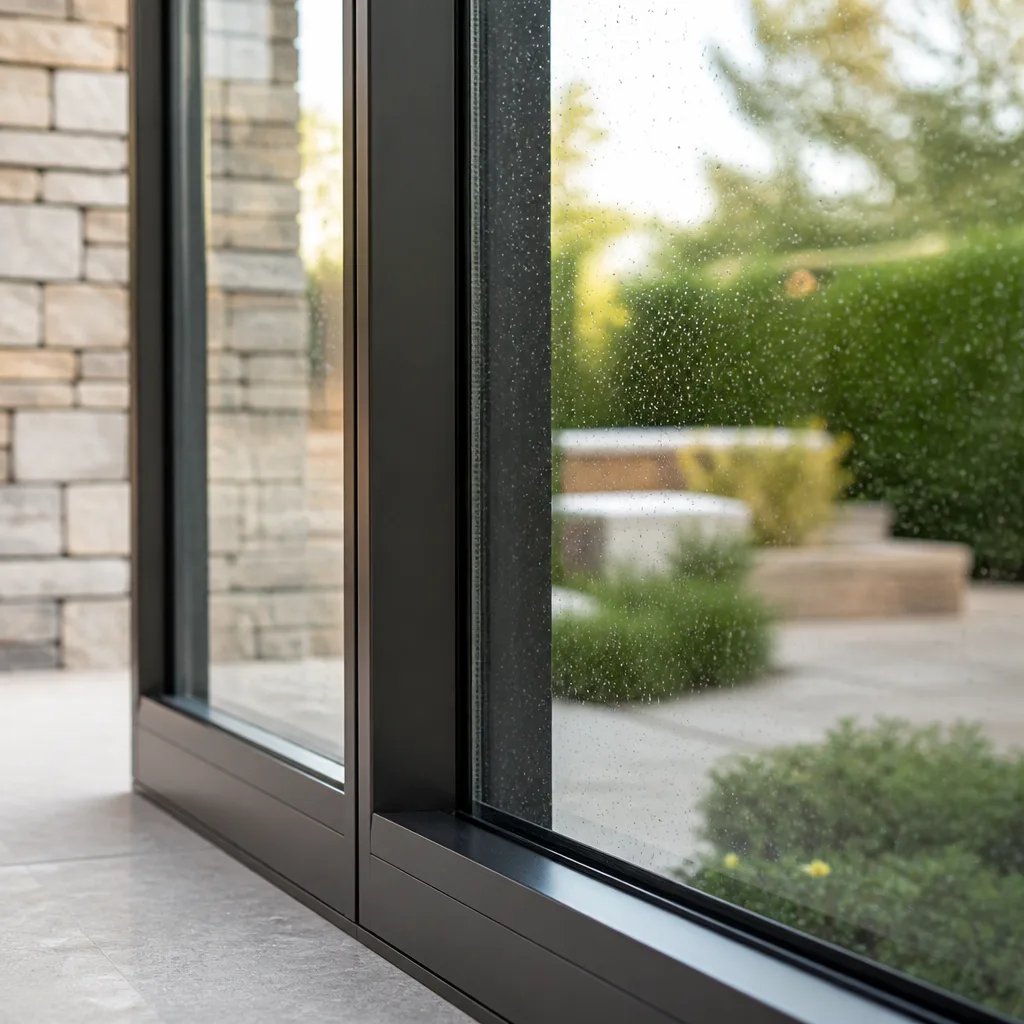
Think about what actually goes wrong with a window. The lock gets stiff. The weep holes clog. The sealant behind the exterior trim lets go. The glass fogs because the seal in the insulated unit failed. Each of those failures has a different cause, a different timeline, and a different fix. A single “check the windows once a year” habit treats all four as one event, so the slow ones get missed and the fast ones get over-serviced.
Here’s the split that matters:
- Hardware and moving parts: quarterly. Lubricant dries, dust packs into tracks, latches work loose. Cheap to maintain, expensive to replace.
- Drainage and weep holes: twice a year. In Mesquite, alkali dust and windblown sand pack into drainage channels faster than in humid climates, so spring and fall are the minimum.
- Glazing and tracks: annually. Glass cleaner, a soft brush, and a check on the gaskets. Low effort, high payoff for clarity and seal life.
- Exterior sealant: every 7 to 10 years, on its own schedule. This is the one most homeowners never do, and it’s the one that decides whether water gets behind your siding.
Separating these four is what keeps a window inside its rated service life. The rated life assumes the sealant was replaced on schedule and the drainage stayed clear. Skip either, and the rating doesn’t apply to your wall anymore.
The Quarterly Hardware Check: What to Torque and What to Lubricate
Do this four times a year, and it takes about ten minutes for a whole house. The goal is to catch a loose latch or a dry hinge before it becomes a stripped screw hole, which is a much bigger repair than a turn of a screwdriver.
- Test every latch and lock. Open and close each one. If it takes more than light finger pressure, the window is out of alignment or the hardware is dry. Don’t force it.
- Check the screws you can see. On casement operators and sliding-door handles, snug any loose screws by hand. Don’t overtighten into vinyl or aluminum; you’ll crack the frame around the fastener.
- Lubricate moving parts with an AAMA-approved dry-film or silicone lubricant. AAMA is the trade body that sets the finish and hardware standards, and its approved lubricants won’t degrade vinyl or aluminum finishes the way petroleum-based products can. Spray a small amount on hinges, rollers, and the casement operator arm, then wipe the excess.
- Check the weatherstripping and gaskets. Run a finger along the seal. If it’s cracked, flattened, or pulling away, it needs replacement. A gasket that’s gone hard won’t seal, no matter how tight the latch.
One thing we see across Mesquite: hardware seizes faster on south- and west-facing windows because the afternoon sun cooks the lubricant off. If you have a wall of glass facing that direction, check those first and expect them to need attention before the rest of the house. The ES Windows and ECO Window Systems lines we install use hardware that holds up well in heat, but no lubricant lasts forever in direct desert sun.
Biannual Drainage Channel Inspection for Desert Climates

Every modern window has a drainage system: the sill has weep holes or slots that let water escape to the outside. In humid climates, those channels mostly see rain. In Mesquite, they see something worse: windblown dust, fine sand, and alkali deposits that set up like concrete once they get wet and dry out. That’s why a window that drains fine in coastal California can back up within two seasons here.
Inspect in spring and fall. Here’s what to do:
- Find the weep holes on the exterior sill. They’re small slots or covered openings along the bottom edge of the frame.
- Look, don’t poke. Shine a light into the channel. If you see packed dust or a white crusty film, that’s the alkali buildup that blocks drainage.
- Flush gently with water from a squeeze bottle or a low-pressure hose. Water should exit the weep holes freely. If it pools in the sill, the channel is blocked.
- Clear soft debris with a soft brush or a pipe cleaner. Never use a screwdriver or wire to clear a weep hole; you can split the frame or puncture the drainage channel.
If the channel won’t clear after a gentle flush, or if you see water staining on the interior sill, stop and call a professional. A blocked drainage channel that’s been holding water is a sign the window needs service beyond a cleaning. In Mesquite, where the dust load is high and the summer monsoon can dump a lot of water fast, a blocked weep hole is the most common cause of interior sill damage we find.
If your windows are old enough that the channels themselves are cracked or the frames are corroding, window replacement in Mesquite may be more cost-effective than repeated repairs.
The 7 to 10 Year Sealant Replacement Cycle
This is the section most window advice skips, and it’s the one that matters most. The exterior sealant bead around your window is a water barrier. When it fails, water gets behind the trim and into the wall cavity. By the time you see a stain on the drywall, the damage has been growing for years.
Silicone sealant has a documented service life of 7 to 10 years in a well-sheltered application. In Mesquite, with intense UV and high summer heat, expect the lower end of that range, and expect the sun-facing sides to go first. Test for adhesion failure before you have a leak:
- Press the bead with your thumb. A healthy sealant is firm and bonded to both surfaces. If it peels back like a rubber band, the bond is gone.
- Look for cracks, gaps, or shrinkage along the bead. Small cracks are the beginning of water entry.
- Check for a “dirty line” where the sealant meets the frame. That’s where water has been sitting.
Which sealant chemistry to use depends on the frame material. For vinyl frames, use a neutral-cure silicone rated for vinyl; standard acetoxy silicone can attack some finishes. For aluminum, a high-quality neutral-cure silicone works. For wood or fiberglass, match the sealant to the coating manufacturer’s spec. The wrong chemistry can fail within a season or stain the frame.
We’ve seen Mesquite homes where the exterior sealant hadn’t been touched in 15 years, and the trim behind it was soft to the touch. If you’re already seeing water stains or peeling paint around a window, that’s a job for a professional, not a Saturday project. A failed sealant barrier is easy to fix if you catch it on schedule.
Annual Glazing and Track Cleaning

Once a year, clean the glass and the tracks properly, and check the seals while you’re in there. It’s the lowest-effort task on the list, and it makes every other check easier to see.
- Clean glazing with a glass cleaner and a microfiber cloth. Skip abrasive pads; they can scratch low-E coatings.
- Vacuum the tracks. A crevice tool pulls out the sand and grit that wears down rollers and seals.
- Wipe the tracks with a damp cloth, then dry them. Don’t leave water sitting in the track; that’s how you feed mold and corrosion.
- Check the glazing seals at the edge of the glass. If the insulated unit is fogging or you see a wavy pattern inside the glass, the seal between the panes has failed. That’s not a cleaning fix; the unit needs replacement.
Fogging between the panes is the one thing on this list you can’t maintain your way out of. It means the seal in the insulated glass unit has gone, and the only fix is a new unit or window. In our experience installing for Mesquite homeowners, high heat cycling on dark-framed windows drives this faster than anything else. If you see fog inside the glass, window installation in Mesquite is where the conversation usually goes.
Comparing the Installation Photo Record at Year Five
A professional installation should leave a documented photo record: shots of the opening before the window goes in, the flashing and sealant work, and the finished frame. If your installer didn’t provide one, ask for it now. That record is your baseline.
At the five-year inspection, pull those photos out and compare them to what you see. Look for three things:
- Frame movement. Are the reveals (the gap between the window frame and the wall opening) even all the way around? Uneven gaps suggest settlement or movement.
- Sealant line position. Has the bead pulled away from where it sat in the original photo? A gap forming at a specific corner is a warning sign.
- Flashing and trim condition. Compare the exterior trim at the top corners of the window; that’s where water gets in first.
This is why every Sightline job under the Haven Standard includes a documented photo record as standard evidence, not an upsell; the record exists precisely so that a five-year comparison is possible. In Mesquite, where expansive soils and summer heat can move a foundation slightly over time, the photo record is how you tell normal settling from a problem that needs attention. If the reveals are visibly uneven or you see cracking at the corners, call a professional for an inspection before you repaint or reseal over it.
Building a Maintenance Log That Holds Up in a Warranty Claim or Home Sale

Every task on this schedule should be logged with a date, what you did, and a photo. Two reasons: warranty claims and home sale disclosures. Nevada’s residential disclosure rules require sellers to disclose known defects, and a documented maintenance history is the cleanest evidence that the windows were cared for.
Build the log now. It doesn’t need to be fancy:
- Create one page per window or per room. Note the manufacturer and model if you have it, and the install date.
- Log each task with a date. “Cleared weep holes, 3/15” beats “spring maintenance.”
- Keep the installation photo record with the log. Before-and-after photos of the opening, plus the finished frame, are the evidence of record.
- Note any professional service visits. Who came, what they did, and the date. Keep the invoice.
When you sell, this log goes with the disclosure packet. When a sealant question comes up under warranty, the log shows you serviced it on schedule. It’s a small habit that pays off twice. If a prior installer didn’t leave a photo record, the measured survey and written scope you keep from your installation are the next best thing.
The Twelve-Month Calendar at a Glance
Here’s the schedule compressed into one view. Adjust the months to your climate; this one is tuned for Mesquite, where spring and fall are the natural inspection windows and summer heat is the stress test.
- January: Quarterly hardware check. Lubricate locks, hinges, operators.
- March: Biannual drainage inspection. Flush weep holes, clear dust and alkali. Annual track cleaning.
- April: Quarterly hardware check. Wipe down exterior sealant beads and look for cracks.
- July: Quarterly hardware check. Pay extra attention to sun-facing windows.
- September: Biannual drainage inspection. Clean tracks again before winter rains.
- October: Quarterly hardware check. Inspect gaskets before the cold season.
- Every 7 to 10 years: Replace exterior sealant. Test adhesion a year early so you can plan the work.
For doors, the schedule shifts a little: hinges and locks on sliding doors and entry doors get the same quarterly treatment, and door installation in Mesquite handles the cases where a door has warped or the hardware has failed beyond adjustment. Therma-Tru entry systems, for example, need their weatherstripping checked on the same annual rhythm as windows.
Common Mistakes to Avoid

- Skipping sealant replacement because the bead “still looks fine.” Sealant fails from the back edge where you can’t see it. Test adhesion with your thumb, don’t just eyeball it.
- Using the wrong lubricant on vinyl or aluminum hardware. Petroleum-based products can degrade the finish. Stick to AAMA-approved dry-film or silicone lubricants.
- Poking a weep hole clear with a screwdriver. The slot cracks, and now you have a drainage channel that leaks. Use a soft brush or pipe cleaner.
- Treating maintenance as one annual walkthrough. Hardware, drainage, glazing, and sealant run on different clocks. Combining them means the slow ones get missed.
- Not keeping a photo record. Without a baseline, you can’t tell at year five whether the sealant line has moved. Photos are evidence, not souvenirs.
- Re-caulking over a failed seal without removing the old bead. New sealant won’t bond to old failed sealant. It peels off within a season.
- Ignoring interior water stains in Mesquite’s monsoon season. A blocked weep hole during a fast summer storm can push water past the sill fast. A stain is a warning, not a cleanup.
When to Call a Professional
Some tasks are homeowner maintenance; some are professional work. Call us when you see fogging between the panes, water staining on the interior sill, sealant that peels back in long strips, or uneven reveals at the five-year inspection. Call when a latch has stripped its screw holes, when the frame itself is cracked or corroded, or when a window won’t close and seal properly after a cleaning. And call before you repaint or reseal over a suspected water problem; sealing over a wet wall traps the moisture. Sightline Windows & Doors Mesquite offers free estimates in Mesquite, and we’ll review a competitor’s written quote at no charge if you’re comparing options. Call (888) 268-5117 for a free estimate.
Frequently Asked Questions

Set a schedule of four different frequencies: hardware quarterly, drainage and weep holes twice a year, glazing and tracks annually, and exterior sealant replacement every 7 to 10 years. In Mesquite, shorten the sealant cycle toward the low end because of UV and heat. Call (888) 268-5117 for a free estimate if you want a professional inspection to set the baseline.
Expect 7 to 10 years in a sheltered application, and closer to 7 on sun-facing walls in Mesquite. The UV load and summer heat break the sealant down faster than in cooler, more humid climates. Test the bead with your thumb a year before you plan to replace it. Call (888) 268-5117 for an exact quote on sealant service; estimates are free.
Almost always a failed exterior sealant bead or a blocked drainage channel, not the glass itself. Water enters behind the trim when the sealant loses adhesion, or backs up in the sill when weep holes clog with dust and alkali. Catch it at the adhesion test and you avoid the wall damage. Call (888) 268-5117 to schedule an inspection.
You can handle small touch-ups, but full sealant replacement around a window is a job for a professional because the old bead must be fully removed and the chemistry matched to the frame material. The wrong sealant can fail within a season or stain the frame. We install across our eight manufacturer lines and know which sealant belongs on each frame. Call (888) 268-5117 for a free estimate.
Compare the frame reveals (the gap between window and wall opening) to your installation photo record, and look for a sealant line that has moved. Even gaps and a stable bead mean normal settling; visibly uneven gaps or a gap forming at one corner warrant a professional inspection. Call (888) 268-5117 if you don’t have a photo record to compare against.
You don’t have to, but a documented maintenance log is the cleanest evidence of care and supports your disclosure. Nevada sellers must disclose known defects, and a dated log with photos shows the windows were serviced on schedule. If you’re missing records, we can provide a measured survey and photo record on any new installation. Call (888) 268-5117 for a free estimate on Mesquite window work.
The Bottom Line
The schedule is four clocks, not one: hardware quarterly, drainage twice a year, glazing annually, sealant every 7 to 10 years. Log every task with a date and a photo. Test your exterior sealant by hand, not by eye, and expect the sun-facing side to go first in Mesquite. If you find fogging, water staining, or uneven reveals, stop maintaining and start pricing. We install windows and doors across Mesquite and the surrounding valley, and every job gets a written price before work starts, a documented photo record when it’s done, and the 365-Day Done Right Promise. Call (888) 268-5117 for a free estimate.
For a full look at what we install and how we work, visit our Sightline Windows & Doors Mesquite home. If you’re comparing options for a replacement, our team can walk you through the manufacturer tiers from ES Windows and ECO Window Systems on up, and Mr-Glass for entry-door glass, and explain what each requires from a maintenance standpoint.
Written by the team at Sightline Windows & Doors Mesquite.
Six Reasons Homeowners Choose Sightline Windows & Doors Mesquite

Laminated glass and reinforced frames hold up to wind-driven rain, hail and flying debris, so your openings stay sealed when the weather turns.
Low-E insulated impact glass from our manufacturer lines commonly cuts monthly cooling bills 20-30%.
Laminated impact glass shuts out up to 40% of outside noise - traffic, neighbors, weather.
Monitoring services run $30-90 a month. Laminated impact glass resists forced entry around the clock, with no subscription.
Tighter seals and insulated glass even out hot and cold rooms and stop the drafts at the frame.
A full impact package upgrades curb appeal, buyer confidence and appraised value in one project.
Other Sightline Windows & Doors Mesquite Services
What Neighbors Say About Sightline Windows & Doors Mesquite