Last updated November 18, 2026
New windows and doors improve comfort, cut energy bills and add long-term value to your home. Sightline Windows & Doors Mesquite pairs proven product lines with a local vetted installing partner for lasting performance - and a price put in writing.
Choose your installer
The unit is half the job - the install is the other half. Background-checked local installers measure, set, seal and insulate every opening, and they know the lines we quote inside and out.
Select the right products
Compare styles, materials and glass packages side by side until the fit is right for your rooms, your budget and your goals. The product-line comparison below is the place to start.
Prepare your home for install
Before install day we walk you through a short checklist - furniture pulled back, treatments down, a clear path to each opening - so install day is watch-it-happen, not scramble.
Compare the Lines We Quote
Every project is priced on the same lines, side by side - the price indicators below are relative, and your consultant shows exact numbers on your actual openings.
PGTThe line homeowners arrive naming - the most impact certifications in the industry$$$
- More impact certifications than any other line we quote
- WinGuard, EnergyVue and ClassicVue Max systems built for every wind zone
- 99% on-time delivery keeps your install date on the calendar
CGIThe heavyweight impact line$$$$$
- Large-missile impact ratings for the strictest wind zones
- Architectural-grade aluminum with commercial-depth frames
- The line we quote when protection is the whole point
CWSThe value pick$$
- Vinyl systems built to strict wind codes
- Strong energy packages at the friendliest price point
- The smart start for whole-home replacements on a budget
ESWSlim lines, big glass$$$$
- Narrow-sightline aluminum for modern elevations
- Oversized openings and floor-to-ceiling glass
- Impact-rated without the bunker look
ECOThe aluminum impact workhorse$$$
- Factory-built aluminum impact systems
- A strong price-to-protection ratio for coastal homes
- Proven lines with short lead times
Energy-Efficient Windows Maintenance Schedule: What to Do and When
Every energy-efficient window sold in Mesquite carries a manufacturer’s insert that says “clean annually.” That insert was written for a national market, not for a desert valley that swings from 110°F summer afternoons to sub-freezing winter nights, where blowing dust deposits a visible film on west-facing glass within two weeks. In our experience, the components that quietly destroy performance first are the cheapest ones: the bulb gasket under the sash, the weep holes at the sill, the weatherstripping at the meeting rail. This guide gives you a task-by-task calendar calibrated to Mesquite’s actual conditions, a way to check low-e coating integrity with nothing but a flashlight, the correct lubricant for tilt-wash and casement hardware, and a log system that supports warranty claims. You’ll finish with a schedule you can tape inside a utility closet.
Quick Answer

In Mesquite, energy-efficient windows need weep holes cleared every 60 to 90 days (every 30 days during spring wind season), gaskets and weatherstripping inspected quarterly, glass cleaned monthly on sun-exposed elevations, and hardware lubricated twice a year with a silicone-based product, never petroleum grease. A full inspection with a written log entry belongs on both the spring and fall equinoxes. The schedule that protects U-factor and SHGC performance is shorter and more frequent than most manufacturer brochures suggest.
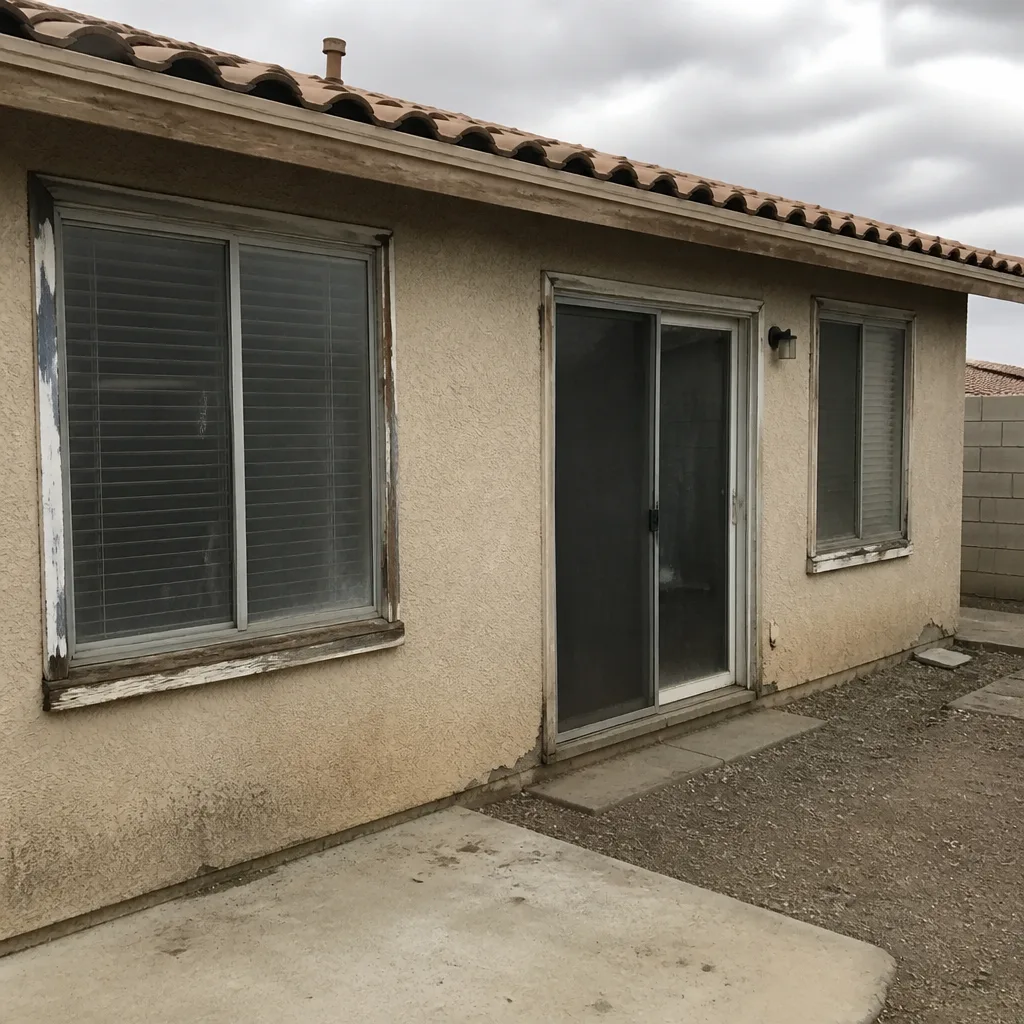 Before
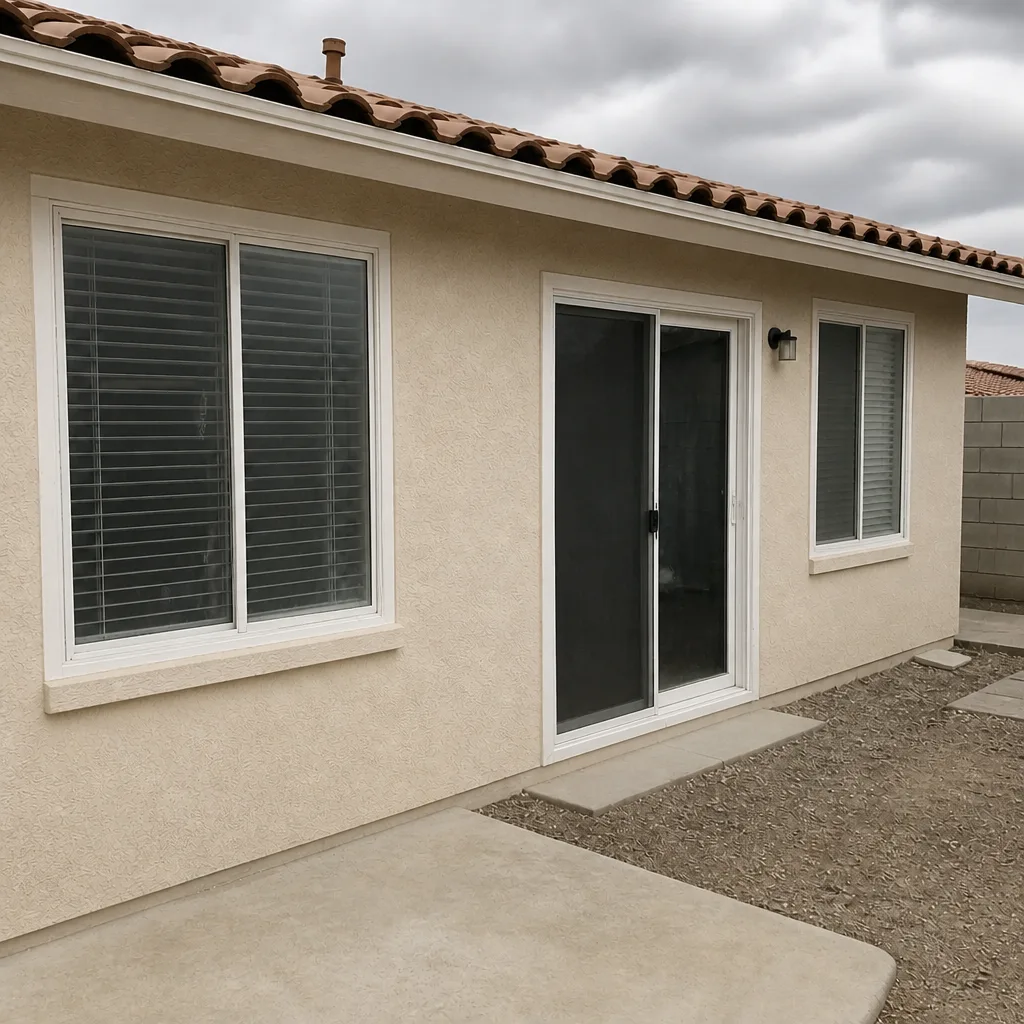 After
Table of Contents
- Why the Manufacturer’s Schedule Doesn’t Fit Mesquite
- Weep Holes: The Four-Minute Job That Prevents Water Damage
- The Full Mesquite Maintenance Calendar, Task by Task
- How to Test Low-e Coating Integrity Without Equipment
- Hardware Care for Tilt-Wash and Casement Operators
- What Maintenance Shows Up on a Utility Bill
- Keeping a Maintenance Log That Supports Warranty Claims
- Common Mistakes to Avoid
Why the Manufacturer’s Schedule Doesn’t Fit Mesquite
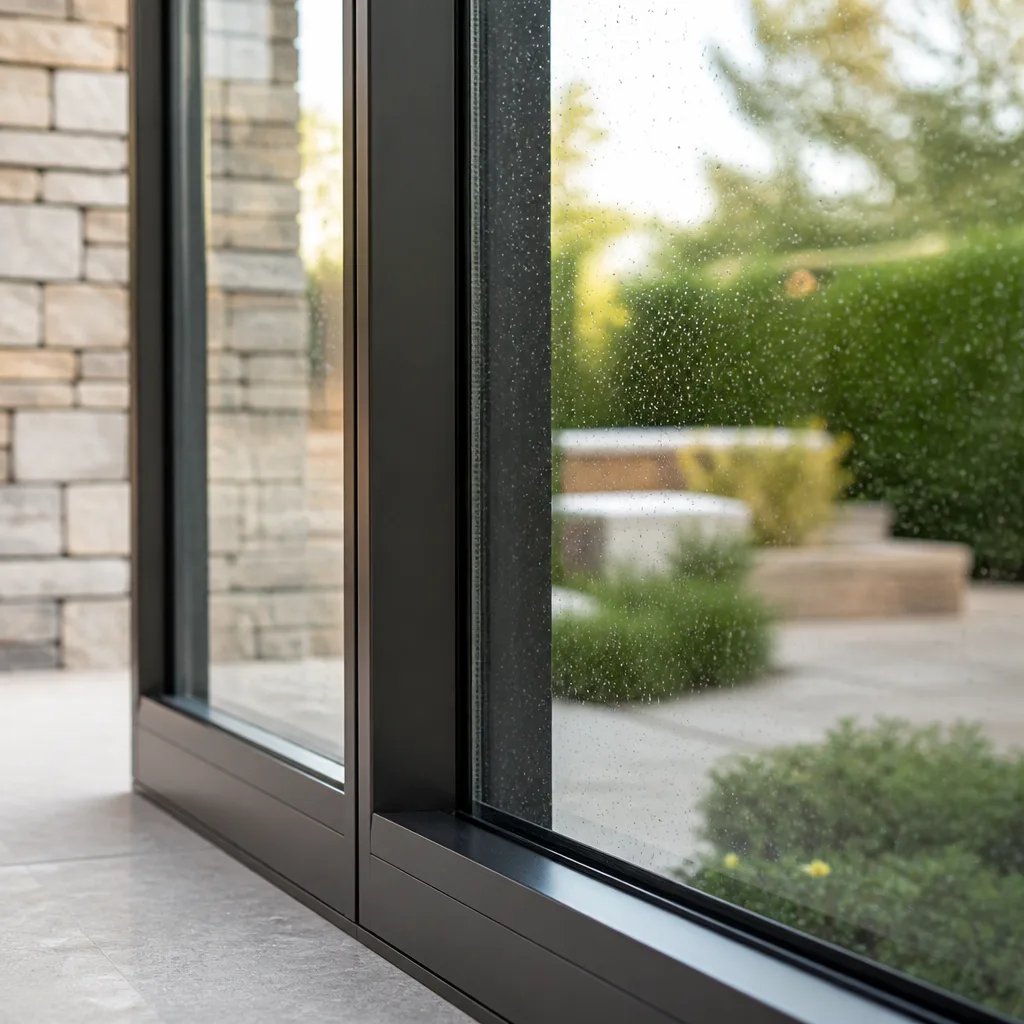
A low-e insulating glass unit is rated at a U-factor measured in a lab under stable conditions. U-factor is the rate of heat transfer through the window assembly – lower is better. SHGC, or solar heat gain coefficient, is the fraction of solar radiation admitted through the glass. Both numbers assume the assembly stays intact: gaskets seated, seals unbroken, drainage paths open. Neglect any of those and the rated numbers drift away from the real numbers.
Mesquite applies three stressors at once. First, dust. The Virgin Valley funnels windborne particulate against exterior glazing and into sill channels, and that grit abrades weatherstripping from the inside out. Second, UV. At roughly 2,000 feet elevation with cloudless days that dominate the calendar, ultraviolet exposure on south and west elevations is relentless, and it hardens and cracks rubber gaskets years ahead of a coastal schedule. Third, freeze-thaw. Winter nights drop below freezing often enough that any moisture trapped behind a blocked weep hole expands, contracts, and works at the frame joints. Three stressors, one schedule – and the printed insert accounts for none of them.
We install energy-efficient lines from PGT, CGI, Therma-Tru and ViewLux, and the material differences matter for maintenance. Vinyl frames and gaskets behave differently than aluminum with a thermal break, and impact-rated units have a heavier sash weight that loads the operator hardware differently. When we hand over a completed job in Mesquite, the maintenance walkthrough covers the specific product on that opening, not a generic brochure. Our technicians have up to 14 years of experience with these assemblies, and the pattern is consistent: units that get quarterly weep-hole care outlast and outperform identical units that get “annual” care.
Weep Holes: The Four-Minute Job That Prevents Water Damage
Weep holes are the small slots or hooded openings at the bottom of a window frame that let accumulated water drain out and let the frame breathe. Blocked weep holes are the single most common cause of frame water intrusion we find in Mesquite installations. Blowing desert dust packs them with a fine silt that hardens after the first rain, and once drainage stops, water sits in the sill channel and finds the least protected seam. The fix takes four minutes with a toothpick, not a service call.
How to clear and check them, in order:
- Locate every weep hole along the sill – typically two per sash, sometimes hooded with a small cover. Count them and write the number in your log so you’ll know if one goes missing.
- Insert a wooden toothpick or a plastic zip tie at a shallow angle and work out the silt. Never use a metal awl or screwdriver; you’ll scratch the finish and can deform the slot.
- Flush with a cup of water from a squeeze bottle and confirm it drains freely out the exterior face. If water stands, the interior channel is packed and needs a second pass.
- Check the hooded covers. If a cover is missing, water tracks behind the frame instead of away from it. Note it and replace it.
- Repeat at every window, and mark the date. In spring wind season along the valley, this becomes a monthly task rather than quarterly.
This is the least glamorous task in the entire schedule and the one that saves the most money. Frame water intrusion rarely announces itself; by the time you see a stain on drywall, the damage has been working for a season or two. In our experience, homeowners who clear weep holes on the quarterly interval simply don’t call us about water. The ones on the annual interval do.
The Full Mesquite Maintenance Calendar, Task by Task
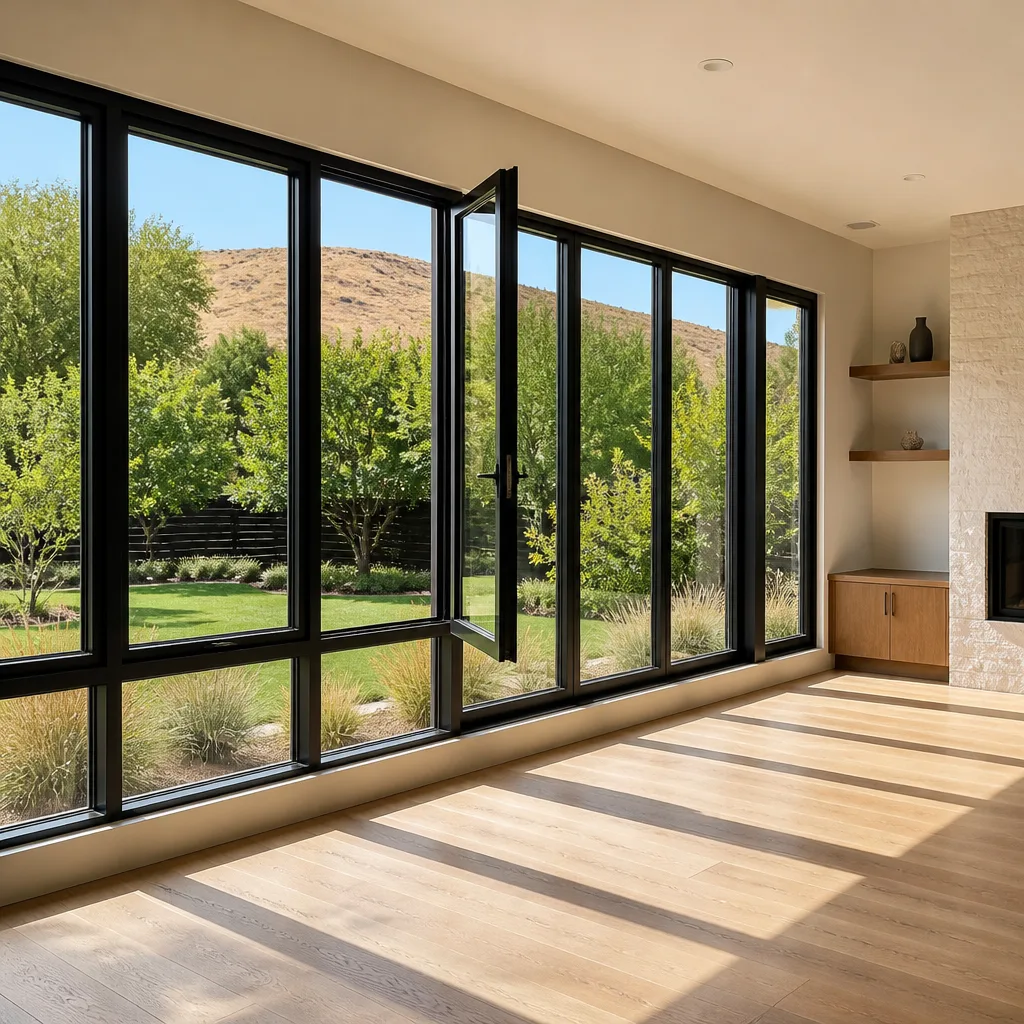
Here’s the schedule we recommend, calibrated to dust, UV, and freeze-thaw. “Quarterly” here means four times a year at roughly equal spacing; tie it to the equinoxes and solstices so it’s easy to remember.
- Monthly: Clean glass on south- and west-facing elevations with a mild dish-soap solution and a microfiber cloth. Rinse the exterior sill channel. Wipe interior tracks with a damp cloth.
- Every 60-90 days (monthly in spring): Clear all weep holes. Inspect exterior caulk lines at the frame perimeter for cracks or separation. Note any gap in the log.
- Quarterly: Inspect bulb gaskets and weatherstripping at the sash perimeter and meeting rail. Run a fingertip along the seal; a draft you can feel is a seal that has failed. Check sash locks and tilt latches for firm engagement.
- Twice a year (spring and fall): Lubricate all operator hardware – casement cranks, awning arms, tilt-wash pivots – with a silicone-based lubricant. Inspect and clean the insect screen. Test the low-e coating per the method below. Do a full written inspection.
- Annually (fall): Have exterior caulk joints reconditioned before the freeze cycle. Verify the maintenance log against the warranty terms for your product line.
For the record on the “annual” myth: you can absolutely run this schedule just once a year. What we’ve observed in Mesquite is that the once-a-year windows arrive at the same condition a quarterly-maintained window reaches in year six or seven, and the gaskets are the first component to fail on the long interval. The maintenance calendar costs you about an hour a quarter. Replacement costs far more.
If you’re weighing whether a tired unit can be maintained back into service or should be replaced outright, our guide to Window Replacement in Mesquite walks through the decision, and a Window Installation in Mesquite survey is the place to start when you decide to replace.
How to Test Low-e Coating Integrity Without Equipment
Low-e is a microscopically thin metallic oxide coating applied to one surface of the glass inside an insulating unit. It reflects infrared energy back into the room in winter and back outside in summer. You can’t measure its emissivity with a flashlight, but you can catch the visual indicators that it’s degrading, and in most cases that’s enough to know it’s time for a professional evaluation.
The indicators to look for, in order of reliability:
- Color shift. Hold a white sheet of paper against the glass in daylight and compare the reflected tint at the edges versus the center. A low-e coating that’s degrading often shows a faint brown, purple, or bronze cast creeping in from the perimeter.
- Haze or iridescence that doesn’t clean off. Clean the glass first with soap and water. If a milky film or a rainbow sheen remains after a proper cleaning, the coating may be delaminating.
- Seal failure fog. Fog or condensation between the panes means the insulated unit’s perimeter seal has failed. That’s a problem with the unit, not the coating, but it’s the most expensive low-e failure and it’s unmistakable.
- Thermal contrast test. On a cold morning, run the back of your hand across the interior glass from center to edge. A well-sealed, properly coated unit feels uniformly cold. A unit with a breached seal often feels markedly colder at the perimeter.
None of these confirms coating performance numerically – only a manufacturer’s test does that. But they tell you when to escalate. For the products we install, including PGT and ViewLux units, the 365-Day Done Right Promise means if a failed seal or coating issue appears within the promise window, we come back and make it right. Call us at (888) 268-5117 and we’ll inspect the unit against the documentation from your original install. Read our Sightline Windows & Doors Mesquite home page for how the Haven Standard governs that promise.
Hardware Care for Tilt-Wash and Casement Operators
Energy-efficient units almost always carry heavier sashes than the single-pane windows they replaced, and that load lands on the operator hardware. A tilt-wash window pivots its lower sash inward on two tilt latches at the top; a casement opens on a crank-and-arm operator that pushes the sash against a compression seal. Both work against the seal every time they operate, and both need the right lubricant.
The lubricant choice is the thing most homeowners get wrong. Use a silicone-based lubricant or a dry PTFE spray. Do not use petroleum jelly, household oil, or WD-40 as a long-term lubricant – petroleum products attract dust, gum up in cold weather, and can degrade the plastic and rubber components over time. In a dusty climate like Mesquite’s, a tacky lubricant is a dust magnet, and a dust-loaded operator grinds its own seals.
Quarterly hardware steps:
- Wipe the operator mechanism clean with a dry cloth before applying anything. Dirt under lubricant is grinding paste.
- Apply a light silicone spray to the crank stem, the hinge arms, and the tilt-wash pivot points. Wipe off excess.
- Test a full open-and-close cycle. The motion should be smooth with no binding, and the sash should pull snug against the weatherstripping at both ends.
- Check the tilt latches release cleanly and re-engage with a firm click. If a latch won’t hold, the sash may drop during cleaning – stop and call a professional.
If a crank feels stiff no matter how well you lubricate it, the operator mechanism is likely worn and should be replaced. That’s a repair, not a maintenance task, and it’s usually less expensive than replacing the whole unit.
What Maintenance Shows Up on a Utility Bill
A neglected window assembly doesn’t fail dramatically – it leaks a little energy every day. Two units of identical specification, one maintained per the schedule above and one neglected, will show a measurable spread on the summer bill. The neglected unit loses performance through two channels: air infiltration past hardened gaskets and weatherstripping (which costs you on both heating and cooling), and solar heat gain through a degraded seal where the low-e layer has begun to fail.
Here’s what to expect as a homeowner when you track it. On a maintained window, you’ll see a stable seasonal pattern – the summer peak in cooling load lands where the prior year’s peak landed, adjusted for weather. On a neglected window, the summer peak creeps upward year over a two-to-three-year stretch without a change in weather, and the winter heating load shows the same drift. That creep is the signature of a window assembly leaking performance. It takes a utility bill comparison to see it; a single month won’t reveal it.
The practical move is to keep twelve months of bills in a folder – paper or a spreadsheet, either works – and compare the same month against the prior two years. If the cooling-season peak is rising faster than the local weather data explains, your window assemblies are the first thing to inspect. This is where a physical inspection pays for itself. We’ve seen Mesquite homes where a failed gasket on two north-facing units accounted for a noticeable share of the summer cooling load; replacing the gaskets – a modest repair – restored the pattern. It’s worth saying plainly: maintenance is the cheapest energy-improvement measure available.
Keeping a Maintenance Log That Supports Warranty Claims
Warranty claims succeed or fail on documentation. A manufacturer’s warranty on an insulating glass unit, a frame, or a finish component usually requires the homeowner to show that the product was maintained to specification and that any failure was reported promptly. A maintenance log is your evidence. It costs almost nothing to keep and it’s the difference between a covered replacement and a denied claim.
What belongs in the log, for each window opening:
- An identifier for the opening – a simple label like “living room, west” or a small numbered sticker on the frame. Match it to the measured survey you received at install.
- The date of each maintenance task and what you did: weep holes cleared, gaskets inspected, hardware lubricated, glass cleaned.
- What you found, in plain observational terms: “gasket at meeting rail feels stiff and a draft is detectable,” not “seems fine.”
- Photos at each inspection, with the same framing each time. Progress photos show condition over the life of the unit.
- The date of any professional inspection or repair, and the written scope you received.
Every Sightline job comes with a documented photo record of the completed installation, and that record is the baseline your log builds on. When you keep your own quarterly notes, you have a continuous condition history from the day of install – the strongest possible evidence if a claim ever arises. If you replace rather than repair, the new install starts a fresh document file; ask for the written scope and photo record and file them with the survey. For a look at how Door Installation in Mesquite documentation works alongside window records, that page shows the same structure.
Common Mistakes to Avoid
- Cleaning weep holes with a screwdriver or awl. Metal tools deform the slot and scratch the finish, and a deformed weep hole drains worse than a blocked one. A toothpick or zip tie is the right tool.
- Using household oil or WD-40 on operators. Petroleum-based products attract dust in Mesquite’s wind season and gum up the mechanism in cold weather. Use silicone or dry PTFE.
- Running the manufacturer’s annual schedule in a desert climate. Dust, UV, and freeze-thaw between them overwhelm an annual cycle. Quarterly weep-hole care and twice-yearly hardware service are the real minimums here.
- Assuming tinted glass means low-e is working. Visible tint has nothing to do with the coating’s emissivity. Check the edge-to-center reflection and watch for a haze that doesn’t clean off.
- Skipping the log until a problem appears. A warranty claim without a maintenance history is a claim without proof. Keep the notes from day one.
- Power-washing the frames and gaskets. High-pressure water forces silt deeper into the sill channel and can displace weatherstripping. A garden hose and a soft cloth do the job without damage.
- Ignoring a stiff crank until it fails. A binding operator damages the sash seal every time you force it. Lubricate quarterly and replace a worn operator early.
When to Call a Professional
Some maintenance is a homeowner job and some isn’t. Call a professional when you find fog or condensation between panes (a failed insulated unit seal), when you can feel a draft through a closed and locked sash after confirming the gaskets aren’t obviously displaced, when a crank or tilt latch binds despite proper lubrication, when you see water staining at the interior sill or drywall, or when the exterior caulk line has separated from the frame. Any of these signals a repair or replacement decision beyond routine care. Sightline Windows & Doors Mesquite offers free estimates in Mesquite – call (888) 268-5117, and we’ll bring the required tools and the written scope. Live phone coverage is available around the clock. A free second opinion on a written estimate from another contractor is also yours, at no charge.
Frequently Asked Questions
Weep holes should be cleared every 60-90 days, monthly during spring wind season; gaskets and weatherstripping inspected quarterly; and operator hardware lubricated twice a year. A full written inspection belongs on both equinoxes. That’s shorter spacing than manufacturer inserts recommend because Mesquite’s dust, UV, and freeze-thaw cycle is a harsher operating environment than the national average.
Fog between the panes means the insulated glass unit’s perimeter seal has failed and moisture has entered the space; no exterior cleaning will remove it. That’s a repair or replacement decision, not a maintenance task. Call (888) 268-5117 for a free inspection, and we’ll compare the unit against the documentation from your original install under the 365-Day Done Right Promise.
Yes, on the glass itself, using a mild soap solution or an ammonia-free glass cleaner and a microfiber cloth. Avoid abrasive pads and ammonia-heavy products near the frame finish, and never power-wash the frame or gaskets. Clean south- and west-facing glass roughly monthly in Mesquite, since UV and dust film build up there fastest.
Often yes, because manufacturers typically require evidence that the product was maintained to specification and that failures were reported promptly. A dated log with photos of each opening – labeled to match your install survey – gives you that record. Start it the day of installation and review your product-line warranty terms annually.
A silicone-based lubricant or dry PTFE spray. Never petroleum jelly, household oil, or WD-40 as a long-term solution – those attract dust and stiffen in cold weather, and here in Mesquite the dust load is significant. Clean the mechanism first, apply lightly, wipe off the excess, and test a full open-and-close cycle.
You can’t measure emissivity without equipment, but you can catch the visual indicators: a brown, purple, or bronze cast creeping in from the perimeter when you hold white paper against the glass; a haze that doesn’t clean off; or a thermal variation at the glass edge on a cold morning. Any of these warrants a professional inspection – call (888) 268-5117 for a free estimate.
The Bottom Line

Energy-efficient windows in Mesquite perform at their rated U-factor and SHGC only while the inexpensive components – gaskets, weatherstripping, weep holes, operator hardware – stay in working condition. The schedule that protects them is quarterly on weep holes and gasket inspection, twice-yearly on hardware with a silicone or PTFE lubricant, and monthly cleaning on the sun-exposed elevations. Keep a dated log with photos labeled to your install survey; that’s the document warranty claims and energy analysis both depend on. The manufacturer’s annual insert doesn’t fit this climate. The calendar above does.
Written by the team at Sightline Windows & Doors Mesquite.
Six Reasons Homeowners Choose Sightline Windows & Doors Mesquite
Laminated glass and reinforced frames hold up to wind-driven rain, hail and flying debris, so your openings stay sealed when the weather turns.
Low-E insulated impact glass from our manufacturer lines commonly cuts monthly cooling bills 20-30%.
Laminated impact glass shuts out up to 40% of outside noise - traffic, neighbors, weather.
Monitoring services run $30-90 a month. Laminated impact glass resists forced entry around the clock, with no subscription.
Tighter seals and insulated glass even out hot and cold rooms and stop the drafts at the frame.
A full impact package upgrades curb appeal, buyer confidence and appraised value in one project.
Other Sightline Windows & Doors Mesquite Services