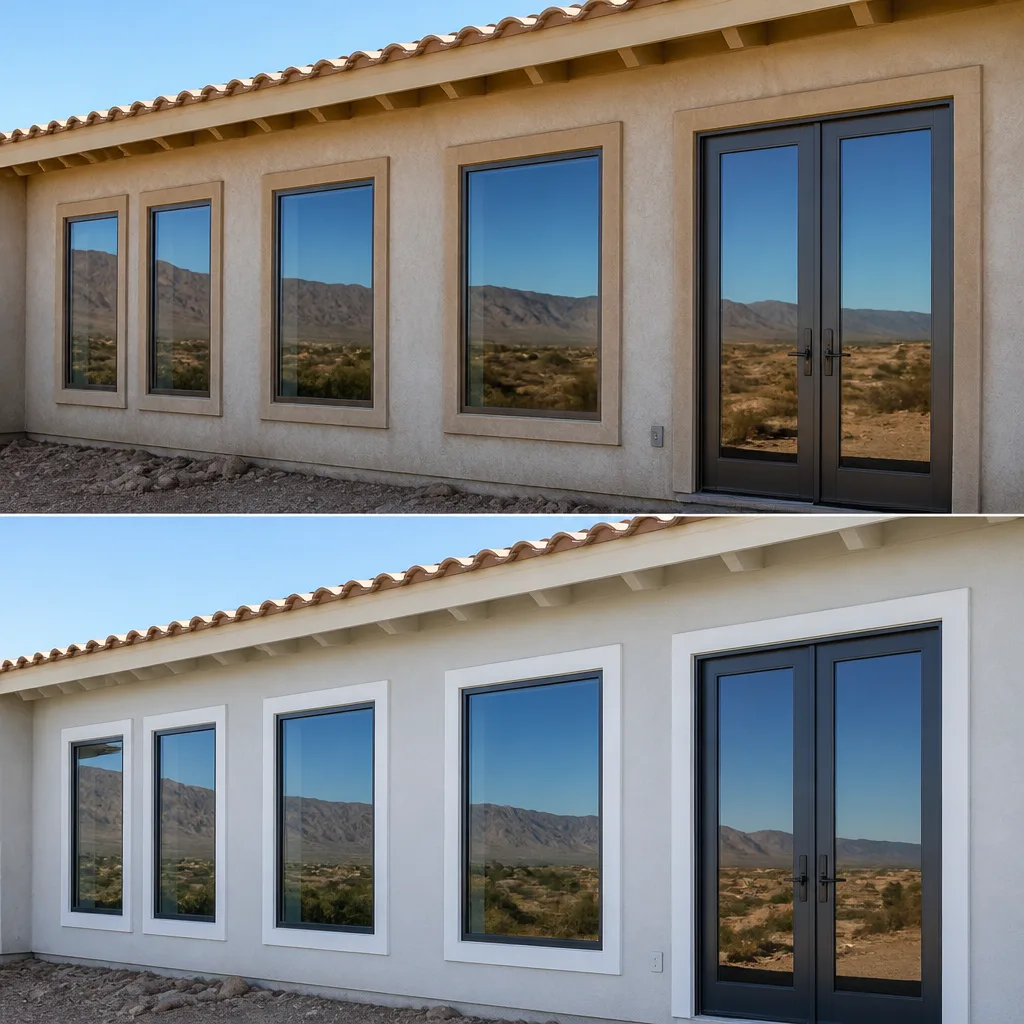
Last updated November 18, 2026
New windows and doors improve comfort, cut energy bills and add long-term value to your home. Sightline Windows & Doors Mesquite pairs proven product lines with a local vetted installing partner for lasting performance - and a price put in writing.
Choose your installer
The unit is half the job - the install is the other half. Background-checked local installers measure, set, seal and insulate every opening, and they know the lines we quote inside and out.
Select the right products
Compare styles, materials and glass packages side by side until the fit is right for your rooms, your budget and your goals. The product-line comparison below is the place to start.
Prepare your home for install
Before install day we walk you through a short checklist - furniture pulled back, treatments down, a clear path to each opening - so install day is watch-it-happen, not scramble.
Compare the Lines We Quote
Every project is priced on the same lines, side by side - the price indicators below are relative, and your consultant shows exact numbers on your actual openings.
PGTThe line homeowners arrive naming - the most impact certifications in the industry$$$
- More impact certifications than any other line we quote
- WinGuard, EnergyVue and ClassicVue Max systems built for every wind zone
- 99% on-time delivery keeps your install date on the calendar
CGIThe heavyweight impact line$$$$$
- Large-missile impact ratings for the strictest wind zones
- Architectural-grade aluminum with commercial-depth frames
- The line we quote when protection is the whole point
CWSThe value pick$$
- Vinyl systems built to strict wind codes
- Strong energy packages at the friendliest price point
- The smart start for whole-home replacements on a budget
ESWSlim lines, big glass$$$$
- Narrow-sightline aluminum for modern elevations
- Oversized openings and floor-to-ceiling glass
- Impact-rated without the bunker look
ECOThe aluminum impact workhorse$$$
- Factory-built aluminum impact systems
- A strong price-to-protection ratio for coastal homes
- Proven lines with short lead times
Door Installation Troubleshooting: Common Problems and How to Fix Them
Most door problems that show up long after installation are not hardware failures. They’re geometry problems: a strike plate that has crept an eighth of an inch relative to the latch bolt, a hinge-side jamb that has settled, a header that has deflected under load. In our experience across thousands of openings, a door that suddenly stops latching after years of smooth operation is telling you about the frame around it, not the lock. This guide gives you the three measurements to take first, the tests that separate weatherstripping wear from door sag, and the documentation that supports a warranty or insurance claim in Mesquite.
Quick Answer

Diagnose a sticking or drafty door with three tape-measure checks before touching any hardware: the diagonal measurement from the top-hinge corner to the bottom-strike corner versus the opposite diagonal (squareness), the gap between door and jamb at the latch side (even reveal), and the door-to-threshold clearance at the sweep. If the diagonals differ by more than 1/8 inch or the reveal varies by more than 3/16 inch top to bottom, the problem is frame geometry, not the hardware, and adjusting the lock won’t fix it.
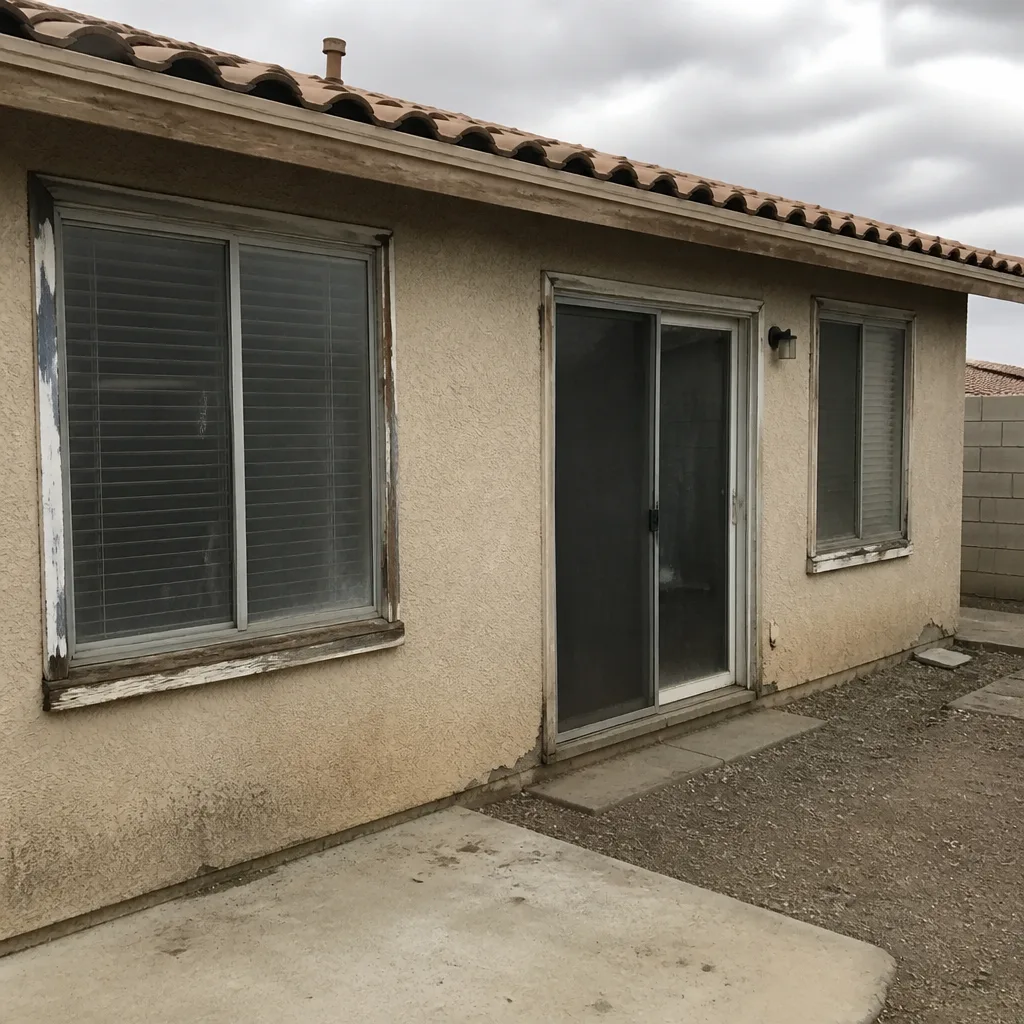 Before
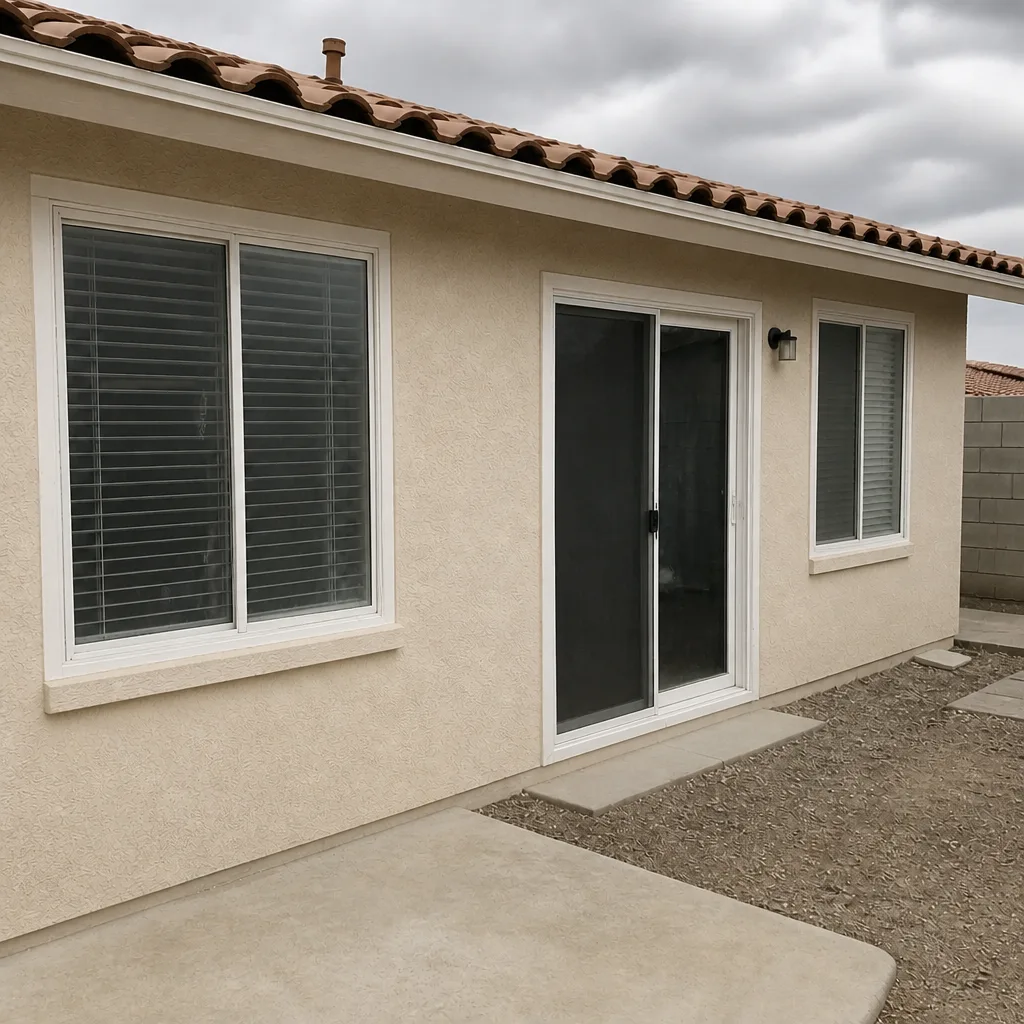 After
Table of Contents
- The Three Numbers to Check First
- How to Check Door Squareness With a Tape Measure
- Three Causes of Threshold Drafts and How to Tell Them Apart
- How to Adjust a Door Hinge in Three Dimensions
- Strike Plate Relocation vs. Door Plane Adjustment
- When the Problem Is Foundation Settlement, Not the Door
- How to Document a Door Defect for Insurance or Warranty
- Why Mesquite’s Climate Ages Doors Differently
The Three Numbers to Check First
Before you loosen a single screw, take three measurements. They tell you which category of problem you’re facing, and they cost nothing but ten minutes and a tape measure.
- Diagonal A: top-hinge corner of the door slab to the bottom-strike corner.
- Diagonal B: top-strike corner to the bottom-hinge corner.
- Latch-side reveal: the gap between the door edge and the jamb, measured at the top, middle, and bottom of the latch side.
Write all three down. A door that measures square (diagonals within 1/16 inch of each other) but still won’t latch has a hardware or strike-plate problem, and that’s usually a one-visit fix. A door whose diagonals differ by 1/8 inch or more has a racked frame: the opening itself is no longer a true rectangle, and no amount of hinge fiddling will make the door close flush. The reveal reading then tells you whether the racking is a shimming issue you can fix by resetting the frame, or whether the rough opening has moved enough that replacement is the honest answer.
In our experience, roughly eight in ten “the door won’t latch” calls resolve to a strike-plate offset of 1/8 inch or less. That’s the good news: the remaining two in ten are the ones where a Mesquite homeowner needs to know the difference between a $60 adjustment and a $1,800 replacement, and the tape measure is the tool that sorts them.
How to Check Door Squareness With a Tape Measure
Door squareness is not a feeling. It’s a number, and you can read it with a $12 tape measure and a pencil mark.
- Hook the tape at the top-hinge corner of the door slab. Measure diagonally to the bottom-strike corner. Note the number to the sixteenth of an inch.
- Hook the tape at the top-strike corner. Measure diagonally to the bottom-hinge corner. Note the number.
- Subtract the smaller from the larger. That difference is your out-of-square reading.
- Measure the latch-side reveal at the top, middle, and bottom of the latch jamb. Compare all three.
Tolerance guide: a diagonal difference under 1/16 inch is normal installation tolerance and shouldn’t cause function problems. Between 1/16 and 1/8 inch, the frame has likely shifted a little and can usually be corrected by re-shimming the hinge jamb and resetting the strike. Above 1/8 inch, the frame is racked enough that we recommend a full reset or, if the door is original to the house and the rough opening has moved more than 1/4 inch, a replacement with a properly shimmed new frame.
Mesquite homes built during the 2004-to-2010 construction surge often have original pre-hung doors whose hinge-side shims have compressed by a few sixteenths over two decades of thermal cycling. That’s a shimming fix, not a replacement. A door on a 1990s slab in the older parts of town, sitting on foundational soils that have moved, is more often a replacement candidate. The numbers tell you which.
Three Causes of Threshold Drafts and How to Tell Them Apart
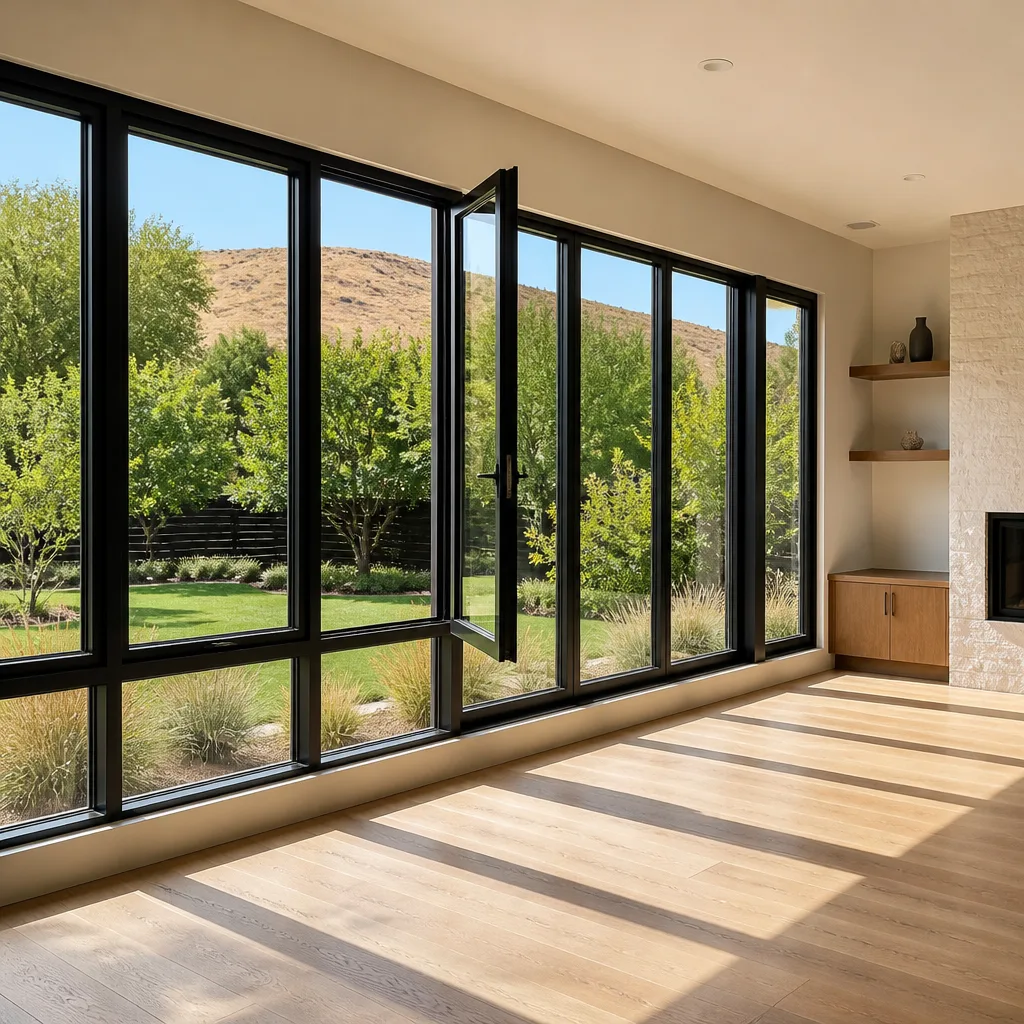
A draft at the bottom of the door can come from three very different problems, and the fix for each is different enough that guessing wastes money. The dollar bill drag test is how we separate them in the field.
The dollar bill drag test: close the door on a dollar bill (or a strip of paper, 6 inches long). Pull it out slowly at the latch side, the center, and the hinge side. A properly sealed door gives firm resistance at all three points. Where the bill slides easily, that’s your leak.
- Weatherstripping wear. The drag is weak everywhere, the gap at the sweep looks even, and the door itself feels tight in the frame. The sweep or weatherstrip has cracked, compressed, or peeled off its kerf. This is the most common cause in Mesquite because intense UV exposure breaks down the foam and vinyl sweeps faster than in a mild climate. Fix: replace the sweep or weatherstrip, a sub-$100 part for most doors.
- Threshold height out of spec. The door slab is square but sits a quarter-inch above the threshold because the sill is set too low or the door was hung without accounting for the final floor thickness (common when a homeowner puts down tile over an existing slab). The sweep never makes contact. Fix: adjust the threshold’s height screws if your sill has them, or install a deeper sweep.
- Door sag. The drag is strong at the hinge side and weak at the latch side, and the reveal is tighter at the top latch side than the bottom. The door has dropped because the hinges have loosened or the hinge jamb has settled. Fix: hinge adjustment (below) or jamb re-shimming. Weatherstripping won’t fix a sag.
If you’re in Mesquite and getting a draft under a south- or west-facing exterior door, assume UV wear first. The afternoon sun at this latitude (over 100°F for weeks each summer) ages a sweep faster than a homeowner expects, and the sweep is the cheapest of the three fixes to rule out.
How to Adjust a Door Hinge in Three Dimensions
Adjusting a hinge is not the same as replacing one. Existing hardware can fix most hinge-related problems in all three dimensions, and it saves the door and the wallet both.
Vertical (door dropped at the latch side): tighten the top hinge screws first. If those spin loose, the jamb wood has stripped and the screw is the problem. Fill the holes with a wooden golf tee or glue a dowel plug, then re-drive a 3-inch screw that reaches into the rough framing behind the jamb. This is the single most useful door repair a homeowner can make.
Horizontal (door too tight or too loose at the latch): shim behind the hinges. A thin cardboard shim (business card thickness) behind the bottom hinge pushes the latch side of the door toward the jamb; behind the top hinge, it pulls it away. Move in 1/32-inch increments and re-test.
In/out (door rubs on the latch jamb in the middle): bend the hinge knuckles slightly with an adjustable wrench, or replace one hinge with a slightly larger-throw hinge. Don’t bend more than 1/16 inch at the knuckle or you’ll deform the hinge pin and make things worse.
If you have time to look at the door frame first, our guide to Door Installation in Mesquite explains how the shimming order is set at install. Getting the shims right at install is why adjustable hinge fiddling is often unnecessary for ten years.
Strike Plate Relocation vs. Door Plane Adjustment
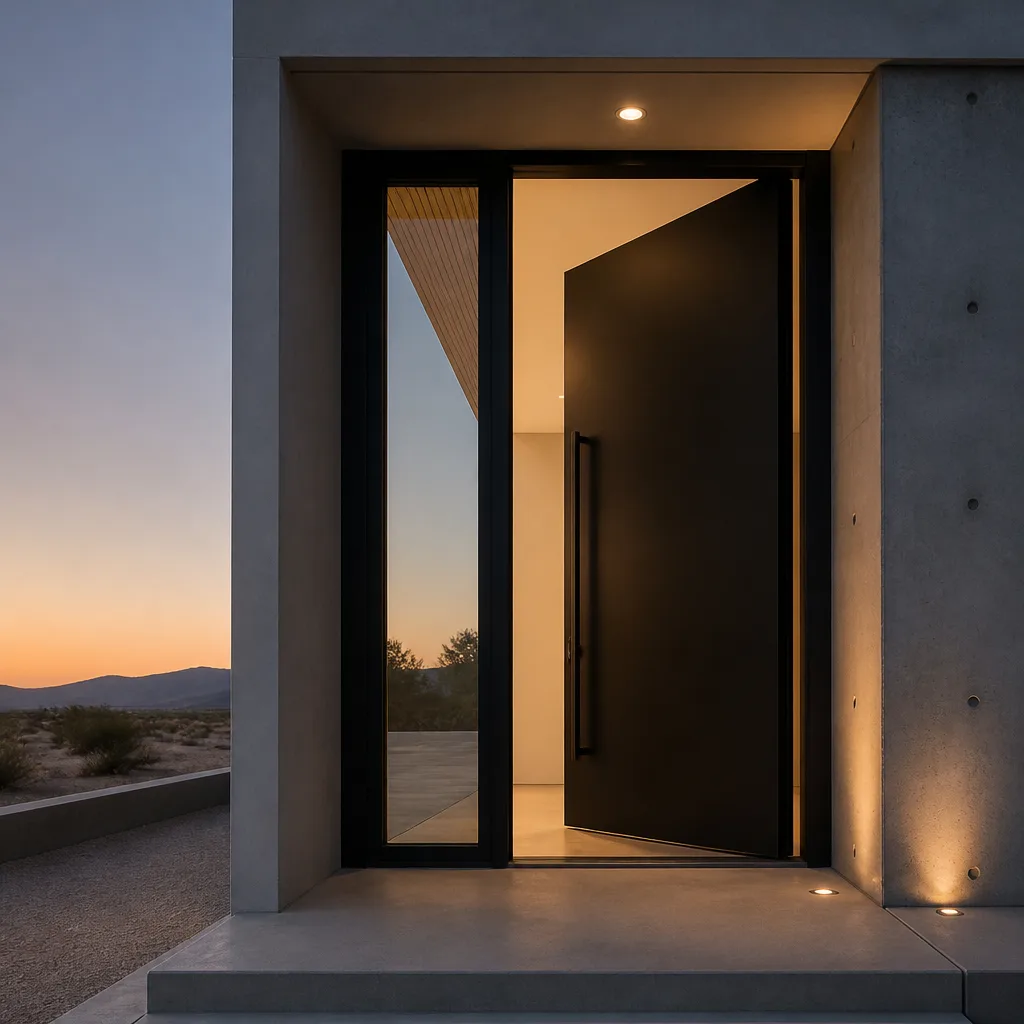
Two approaches fix a misaligned latch. Only one of them lasts on a frame that’s still moving.
Strike plate relocation means moving the strike plate on the jamb so the latch bolt catches. You file the strike opening larger, or you drill new screw holes and shift the plate up, down, or forward by an eighth of an inch. It’s fast, it’s cheap, and on a stable frame it’s permanent. On a Mesquite home where the foundation is actively settling, relocation just chases the problem: six months later the door is out of alignment again, only now the strike plate has been filed twice and the jamb looks like a woodshop project.
Door plane adjustment means resetting the entire door in the frame: re-shimming the hinge jamb, re-plumbing it with a 4-foot level, re-setting the strike plate in a single pass, and resetting the head jamb. It takes longer and it’s what a proper install looks like. It’s also the only fix that holds when the frame itself has racked.
The rule of thumb: if the door is within an eighth inch diagonally and has stayed that way for a year, strike plate relocation is honest work. If the diagonals are drifting year over year, relocation is a Band-Aid over a moving foundation, and the honest fix is a full reset or re-hang. Our Window Replacement in Mesquite and door teams see this on the same call all the time: a settling foundation moves the openings, not just one door.
When the Problem Is Foundation Settlement, Not the Door
A door that suddenly won’t latch is 80% of the time a strike plate that has moved 1/8 inch, not a hardware failure. That number matters because it points to a cause most homeowners miss: the strike plate has no reason to move unless the frame around it moved, and frames move because of foundation settlement or header deflection, not because of gravity on the door alone.
The signs that the door is telling you about the building:
- The door has needed strike-plate adjustments more than once in 18 months.
- Interior doors upstairs in the same hallway are sharing the same symptom.
- You can see a hairline crack in the drywall above the door corner, running diagonally out from the jamb.
- The floor under the threshold has a visible slope, or the tile has loosened near the door.
- A sliding patio door in the same wall is suddenly harder to operate.
In Mesquite, expansive clay soils and the summer heat-pump draw both contribute to slab movement, especially on older single-story homes. If the door is a symptom and the foundation is the cause, fixing the door is a temporary favor. A structural engineer’s report is the honest next call, and our team will say so on a site visit if the numbers point that way. Our Window Installation in Mesquite crew checks the same wall for movement, because windows and doors share the framing.
How to Document a Door Defect for Insurance or Warranty
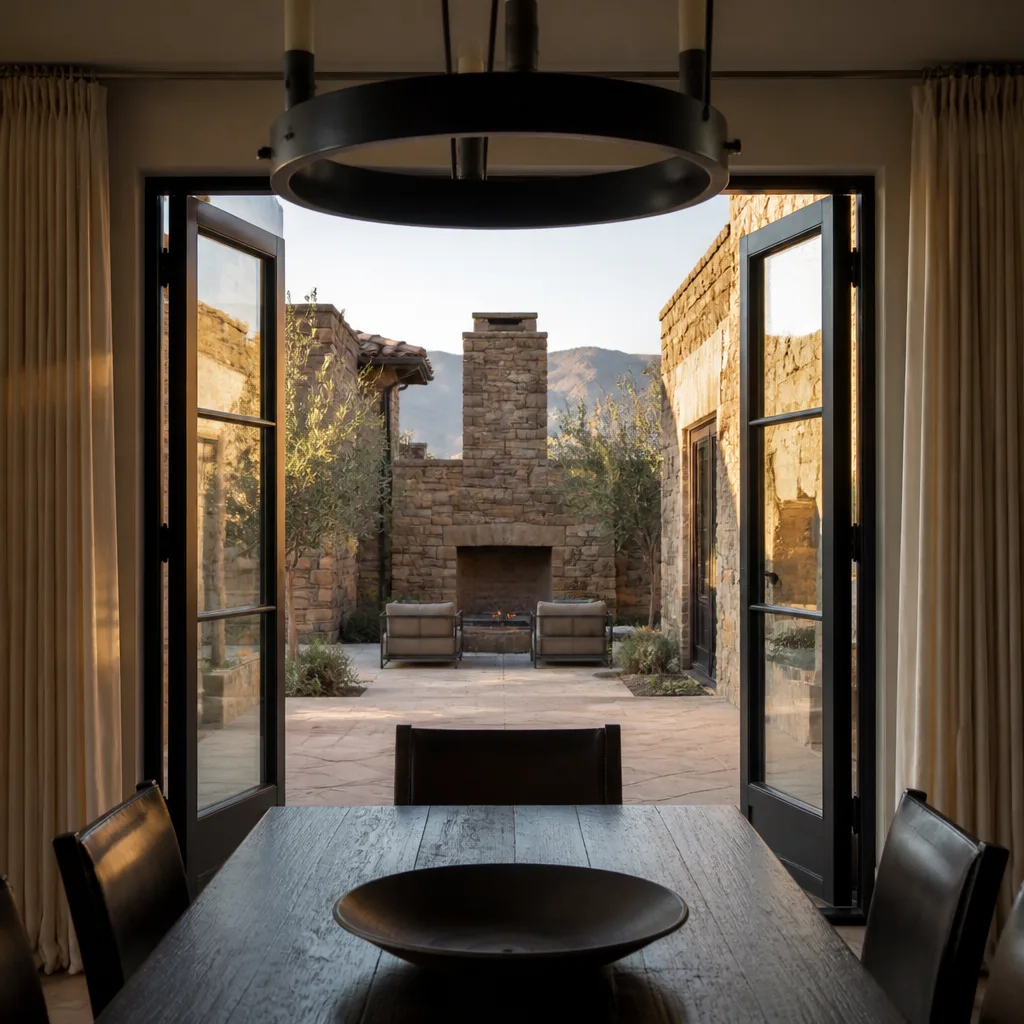
Insurance adjusters and warranty departments don’t respond to descriptions. They respond to measurements and photos that show the same thing twice, from different angles. Here’s what to collect before you pick up the phone.
- Photo of the whole opening, taken from 6 feet back at door height, including the threshold and the top of the door.
- Photo of the latch-side reveal at top, middle, and bottom, with a tape measure visible in the frame.
- Photo of the strike plate with the door open, showing screw holes and any filing.
- Photo of the corner of the door where the drywall meets the jamb, if there’s a crack.
- The three written measurements from the squareness check, dated.
- The original install paperwork, if you have it: the measured survey and the written scope the installer gave you.
That last item is where installers separate. Because our measured survey and our written quote are the same document (Haven Clause 1: Have It In Writing), a Mesquite homeowner with a Sightline-installed door has a dated, signed record of the opening as it was on day one, which is the reference the adjuster needs. Our crews also produce a documented photo record when the job completes (Haven Clause 4: Evidence On Every Job), so a claim filed two years later has a starting baseline.
Why Mesquite’s Climate Ages Doors Differently
Doors in Mesquite live harder than doors in most of the country. Summer highs over 110°F, single-digit winter humidity, and intense UV exposure all act on exterior door components in ways that a coastal or mild-climate installation manual doesn’t always anticipate.
- Weatherstripping breaks down first. Foam and vinyl sweeps on a south- or west-facing exterior door often need replacement within 4 to 6 years, not the 10 or 12 you’d get inland.
- Wood frames dry and shrink. The latch-side jamb can open up 1/16 inch in the dry season, then close in monsoon humidity. Hinges and strikes need to be set with that seasonal swing in mind.
- Paint and finish fail faster. Any door installed in Mesquite should be finished on all six sides, including the top and bottom edges, before it hangs. Failing to finish the top edge is the single most common mistake we see.
Our Sightline Windows & Doors Mesquite home page lists the product lines we work with, including PGT, CGI, CWS, ES Windows, ECO Window Systems, Mr-Glass, Therma-Tru, and ViewLux. We specify each one by what the opening requires and what the sun exposure demands, not by margin. A fiberglass door on a west-facing entry here needs a different spec than a wood door on a shaded north entry, and the written quote says which one and why.
Common Mistakes to Avoid
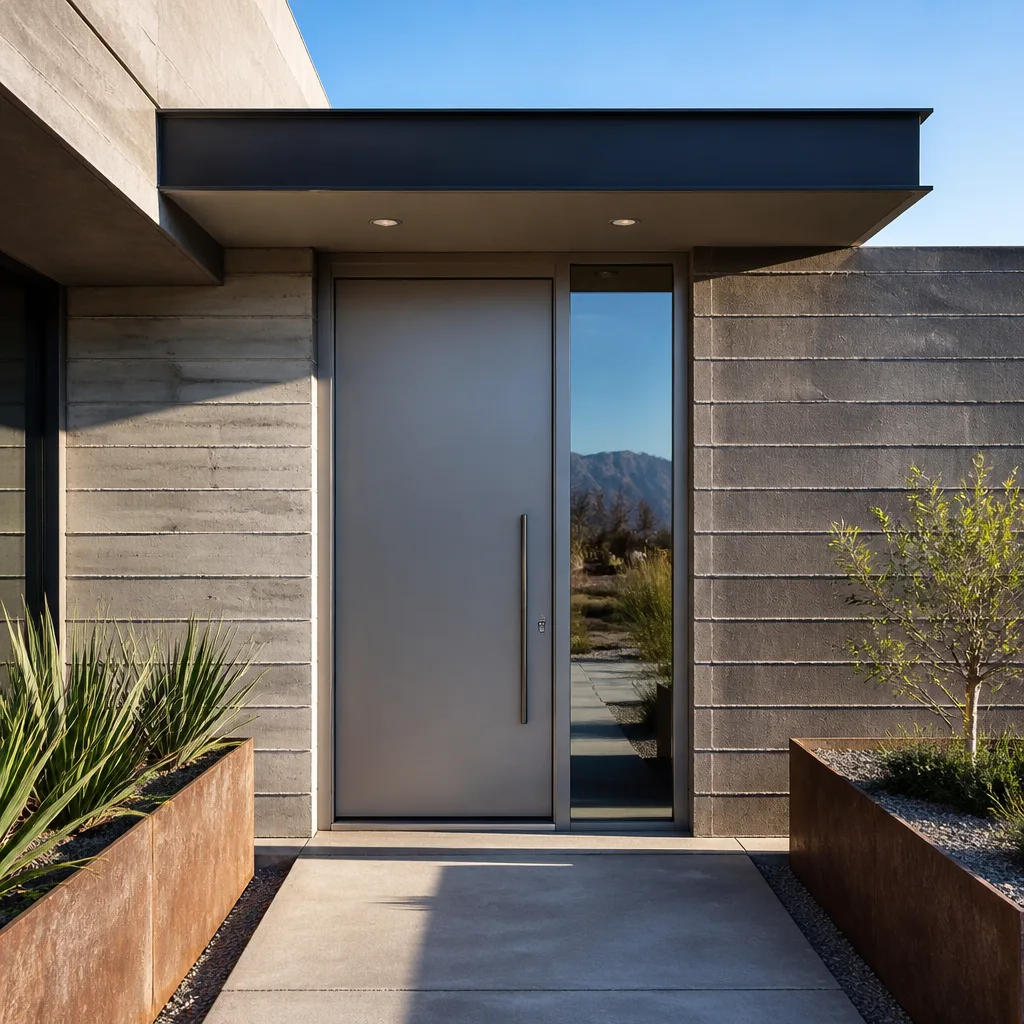
- Filing the strike plate before checking the diagonals. A filed strike plate on a racked frame just makes the next fix harder. Measure first, file last.
- Filling stripped hinge holes with wood filler. Wood filler crumbles under door weight. Use a glued dowel plug or a golf tee, and drive a longer screw that reaches structural framing.
- Using a plane or sander on a door edge before ruling out a frame problem. Once you’ve planed a door, you can’t put the material back. Nine times out of ten the door is fine and the frame moved.
- Replacing weatherstripping on a door with a sag. New stripping on a sagging door just compresses awkwardly and leaks in a different place. Fix the sag first.
- Ignoring the same symptom on a nearby window or patio door. In Mesquite, a door that won’t latch and a slider that’s harder to operate in the same wall is one building problem, not two door problems.
- Buying a new door when the frame is fine. If the diagonals are within 1/8 inch, the frame works and only the hardware or sweep needs attention. Replacement is for a rough opening that has moved.
- Skipping the finishing on the top and bottom edges. An exterior door finished on four sides and left bare on two rots from the inside out, often within three Monsoon seasons in Mesquite.
When to Call a Professional
Call a professional when the diagonals differ by more than 1/8 inch, when the strike plate has been adjusted more than once in 18 months, when the door has begun to leak at the threshold despite a new sweep, or when the same symptom shows up on more than one opening in the same wall. Foundation settlement, header deflection, and rough-opening movement are beyond the scope of what any homeowner should try to fix with hardware and a level. Also call if the door is impact-rated and the frame has racked: impact glazing and impact-door assemblies are certified as a system, and once the frame is out of tolerance the impact rating is compromised. Our technicians have up to 14 years of experience diagnosing exactly this, and the visit starts with a measurement, not a sales pitch. Sightline Windows & Doors Mesquite offers free estimates in Mesquite. Call (888) 268-5117 to schedule.
Frequently Asked Questions
Measure both diagonals from corner to corner on the door slab. If they differ by less than 1/8 inch and the door has been stable for a year, an adjustment will fix it. If they differ by more than 1/8 inch or have drifted over two seasons, the frame has racked and reinstallation with proper shimming is the honest fix. Call (888) 268-5117 for a free estimate if the numbers are borderline; we measure it and tell you which side of the tolerance you’re on.
Summer heat expands the door slab and the jamb at different rates, especially on south- and west-facing exterior doors where surface temperatures can exceed 140°F. If the door sticks only in summer, the reveal was set too tight at install or the frame has shifted seasonally. The fix is usually re-shimming the hinge jamb to open the reveal by 1/16 inch.
Hinge and strike-plate adjustments typically run $85 to $180 for a single door. Full reset with re-shimming and re-hanging runs $220 to $420. A replacement pre-hung exterior door, installed, runs $650 to $1,900 depending on size, material, and whether the opening needs repair. Our written quote is the price before work starts, and it doesn’t change mid-job.
Sometimes. Insurance usually covers sudden damage (storm, impact, water) but not gradual settlement or wear, unless the settling is the result of a covered event. The documentation matters more than the argument: dated photos, diagonal measurements, and the original install paperwork are what an adjuster needs. Keep all three.
Replacement of a like-for-like exterior door in an existing opening typically doesn’t require a permit; enlarging an opening, changing the door’s structural role, or installing a new opening does. Rules vary and we pull permits and pass inspections when the job scope requires it. Ask at the estimate stage, and get the answer in writing.
A well-installed fiberglass or steel exterior door with proper finishing and a weatherstripping refresh every 5 to 7 years should function well for 20 to 30 years. A wood door with finish on only four sides typically fails in 6 to 10 in this climate. The installation and finishing are what set the clock.
The Bottom Line
Most door problems are geometry problems, and geometry can be measured with a tape measure before anyone touches a screwdriver. Take the diagonals. Check the reveal. Run the dollar bill drag test. The numbers will tell you whether you’re looking at a sub-$100 weatherstrip fix, a $150 hinge and strike adjustment, or a frame that has moved and needs a proper reset or replacement. In Mesquite, where UV, heat, and soil movement all act on the opening, the measurement habit pays for itself the first time you avoid buying a door you didn’t need. Every completed job under the Haven Standard carries the 365-Day Done Right Promise and a documented photo record, and every engagement starts with a measured survey you keep.
Call (888) 268-5117 to schedule a free estimate in Mesquite. Bring us a competitor’s quote if you have one: our free second opinion on any written estimate is included.
Written by the team at Sightline Windows & Doors Mesquite.
Six Reasons Homeowners Choose Sightline Windows & Doors Mesquite

Laminated glass and reinforced frames hold up to wind-driven rain, hail and flying debris, so your openings stay sealed when the weather turns.
Low-E insulated impact glass from our manufacturer lines commonly cuts monthly cooling bills 20-30%.
Laminated impact glass shuts out up to 40% of outside noise - traffic, neighbors, weather.
Monitoring services run $30-90 a month. Laminated impact glass resists forced entry around the clock, with no subscription.
Tighter seals and insulated glass even out hot and cold rooms and stop the drafts at the frame.
A full impact package upgrades curb appeal, buyer confidence and appraised value in one project.
Other Sightline Windows & Doors Mesquite Services
What Neighbors Say About Sightline Windows & Doors Mesquite