Last updated November 18, 2026
New windows and doors improve comfort, cut energy bills and add long-term value to your home. Sightline Windows & Doors Mesquite pairs proven product lines with a local vetted installing partner for lasting performance - and a price put in writing.
Choose your installer
The unit is half the job - the install is the other half. Background-checked local installers measure, set, seal and insulate every opening, and they know the lines we quote inside and out.
Select the right products
Compare styles, materials and glass packages side by side until the fit is right for your rooms, your budget and your goals. The product-line comparison below is the place to start.
Prepare your home for install
Before install day we walk you through a short checklist - furniture pulled back, treatments down, a clear path to each opening - so install day is watch-it-happen, not scramble.
Compare the Lines We Quote
Every project is priced on the same lines, side by side - the price indicators below are relative, and your consultant shows exact numbers on your actual openings.
PGTThe line homeowners arrive naming - the most impact certifications in the industry$$$
- More impact certifications than any other line we quote
- WinGuard, EnergyVue and ClassicVue Max systems built for every wind zone
- 99% on-time delivery keeps your install date on the calendar
CGIThe heavyweight impact line$$$$$
- Large-missile impact ratings for the strictest wind zones
- Architectural-grade aluminum with commercial-depth frames
- The line we quote when protection is the whole point
CWSThe value pick$$
- Vinyl systems built to strict wind codes
- Strong energy packages at the friendliest price point
- The smart start for whole-home replacements on a budget
ESWSlim lines, big glass$$$$
- Narrow-sightline aluminum for modern elevations
- Oversized openings and floor-to-ceiling glass
- Impact-rated without the bunker look
ECOThe aluminum impact workhorse$$$
- Factory-built aluminum impact systems
- A strong price-to-protection ratio for coastal homes
- Proven lines with short lead times
Window Replacement Maintenance Schedule: What to Do and When
Vinyl frame warranties from major manufacturers typically exclude damage caused by failure to clean weep holes – a task that takes four minutes per window twice a year and is cited in roughly 30% of denied warranty claims. That single line in the fine print describes how most replacement windows lose their coverage: not through a manufacturing defect, but through two years of skipped maintenance nobody flagged at job completion. We’ve watched homeowners in Mesquite discover this in year six of a ten-year warranty, holding a denial letter for a frame that swelled because the drainage path clogged. What follows is a maintenance calendar organized by what your warranty actually requires, not by what’s fastest. It covers the Mesquite climate, the hardware on each window type, and the records that keep a claim alive.
Quick Answer

A replacement window needs maintenance twice a year and a full inspection once a year. In Mesquite, the two critical windows are late spring, before summer thermal stress peaks, and early fall, after monsoon season. Each session covers weep holes, seals, hardware, and glass – roughly 45 minutes for a typical home – and you keep a dated photo log of every check to support warranty claims later.
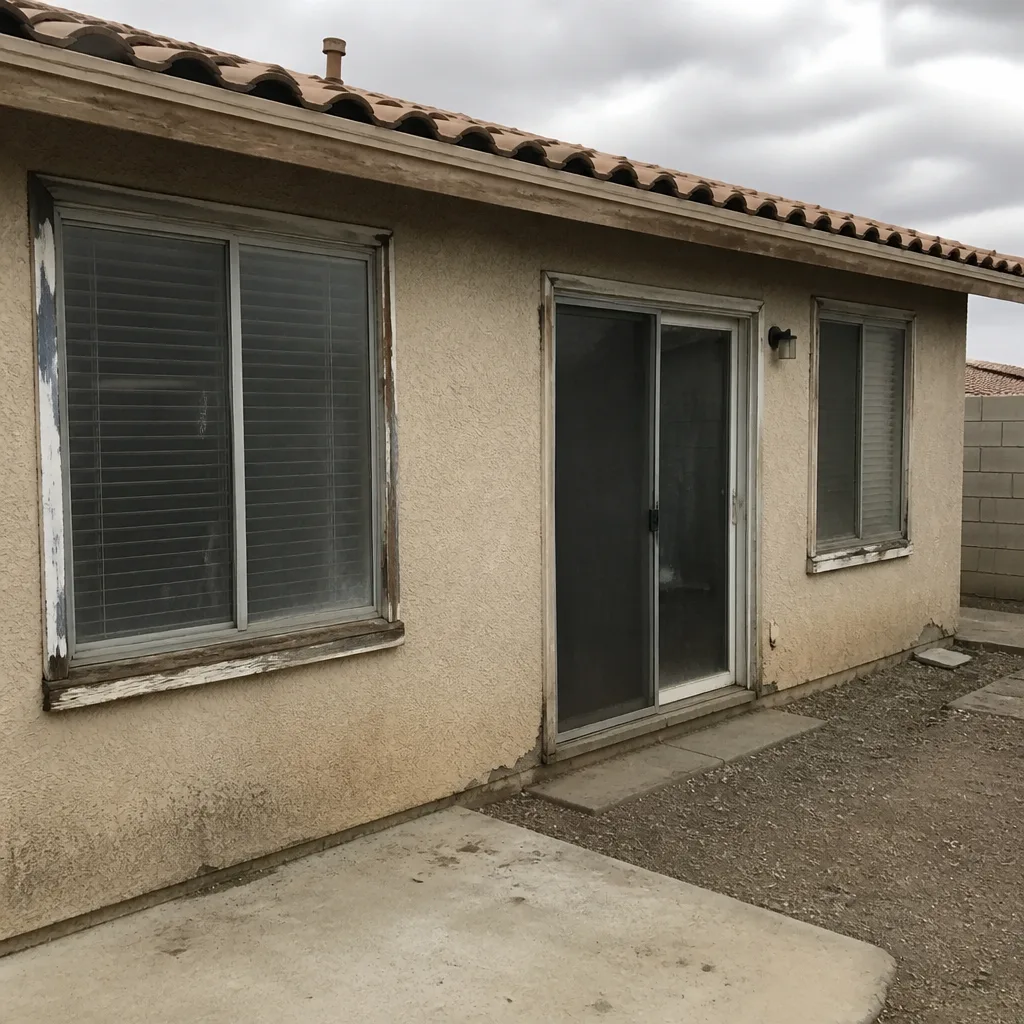 Before
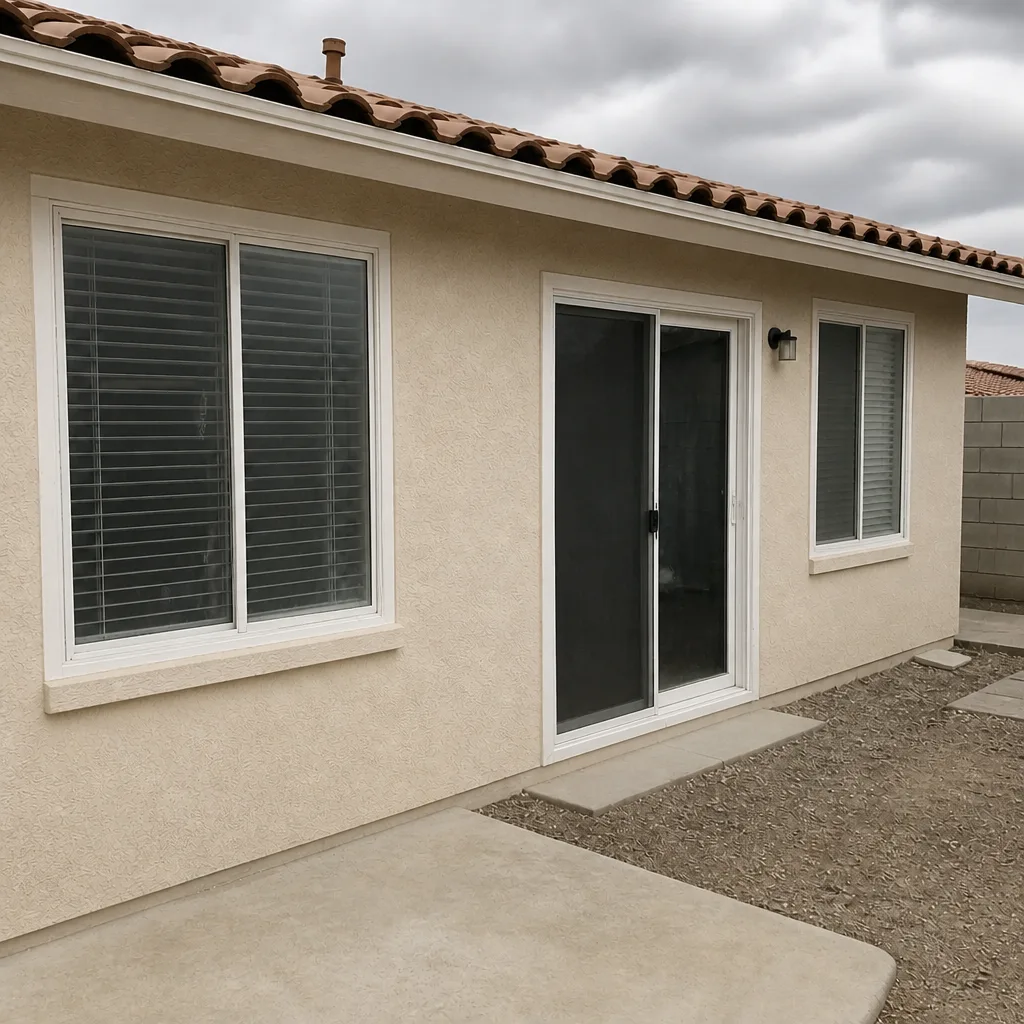 After
Table of Contents
- The Mesquite Maintenance Calendar: Month by Month
- Weep Hole Maintenance: The Four-Minute Task That Saves Your Warranty
- Hardware Lubrication Intervals by Window Type
- The Annual Seal Integrity Check You Can Do Without Tools
- What Records to Keep (and Why They Decide Warranty Claims)
- Glass, Screens, and Glazing Care
- Common Mistakes to Avoid
- When to Call a Professional
The Mesquite Maintenance Calendar: Month by Month
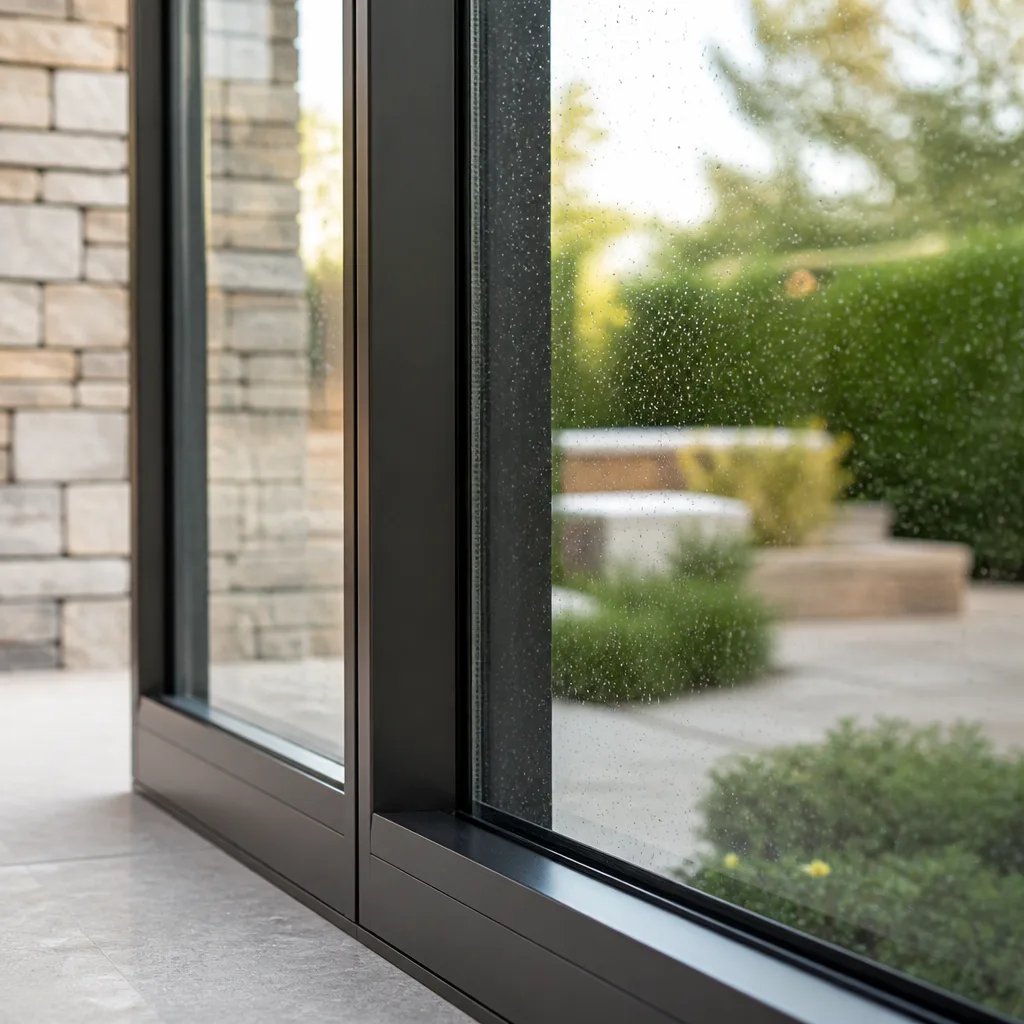
Generic maintenance advice tells you to “check your windows seasonally.” That’s useless in a place where July afternoons hit 110°F and the late-summer monsoon drives wind-driven rain against south-facing glass. The calendar below is built around the actual thermal and weather cycle of the Mesquite valley.
January – February. Inspect weatherstripping and door sweeps while temperatures are mild. Cold-morning drafts are easiest to trace now. Check that sliding door tracks haven’t collected winter grit.
March – April. Pre-summer seal inspection. This is the most important check of the year. Walk every window from inside and out, looking for cracked sealant beads, gaps at the frame-to-wall joint, and lifted glazing tape. Thermal stress in June and July will find any weak point, so fix it while the temperature is still forgiving. Clean weep holes for the first time this year.
May. Lubricate hardware – casement cranks, sliding rollers, tilt-wash pivots – before the season of heavy use begins. Test every operable window through a full open-and-close cycle.
June – August. Light touch only. Check for condensation between panes (a sign of seal failure in an insulated unit) and confirm weep holes stay clear after dust storms. Don’t apply sealant in peak heat; most exterior sealants won’t cure properly above 100°F.
September – October. Post-monsoon debris clearing. Monsoon winds push dust, seed pods, and grit into tracks and weep channels. Clear them, re-check sealant, and photograph everything for your log. This is the second weep-hole cleaning of the year.
November – December. Final hardware check and lubrication before the cooler season, when windows tend to stay closed and small issues go unnoticed until spring. Review your photo log and note anything that needs professional attention.
If your home has impact-rated windows – a common specification in this region and one we install from PGT and CGI – the calendar holds, but the seal inspection matters more, because the laminated glass assembly is only as good as the frame that holds it. The same schedule applies whether you’re in a newer build or an older home where a window replacement in Mesquite has already upgraded the openings.
Weep Hole Maintenance: The Four-Minute Task That Saves Your Warranty
Weep holes are small openings at the bottom of a window frame that let water drain out instead of pooling inside. Every modern vinyl and aluminum window has them. When they clog – and in dusty desert air they clog fast – water sits in the sill, works into the frame, and eventually reaches the wall cavity. That’s when the damage starts, and it’s precisely the kind of “failure to maintain” a manufacturer points to when denying a warranty claim.
Here’s what the task involves, and how to do it correctly:
- Locate them. On most windows, weep holes sit on the exterior sill, a few inches in from each corner. Some frames have small flip covers over them; open those first. If you can’t find them, check the manufacturer’s documentation – keeping that document is part of the schedule below.
- Clear with a soft tool. A pipe cleaner, a soft brush, or a can of compressed air works. Never use a screwdriver, drill bit, or anything rigid – you can widen or crack the opening and create a real leak.
- Flush with water. A gentle stream from a hose confirms drainage. If water pools instead of running out, the channel behind the hole is blocked and needs professional clearing.
- Confirm the covers. If your frame has weep covers, make sure they’re seated and not painted shut or caulked over. Some installers seal them by mistake – we’ve seen it, and it’s a repair we handle often.
Two minutes per window, twice a year. The alternative is water damage to framing and drywall that routinely runs into the thousands once it’s discovered, plus a denied claim because the drainage path wasn’t maintained. We specify weep covers and drainage detailing on every install precisely because this is the failure point that costs homeowners the most.
Hardware Lubrication Intervals by Window Type

Hardware wears out on its own schedule, and the wrong lubricant can do more damage than none at all. Silicone-based lubricants are the safe default across vinyl and aluminum frames – they don’t degrade plastic, don’t attract dust the way petroleum grease does, and stay effective through temperature swings. Avoid WD-40 as a long-term solution (it’s a solvent, not a lubricant, and it washes out), and skip graphite in dusty climates.
Here’s the interval and product for each window type:
- Casement windows (crank-operated): Lubricate the crank mechanism and the operator arm every six months, ideally March and November. A silicone spray or a light white lithium grease on the operator arm works well. If the crank gets stiff, don’t force it – that strips the gears.
- Sliding windows and patio doors: Clean and lubricate the track rollers every six months. Wipe the track clean first, then apply a silicone spray to the rollers, not the track itself. Grit in the track is what kills rollers; a dry silicone film on the roller does the actual work. This matters especially for the sliding and patio doors we install, where the roller assembly carries a lot of weight.
- Tilt-wash windows: The pivot bars and tilt latches need a light silicone application once a year – spring is fine. Don’t over-lubricate the latches; a little goes a long way, and excess attracts dust.
- Awning and hopper windows: Lubricate the hinge arms and operators every six months, same silicone rule.
One rule that applies to all of them: clean before you lubricate. Spraying silicone onto a dusty mechanism just glues the grit in place. Wipe, dry, then apply. If you’ve recently had window installation in Mesquite done, ask the installer for the manufacturer’s hardware spec sheet – it lists the exact lubrication points for your model.
The Annual Seal Integrity Check You Can Do Without Tools
You don’t need a moisture meter or a thermal camera to catch most seal failures early. You need your hands, your eyes, and a windy or cold day. Here’s the home inspection, step by step:
- Run a hand around the perimeter. On a breezy day, hold the back of your hand near the frame-to-wall joint and the sash edges. A draft you can feel is a seal that’s failed or weatherstripping that’s compressed.
- Look at the sealant bead. From outside, check for cracks, gaps, or peeling where the frame meets the wall. A bead that’s pulled away at one corner is the early stage of a leak. UV in this climate breaks down exterior sealant faster than most homeowners expect.
- Watch for condensation between panes. Fog or water droplets inside a double-pane unit means the insulated glass seal has failed. The window still works, but its U-factor performance is gone, and that’s a warranty matter – photograph it and call.
- Open and close each window. Binding, sticking, or a sash that won’t latch cleanly points to a frame that’s shifted or a hardware problem.
- Check the interior sill after rain. Any moisture, staining, or bubbling paint on the interior sill or drywall below tells you water is getting in somewhere.
The threshold for calling a professional: any draft you can feel, any visible gap in the exterior sealant, any condensation between panes, or any water staining inside. Those aren’t maintenance items – they’re repairs. Small sealant touch-ups you can handle yourself in mild weather; a failed insulated unit or a frame that’s moved is a professional assessment. A written second opinion on any contractor’s estimate is free, and it’s worth having before the problem grows.
What Records to Keep (and Why They Decide Warranty Claims)

Here’s the part almost nobody mentions at job completion: a warranty is a contract that runs both ways. The manufacturer promises the product; you promise to maintain it. When a failure happens in year six of a ten-year warranty, the first question the claims department asks is whether the window was maintained, and your records are the answer.
Keep these, and keep them together:
- The measured survey and written quote from your installation. At Sightline Windows & Doors Mesquite, the measured survey the customer keeps is the same document the quote is drawn from, so the paperwork matches the job exactly – a real advantage when a claim needs to prove which product was installed.
- The manufacturer’s warranty document for each product line. PGT, CGI, CWS, and ViewLux all publish their maintenance requirements; the exclusions page is the one that matters.
- A dated photo log of each annual inspection. Photograph the weep holes (clear, before and after), the exterior sealant bead, the hardware, and any condensation between panes. Date each photo. This is the single most useful record you can build, and it takes two minutes.
- The documented photo record from the installation. Every job we complete leaves one. It shows the condition of the opening and the completed work, and it’s the baseline your later photos get compared against.
- Receipts for any professional service – hardware replacement, sealant repair, glass work. Dated, itemized proof of maintenance is exactly what a claim reviewer wants to see.
A dated photo log is what turns “I maintained it” into evidence. When a claim reviewer can see a clear weep hole in a photo from March 2027 and a matching one from September 2028, the maintenance argument is settled. Without it, the claim rests on memory – and memory loses.
Glass, Screens, and Glazing Care
The glass itself needs the least attention, but the wrong cleaner causes problems. Ammonia-based cleaners can cloud some low-E coatings over time, and abrasive pads scratch glass permanently. A mild soap solution and a soft cloth or squeegee handle everything on a modern window, including the energy-efficient units we install.
In Mesquite, dust is the constant. Rinse glass before you wipe it – dry-wiping a dusty pane drags grit across the surface and leaves fine scratches. Wipe screens with a soft brush rather than a hose, and check the screen frames for looseness once a year; a screen that rattles in the wind eventually lets itself out of the frame, and the mesh tears.
Impact-rated glass – the laminated assemblies common on homes here and specified from PGT and CGI – resists impact but still scratches. Treat it like any other glass: rinse, mild soap, soft cloth. Don’t lean anything against a pane during cleaning, and don’t use a pressure washer on the glass or the seals. The frame and sealant are more vulnerable than the glass, and pressure washing drives water into exactly the joint you’re trying to protect.
Common Mistakes to Avoid

- Caulking over weep holes. It’s the fastest way to void a frame warranty, and it happens when a homeowner seals a draft and doesn’t know what the little slots are. Check for it every spring – if a hole is sealed, clear it carefully or call for help.
- Using petroleum-based lubricants or WD-40 on hardware. They degrade plastic components and attract dust, which accelerates wear on sliding rollers and casement operators. Silicone is the safe choice every time.
- Pressure-washing windows and seals. The 110°F summer sun already stresses exterior sealant; a pressure washer strips it. Wash glass by hand and let the sealant do its job.
- Skipping the pre-summer seal check. Thermal stress in July is when weak seals fail. Fixing them in April takes an afternoon; fixing the water damage they cause takes a contractor.
- Throwing away the measured survey and warranty documents. These are your claim evidence. Keep them with your home records – the paperwork is the proof.
- Ignoring condensation between panes. A foggy double-pane unit is a failed sealed unit, not a cosmetic issue. It’s usually covered if reported with dated photos – so report it.
- Waiting until something breaks to inspect. The annual check takes 45 minutes. The repair it prevents routinely runs into the thousands.
When to Call a Professional
Some issues are maintenance. Others are repairs that get worse with delay, and a few are safety matters. Call for a professional assessment when you find any of these: condensation or fogging between panes; a frame that’s shifted, warped, or won’t latch; water staining on the interior sill or wall below a window; exterior sealant that’s failed along an entire run, not just a corner; a crank or roller that binds even after cleaning and lubrication; or any window that’s difficult to operate and sits above a drop or near a stair. A window that won’t stay latched is also a security concern, and that’s worth fixing promptly. Our technicians – with up to 14 years of experience – assess each opening on site and put the findings in writing. Sightline Windows & Doors Mesquite offers free estimates in Mesquite; call (888) 268-5117 to schedule one, and bring any prior written estimate for a free second opinion.
Frequently Asked Questions

Twice a year is the standard – once in spring before summer heat, once in fall after monsoon season. In dusty Mesquite conditions, check them monthly during windy periods and clear them whenever you see debris. The task takes about two minutes per window and is the single most important maintenance item for protecting your frame warranty.
Silicone-based lubricant is the safe default for vinyl and aluminum window frames. It doesn’t degrade plastic parts and won’t attract dust the way petroleum grease does. Avoid WD-40 as a long-term solution and skip graphite in dusty climates. Apply every six months to casement cranks and sliding rollers, and once a year to tilt-wash pivots.
Yes. Most major manufacturers – including the PGT, CGI, and CWS lines we install – exclude damage caused by failure to maintain. A dated photo log of annual checks is the evidence that answers the claims reviewer’s first question. Keep your measured survey, warranty documents, and photos together; that file is what supports a claim in year six of a ten-year warranty.
The key dates are the pre-summer seal inspection in March or April and the post-monsoon debris clearing in September or October. Mesquite’s 110°F summers and wind-driven monsoon rain stress seals and clog weep channels faster than most climates. Clean weep holes twice a year, lubricate hardware in spring and fall, and check for condensation between panes through the summer.
Yes, and it catches most early problems. Run the back of your hand around each frame on a breezy day to feel drafts, look at the exterior sealant bead for cracks or gaps, open and close each window, and check interior sills for staining after rain. Any draft you can feel, a gap in the sealant, condensation between panes, or interior water staining is your signal to call a professional.
Not for routine care – the annual inspection and twice-yearly cleaning are things most homeowners can do themselves. Professional assessment matters when you find a specific issue: fogged glass, a shifted frame, failed sealant runs, or hardware that binds after lubrication. A free estimate in Mesquite tells you what’s maintenance and what’s a repair.
The Bottom Line
Your replacement window carries a warranty that most homeowners void within two years through three omissions: clogged weep holes, skipped seal inspections, and no maintenance record. The fix is a calendar – pre-summer seal check in March or April, post-monsoon debris clearing in September or October, hardware lubrication every six months with silicone, and a dated photo log of every check so a claim in year six stands on evidence, not memory. It’s 45 minutes, twice a year. If you’re planning a replacement rather than maintaining one, every engagement at Sightline Windows & Doors Mesquite begins with a measured survey you keep, a written price before any work starts, and a documented photo record when it’s done – the paperwork that outlasts the warranty. Call (888) 268-5117 for a free estimate, or start with our Sightline Windows & Doors Mesquite home page to see the full range of door installation in Mesquite and window services.
Written by the team at Sightline Windows & Doors Mesquite.
Six Reasons Homeowners Choose Sightline Windows & Doors Mesquite

Laminated glass and reinforced frames hold up to wind-driven rain, hail and flying debris, so your openings stay sealed when the weather turns.
Low-E insulated impact glass from our manufacturer lines commonly cuts monthly cooling bills 20-30%.
Laminated impact glass shuts out up to 40% of outside noise - traffic, neighbors, weather.
Monitoring services run $30-90 a month. Laminated impact glass resists forced entry around the clock, with no subscription.
Tighter seals and insulated glass even out hot and cold rooms and stop the drafts at the frame.
A full impact package upgrades curb appeal, buyer confidence and appraised value in one project.
Other Sightline Windows & Doors Mesquite Services
What Neighbors Say About Sightline Windows & Doors Mesquite